


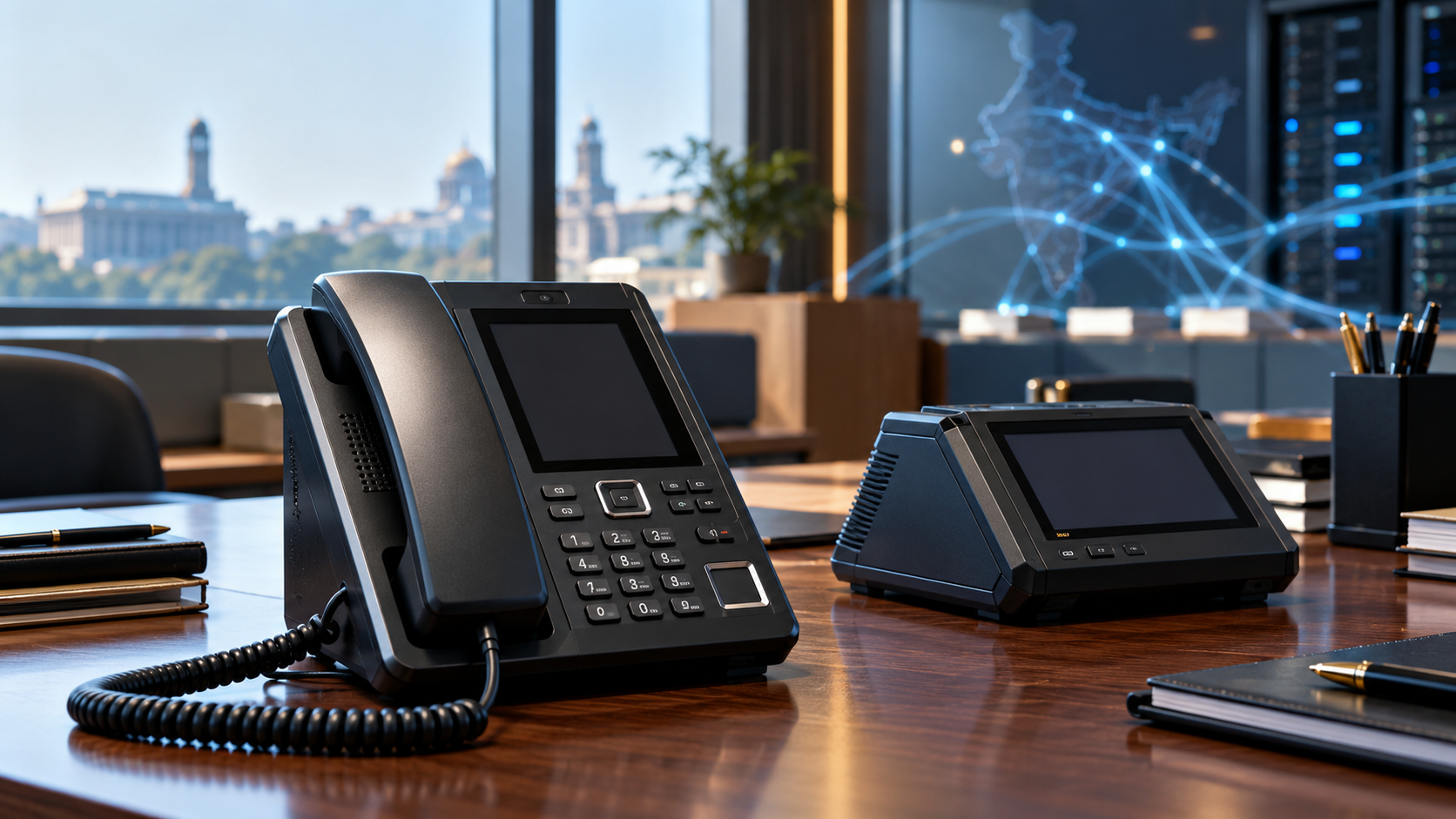
What is RAX phone, and why is it associated with secure communications among senior Indian government officials? A RAX phone is commonly described in media reports as part of India’s restricted-access telephone system, intended to help authorised officials communicate confidentially. However, there is an important distinction: the government telecom research organisation C-DOT officially documents RAX as Rural Automatic Exchange, a digital telephone-switching system originally developed to extend telephone services to rural areas.
The term RAX is therefore used in more than one context. To understand the secure telephone system discussed in news reports, it helps to examine its history, reported security features, and the way a restricted communications network can operate.
Table of Contents
What Is RAX Phone?

RAX is associated with a restricted telephone service reported to have been provided to selected Indian government officials for confidential official conversations.
Reports published in 2014 described specially secured RAX telephone sets developed by the Centre for Development of Telematics (C-DOT), with MTNL involved in making the system operational. These reports discussed fingerprint identification, caller-image verification and encryption at the handset level.
It is important not to confuse the secure telephone service with the original RAX technology.
- Original RAX: A digital telephone exchange developed to provide basic telephone connectivity, particularly in rural areas.
- Secure RAX telephone service: A restricted communications arrangement reported in connection with confidential government communications.
- Ordinary smartphones: Consumer devices that use commercial mobile networks and general-purpose operating systems and applications.
The exact current configuration and technical specifications of the restricted government telephone system are not fully established by the public sources reviewed here.
How Does a RAX Phone Work?The reported secure telephone system can be understood through three broad components: user authorisation, a restricted communications network and protection of call informatio
1. Authorised users access the telephone
According to a 2014 report by The Economic Times, the specially secured handsets were designed to require fingerprint identification. The same report described a feature that displayed a live picture of the caller on the recipient’s telephone, helping users verify who was calling.
- Fingerprint authentication can help prevent unauthorised people from using a handset.
- Caller-image verification can help users identify a caller.
- Access restrictions can limit communications to authorised participants.
These features were reported for the proposed or deployed secure handsets described at that time; their availability in every current RAX installation has not been independently confirmed.
2. Calls travel through a restricted communications system
Unlike a typical smartphone call placed through a consumer mobile subscription, a restricted government telephone service is designed for a defined group of authorised users.
A simplified illustration of such a system is:
Authorised caller
Secure telephone handset
Restricted communications network
Access control and call routing
Authorised recipient
Approved endpoint
Conceptual diagram, not a verified architecture of India’s government RAX network.
A restricted network can reduce exposure to threats affecting public communications services. However, the available sources do not establish that every RAX call uses the same physical infrastructure, that all calls travel through underground cables, or that the system operates exclusively on military radio frequencies.
3. Encryption helps protect communication
Encryption transforms readable information into a form that cannot readily be understood without the appropriate cryptographic key.
The 2014 Economic Times report described encryption at the handset stage for the specially secured telephones.
In general, encryption can help protect voice communications against interception. Its effectiveness depends on how encryption is implemented, how keys are managed, and whether the endpoints and network are secure.
No telephone system can responsibly be described as impossible to hack or track. Security measures reduce risks; they do not eliminate every possible vulnerability.
What Are the Main Security Features of a RAX Phone?
The following features have been reported in connection with the specially secured government handsets. They should not be interpreted as a verified list of features on every device currently in service.
| Feature | Purpose |
|---|---|
| Fingerprint authentication | Helps restrict handset access to authorised users. |
| Caller-image verification | Helps the recipient check the caller’s identity. |
| Handset-level encryption | Helps protect communications before they travel through the network. |
| Restricted access | Limits communication to an approved group or set of endpoints, depending on system configuration. |
| Dedicated communications infrastructure | Can reduce reliance on ordinary consumer communication services. |
The first three features were specifically described in the 2014 reporting on the secure handsets.
The Economic Times The precise present-day implementation of the remaining features requires confirmation from an authoritative technical source.
RAX Phone vs. an Ordinary Smartphone
A RAX secure telephone service and a regular smartphone are designed for different communication needs.
| Aspect | Reported secure RAX service | Ordinary smartphone |
|---|---|---|
| Main purpose | Confidential official communication | General-purpose communication and computing |
| Intended users | Selected authorised officials | General consumers |
| Network access | Restricted service, as reported | Commercial mobile networks and Wi-Fi |
| Authentication | Fingerprint verification was reported for special handsets | PIN, password, biometrics and other options |
| Encryption | Handset-level encryption was reported | Depends on the calling app, operating system and network |
| Public availability | The reported government service is restricted | Devices are commercially available |
This is a high-level comparison, not a claim that every secure RAX installation has identical technical specifications.
An ordinary smartphone can also support strong encryption. The important difference is the overall security arrangement, including device management, access policies, network design and the applications permitted for official use.
India’s Ministry of Electronics and Information Technology has also stated that government departments should not use public-domain messaging platforms for classified official communications. Its 2022 parliamentary response identified government email and government messaging platforms for certain information categories, while explicitly excluding top-secret and secret information from those platforms as well.
Why Do Senior Government Officials Need Secure Phones?
Government officials may discuss sensitive subjects such as national security, defence planning, diplomatic relations and confidential administrative decisions.
If sensitive conversations are intercepted or disclosed, they could expose information to unauthorised parties. A dedicated secure communications service can help reduce this risk by restricting access and applying additional security controls.
A restricted telephone network is only one part of information security. Officials also need appropriate procedures for handling confidential information, protecting devices, verifying identities and selecting approved communication channels.
What Is the History of RAX in India?
The original RAX technology has a documented history in India’s telecom development.
According to the Government of India’s Press Information Bureau, C-DOT’s first indigenous RAX telephone exchange was installed at Kittur, Karnataka, in July 1986. The original 128-port system helped expand basic telephone access in rural areas where telecom infrastructure was limited.
C-DOT’s official product information describes RAX as a digital, program-controlled telephone-switching system designed to provide economical telephone service in rural locations.
The later reports about secure government telephones describe a different use of the RAX name. In October 2014, The Economic Times reported a proposal to expand the number of secure RAX telephone users to 5,000 officials. That is a historical report, not confirmation of the number of active users today.
Frequently Asked Questions
1. What does RAX stand for?
In C-DOT’s documented telecom history, RAX stands for Rural Automatic Exchange. News reports have also used the name RAX for restricted-access secure telephone services for government officials. The meanings should not be treated as interchangeable without context.
2. Is RAX phone used by the Indian Prime Minister?
A 2014 Economic Times report described the expansion of secure RAX telephone services under Prime Minister Narendra Modi’s government. This supports the historical connection between the service and senior government communications, but it does not independently verify the Prime Minister’s current device or communication arrangements.
3. Can ordinary people buy a government RAX phone?
The restricted government service described in news reports was intended for authorised officials. The public sources reviewed here do not establish a current retail price or a public purchasing route for the official secure handsets.
4. Is a RAX phone impossible to hack?
No. It is not accurate to claim that any phone is completely impossible to hack. Authentication, encryption and restricted access can reduce security risks, but implementation flaws, compromised devices and other vulnerabilities can still matter.
5. Does a RAX phone use 4G or 5G?
The sources reviewed here do not establish the complete current network architecture of the restricted government telephone service. Therefore, it would be inaccurate to state categorically that every RAX handset uses, or never uses, 4G or 5G infrastructure.
6. Is RAX the same as a satellite phone?
No. RAX originally refers to a telephone exchange, while the secure government telephone service is a restricted communications arrangement. A satellite phone communicates using satellite infrastructure. The sources reviewed do not establish that every secure RAX telephone uses satellite links.
Conclusion
RAX is an important part of India’s telecom history, and secure RAX telephone services have been reported as a means of protecting confidential communication among senior government officials.
The most useful distinction is between the original Rural Automatic Exchange technology and the later restricted-access telephone service. Reports describe security measures such as fingerprint authentication, caller-image verification and handset-level encryption, but claims about the system’s current network, exact number of users and absolute immunity from interception require stronger evidence.
Understanding what is publicly documented—and what remains unverified—is essential when discussing national security technology.
Sorce:C-DOT’s Original RAX Telephone Exchange
Also Read:What is Neuralink: Amazing Brain Implant Helps Speech-Impaired Patient Speak Again


[…] What Is RAX Phone? How It… […]
[…] What Is RAX Phone? How It… […]
Наркологическая помощь включает вывод из запоя, детоксикацию организма, постановку капельницы, снятие симптомов похмелья и дальнейшее лечение алкоголизма. Частный нарколог может приехать домой круглосуточно, если выездная служба работает в таком режиме. Лечение проводится анонимно и конфиденциально, а схема терапии определяется после оценки состояния пациента. Медицинские препараты нельзя выбирать самостоятельно: лечение назначает врач с учетом возраста, длительности употребления алкоголя, хронического заболевания, состояния печени, сердца, головного мозга и нервной системы.
Узнать больше – [url=https://narcolog-na-dom-lugansk13.ru/]нарколог на дом цена Луганск[/url]