


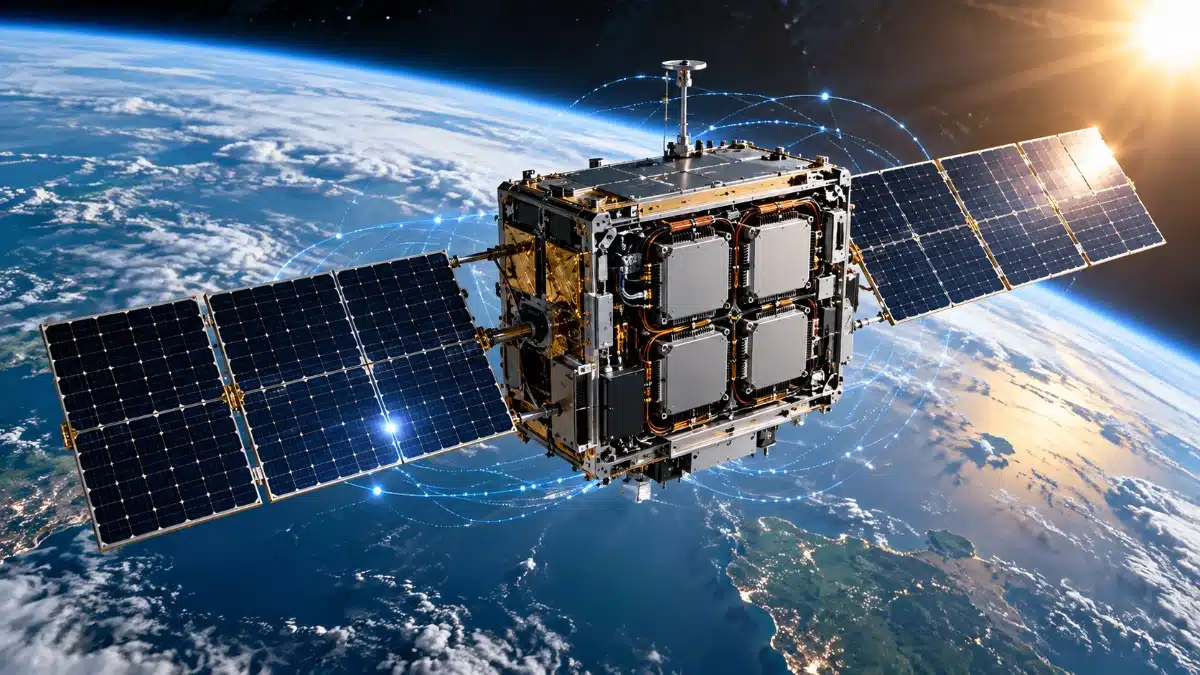
Google Project Suncatcher has reached a major testing milestone: Google’s prototype satellite carrying its custom artificial intelligence chips is now in orbit. The mission is designed to investigate whether machine-learning computing could eventually operate in space using solar-powered satellites. Google confirmed that the prototype launched aboard SpaceX’s Transporter-18 rideshare mission on October 1, 2026, and that the company has established contact with the spacecraft.
The project is still an experimental research effort, not an operational space-based data center. Google is using the mission to collect real-world data on how its Tensor Processing Units (TPUs) handle the physical stresses of spaceflight, radiation and extreme thermal conditions.
Also Read:Google Project Suncatcher
Table of Contents
What Is Google Project Suncatcher?
Project Suncatcher is a Google research initiative exploring the possibility of running machine-learning infrastructure in space.
Google announced the project in November 2025 as a long-term research effort. Its broader concept involves interconnected satellites equipped with Google’s Tensor Processing Units and powered by solar energy.
The idea is based on a simple question: Could AI computing infrastructure eventually be built in orbit rather than entirely on Earth?
In Google’s concept, satellites in low Earth orbit could use solar energy for computing and potentially form interconnected networks capable of handling machine-learning workloads.
However, that future remains experimental. The current mission is primarily about learning how the hardware behaves in the space environment.
Google Project Suncatcher Prototype Has Reached Orbit
The first prototype satellite for Project Suncatcher was launched on October 1, 2026, as part of SpaceX’s Transporter-18 rideshare mission.
Google says the satellite was built in partnership with Planet and that its team confirmed contact after launch. The spacecraft is now being used to collect data from orbit.
The prototype is significantly smaller than the large data centers used for AI computing on Earth. Current reports describe it as roughly refrigerator-sized and equipped with four Google TPUs.
This mission should therefore be viewed as a technology demonstration and research experiment, rather than the launch of a complete AI data center in space.
Why Is Google Putting AI Chips in Space?
One of the main reasons Google is investigating space-based computing is energy.
Satellites operating in suitable low-Earth orbits can receive sunlight for long periods. Google says satellites in low Earth orbit could potentially access significantly more solar power than comparable solar installations on Earth, depending on the orbit and configuration.
For AI infrastructure, energy availability is important because training and running advanced models requires substantial computing power.
Google’s long-term concept is therefore based on combining:
- Solar-powered satellites
- Google’s custom AI chips
- High-speed communication between satellites
- Orbital computing infrastructure
- Machine-learning workloads
But abundant sunlight alone does not make space data centers practical. Launch costs, thermal management, radiation, communications, maintenance and orbital congestion remain major engineering challenges.
How Do the AI Chips Work in Project Suncatcher?
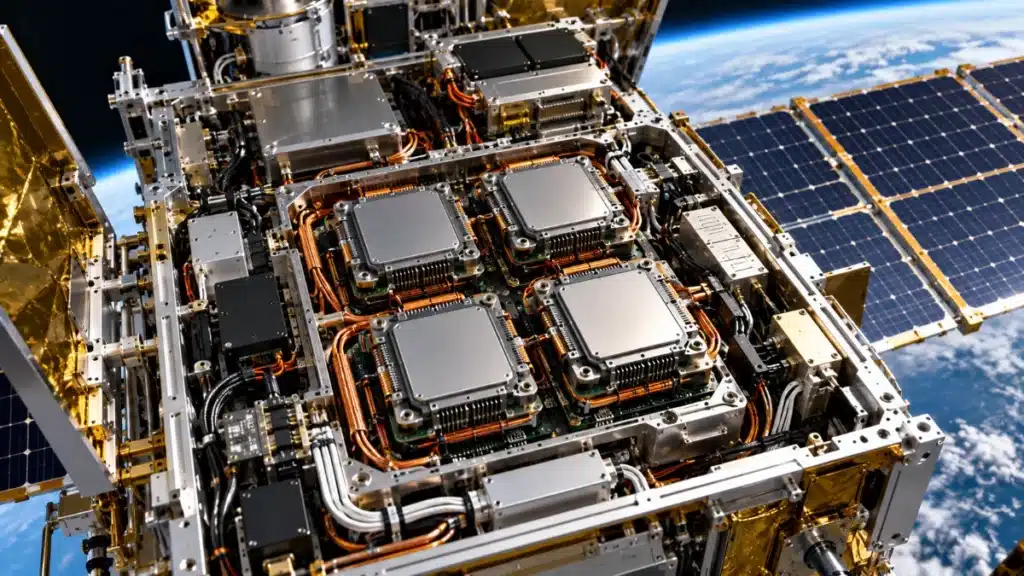
The prototype carries Google’s Tensor Processing Units, commonly known as TPUs.
TPUs are Google’s custom processors designed specifically for machine-learning workloads. Google has used generations of TPUs in its terrestrial data-center infrastructure.
For Project Suncatcher, the objective is different: researchers want to understand how these processors behave outside Earth’s protective environment.
Google says the initial mission will gather data about how the TPUs respond to:
- Physical stresses associated with spaceflight
- Radiation
- Extreme thermal conditions
- The broader conditions encountered while operating in orbit
These measurements are important because hardware that performs reliably inside a controlled Earth-based data center cannot automatically be assumed to behave the same way in space.
Why Is Cooling a Challenge in Space?
One of the less obvious challenges of putting AI computers in space is heat management.
Powering a processor generates heat. On Earth, data centers can use fans, air conditioning, liquid cooling and other systems to move heat away from computing equipment.
Space is different.
There is no surrounding atmosphere through which conventional air cooling can work. Spacecraft therefore have to rely heavily on thermal conduction and radiation to manage heat.
Current reporting on the Suncatcher prototype indicates that thermal constraints limit how long its AI processors can operate during testing. NPR reported that the chips are expected to run a version of Google’s Gemma model in short periods because of heat-management limitations.
This makes thermal engineering one of the important questions the mission needs to answer.
What Will Google Test With the Satellite?
The current satellite is intended to provide real-world information that cannot be obtained completely through laboratory testing.
Google specifically says its team will study how its TPUs handle the physical stress of spaceflight, radiation and thermal extremes.
The results could help researchers determine how future spacecraft should be designed.
The experiment may provide information about:
- Hardware durability — how the processors respond to the space environment.
- Radiation exposure — whether the hardware can continue operating reliably.
- Thermal management — how heat can be controlled without conventional Earth-based cooling.
- Power availability — how solar generation can support computing.
- Orbital computing design — what future space-based AI infrastructure might require.
The important distinction is that successfully launching the prototype does not demonstrate that large-scale AI data centers in space are already practical.
Could AI Data Centers Really Be Built in Space?
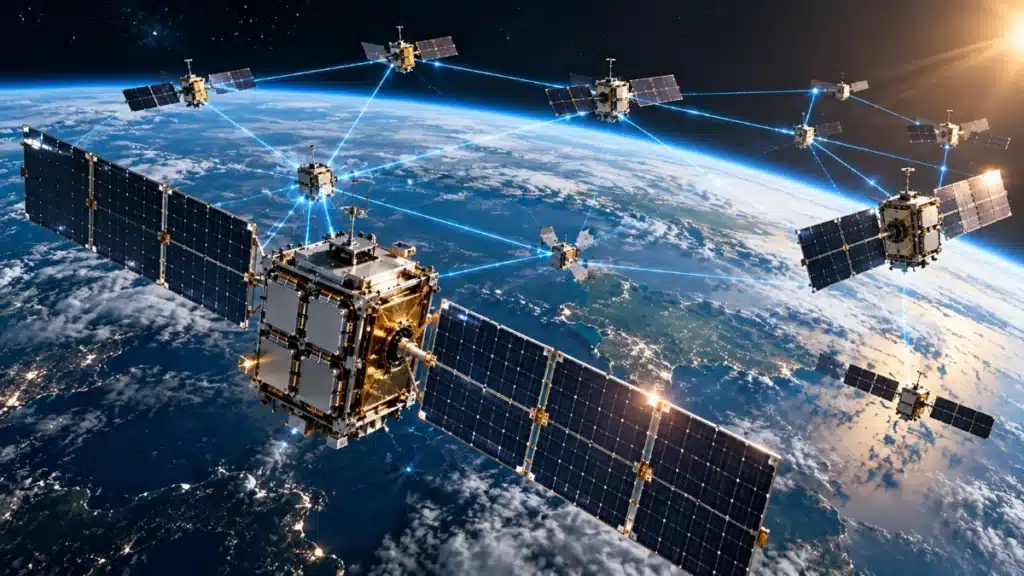
That is the larger question behind Project Suncatcher.
Google’s long-term research envisions networks of satellites working together to provide machine-learning computing infrastructure in orbit. The company’s original Project Suncatcher announcement described an interconnected network of solar-powered satellites equipped with TPUs.
Such a system could potentially provide computing capacity in an environment with substantial solar-energy availability.
However, building a large orbital data center would require solving several difficult problems.
Launch Costs
Large numbers of satellites would need to be manufactured, launched and deployed.
Thermal Management
Computing hardware produces heat, and spacecraft need carefully designed systems to radiate that heat away.
Radiation
Space exposes electronic hardware to radiation that is substantially different from the environment inside terrestrial data centers.
Communication
A large constellation would need reliable, high-speed communication between satellites and with systems on Earth.
Maintenance
Repairing or replacing failed computing hardware in orbit is much more difficult than maintaining equipment inside an Earth-based data center.
Orbital Environment
Any large satellite constellation also has to account for orbital debris, collision risks and the long-term management of spacecraft.
These challenges mean that Project Suncatcher remains a long-term research program rather than a replacement for Google’s existing data centers.
What Makes the Project Different From a Normal Satellite?
Traditional satellites are generally designed around specific functions such as communications, Earth observation, navigation or scientific research.
Project Suncatcher is investigating a different concept: using satellites themselves as computing infrastructure.
Instead of sending information from space to Earth for every computational task, some processing could potentially happen directly in orbit.
That could become particularly interesting for applications involving satellite-generated data. Processing some information closer to where it is collected could potentially reduce the need to send all raw data back to Earth.
However, whether that would be economically and technically advantageous depends on the final system design.
What Happens Next for Project Suncatcher?
The current mission is only an early step.
Google says it will use the coming weeks to collect in-orbit information about the TPUs and use what it learns to refine future designs.
Google had previously described plans to launch prototype satellites with Planet to test the concept. Its September 2026 material also described future work involving multiple satellites and communication between them.
The immediate priority is therefore not to build a giant orbital data center, but to understand whether the underlying hardware and engineering approach can work in real space conditions.
Why Google Project Suncatcher Matters
The significance of the project is not that Google has already moved its AI data centers into space.
Instead, it represents an attempt to test whether space could eventually become another location for large-scale computing.
AI development is increasing demand for computing power, while data centers on Earth face challenges involving electricity, cooling, land and infrastructure.
Project Suncatcher explores whether some of those constraints could eventually be approached differently by placing computing hardware in orbit.
At the same time, the project demonstrates how many difficult engineering problems appear when computing moves outside a terrestrial data center.
The first prototype will provide practical information that computer simulations and laboratory tests cannot fully reproduce.
Google Project Suncatcher: What We Know So Far
| Feature | Current information |
|---|---|
| Project | Google Project Suncatcher |
| Main goal | Research space-based machine-learning infrastructure |
| First prototype | Launched October 1, 2026 |
| Launch mission | SpaceX Transporter-18 |
| Partner | Planet |
| AI hardware | Google Tensor Processing Units (TPUs) |
| Power concept | Solar energy |
| Current status | Prototype in orbit and operating as expected |
| Main tests | Spaceflight stress, radiation and thermal conditions |
| Long-term vision | Interconnected orbital AI computing infrastructure |
Google has confirmed the launch and initial contact with the spacecraft, while the broader concept remains a research project.
Frequently Asked Questions
What is Google Project Suncatcher?
Google Project Suncatcher is a research initiative investigating whether machine-learning computing infrastructure could eventually operate in space using solar-powered satellites equipped with Google’s TPUs.
Did Google launch an AI chip into space?
Google launched a prototype satellite carrying four of its Tensor Processing Units as part of Project Suncatcher. The satellite reached orbit on October 1, 2026, aboard SpaceX’s Transporter-18 mission.
Why is Google testing AI chips in space?
Google is studying whether AI computing could eventually operate in orbit using solar-powered satellites. The current mission is specifically intended to study hardware performance under spaceflight, radiation and thermal conditions.
What are Google’s TPUs?
Tensor Processing Units, or TPUs, are Google’s custom processors designed for machine-learning workloads. They are already used in Google’s terrestrial data-center infrastructure.
Can AI data centers really work in space?
The technology is still experimental. Project Suncatcher is investigating the feasibility of space-based AI computing, but significant challenges remain, including thermal management, radiation, communications, launch costs and satellite maintenance.
How does Google plan to power AI computing in space?
The long-term concept relies heavily on solar power. Google has proposed interconnected satellites that could use the Sun as an energy source for machine-learning infrastructure.
What is the biggest challenge for AI chips in space?
Thermal management is one major challenge because spacecraft cannot rely on ordinary atmospheric cooling. Radiation, power management and communications are also important engineering problems.
Is Google already operating a data center in space?
No. The current Project Suncatcher satellite is a research prototype designed to test the technology and collect data. It should not be confused with a full-scale commercial orbital data center.
Conclusion
Google Project Suncatcher is an early experiment in a much larger idea: moving some AI computing infrastructure beyond Earth.
The first prototype has now reached orbit, giving Google an opportunity to study how its AI processors behave under real space conditions. The mission will focus on issues such as radiation, thermal management and the physical stresses of spaceflight.
For now, the project does not prove that orbital AI data centers are commercially practical. Instead, it provides Google with real-world engineering data that could determine whether the concept deserves further development.
The results of these experiments could help shape Google’s next steps in exploring the future of AI computing in space.
Also Read:What is Neuralink

