


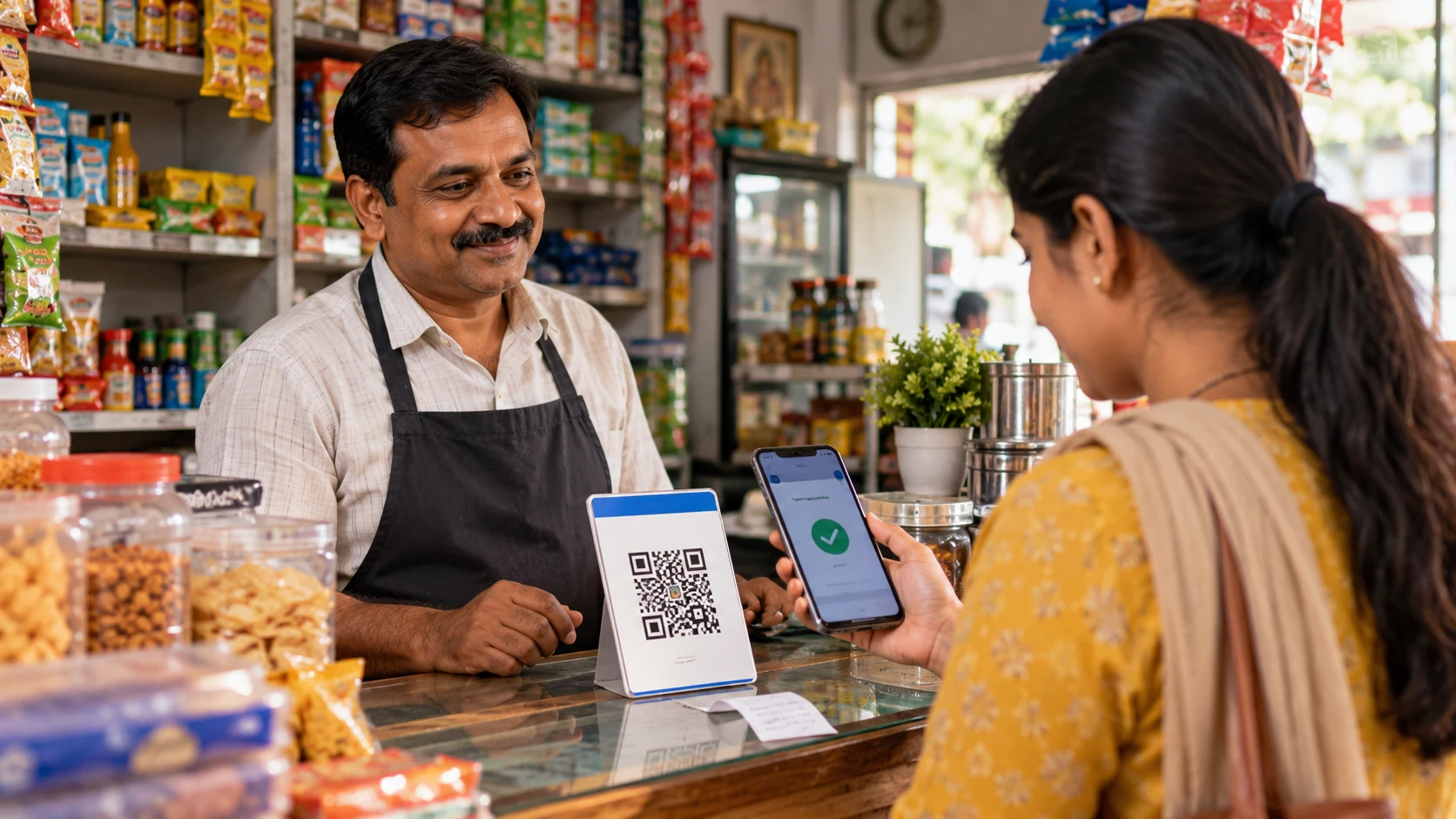
UPI charges after Diwali 2026 are a concern for shoppers and shopkeepers, but the important distinction is between a fee that a payment provider may charge an eligible merchant and a fee charged directly to a customer. As of 17 October 2026, the reported implementation of a proposed merchant discount rate (MDR) on certain UPI transactions has been postponed until after Diwali, and a final effective date has not yet been announced in the reports reviewed.
Table of Contents
UPI Charges After Diwali 2026:What has changed?
The National Payments Corporation of India (NPCI) has postponed the planned 15 October implementation of a reported 0.4% merchant fee on specified person-to-merchant (P2M) UPI transactions above ₹2,000. The postponement is intended to avoid disruption during the festive shopping period. Reports say the new implementation date will be announced separately. The postponement should not be treated as cancellation: users and merchants should look for a later official notice before relying on a specific start date.
This is a developing payment-policy issue. The exact scope, caps, exclusions and merchant eligibility should be checked against the applicable NPCI circular and official clarifications at the time of publication. News reports are useful for explaining the postponement, but they are not a substitute for the final operative rules.
What is MDR?
MDR stands for Merchant Discount Rate. It is a fee associated with processing a payment made by a customer to a business. It is different from a person-to-person transfer, such as sending money to a friend. The reported proposal concerns specified merchant transactions, not every transfer made through UPI.
For a simple illustration, if a 0.4% fee applied to an eligible merchant payment of ₹5,000, the calculation would be ₹5,000 × 0.004 = ₹20. This is only an illustration of the percentage, not a guarantee that every ₹5,000 UPI payment attracts that fee. The actual treatment depends on the final rules, transaction category, caps and exemptions.
Will customers have to pay extra?
A merchant-side processing fee does not automatically mean that a customer is charged an additional fee by their UPI app. The reported framework distinguishes eligible merchant transactions from person-to-person transfers and includes exemptions. Before publication, verify the latest official guidance on which transactions are exempt and whether any customer-facing charges are prohibited or restricted.
For readers, the safest practical advice is to review the payment screen, check the amount and recipient, and ask for an itemised explanation if a seller adds an unexpected charge. Do not assume that a viral message saying “all UPI payments will be charged” accurately describes the proposal.
How to understand common UPI payment situations
| Situation | What readers should check |
| Sending money to a friend | This is a person-to-person transfer, which is treated differently from a merchant payment in the reported framework. |
| Paying a shop by QR code | Check whether the transaction and merchant fall within the final MDR rules and exemptions. |
| Paying more than ₹2,000 to a business | The reported proposal concerns specified merchant transactions above this threshold; confirm the final operative terms. |
| Paying a bill or a specialised service | Do not assume that every category follows the same rule. Check the provider and transaction-specific terms. |
| A seller asks for an extra fee | Ask what the fee is for, request an itemised bill and check official rules before deciding whether it is valid. |
Why has the rollout been postponed?
The postponement was reported ahead of the festive period, when consumer spending and retail payments typically rise. A change in payment-processing arrangements can require technical preparation by banks, payment apps, merchants and service providers. Deferring a rollout can give participants time to prepare, but it does not tell readers what the eventual final rules will be.
The practical point is to avoid publishing a definite launch date until NPCI or another responsible authority confirms it. “After Diwali” describes a broad timing window, not a precise date.
What should UPI users do now?
Before approving a payment
- Check that the recipient name and amount match the intended transaction.
- Read any fee or charge displayed before confirming.
- Keep the transaction ID or receipt until the payment is reconciled.
- Use the official app and never share your UPI PIN or OTP with a shopkeeper, caller or supposed support agent.
If a merchant adds a separate charge
Ask the merchant to explain the charge and provide an itemised bill. Keep a screenshot or receipt if the amount differs from what was displayed. If you believe a fee is improper, check the latest official rules and contact your bank or payment provider through its verified support channel. Do not rely on social-media posts as proof that a particular fee is permitted.
What merchants should review
Merchants should confirm their category, payment-provider agreement, transaction eligibility and any applicable exemptions before changing checkout practices. They should also check whether their payment service provider has issued implementation instructions. A fee that applies to one category should not be assumed to apply to all merchants or payment types.
For small businesses, the important operational questions are how the fee is calculated, whether a cap applies, how settlements are reported, and what records should be retained. These details should be confirmed from the final circular and the merchant’s own provider rather than inferred from a headline.
Frequently asked questions
1. When will the reported UPI merchant fee begin?
The planned 15 October rollout was postponed until after Diwali, and the reports reviewed say a new date will be announced separately. Confirm the latest official notice before stating a precise date.
2. Does this mean every UPI payment will become chargeable?
No. The reported proposal concerns specified merchant transactions. Person-to-person transfers and exempt transaction categories must be treated separately under the applicable rules.
3. What does a 0.4% fee mean on a ₹5,000 payment?
If that rate applied, 0.4% of ₹5,000 would be ₹20. This is a mathematical illustration, not confirmation that the fee applies to every payment of that amount.
4. Should I stop using UPI?
There is no need to stop using UPI solely because of a reported merchant-fee proposal. Check the payment details, use trusted apps and verify any unexpected charge.
5. Where should I verify the final rule?
Look for the latest NPCI circular or official clarification, along with relevant Ministry of Finance information. Use news reports for context, but rely on the operative official notice for the final scope and date.
Conclusion
The UPI fee discussion is about the treatment of specified merchant transactions, not a blanket announcement that every UPI transfer will cost money. The rollout has been postponed until after Diwali, and the final date and applicable details need to be confirmed through official updates. Customers should check payment screens and receipts; merchants should verify their category and provider instructions before changing how they accept payments.
Also Read:UPI Payment Charges From October 15, 2026: What Users and Merchants Need to Know
Sources:Press Release: Press Information Bureau,India postpones UPI payment fee rollout until after Diwali festival | Reuters

