


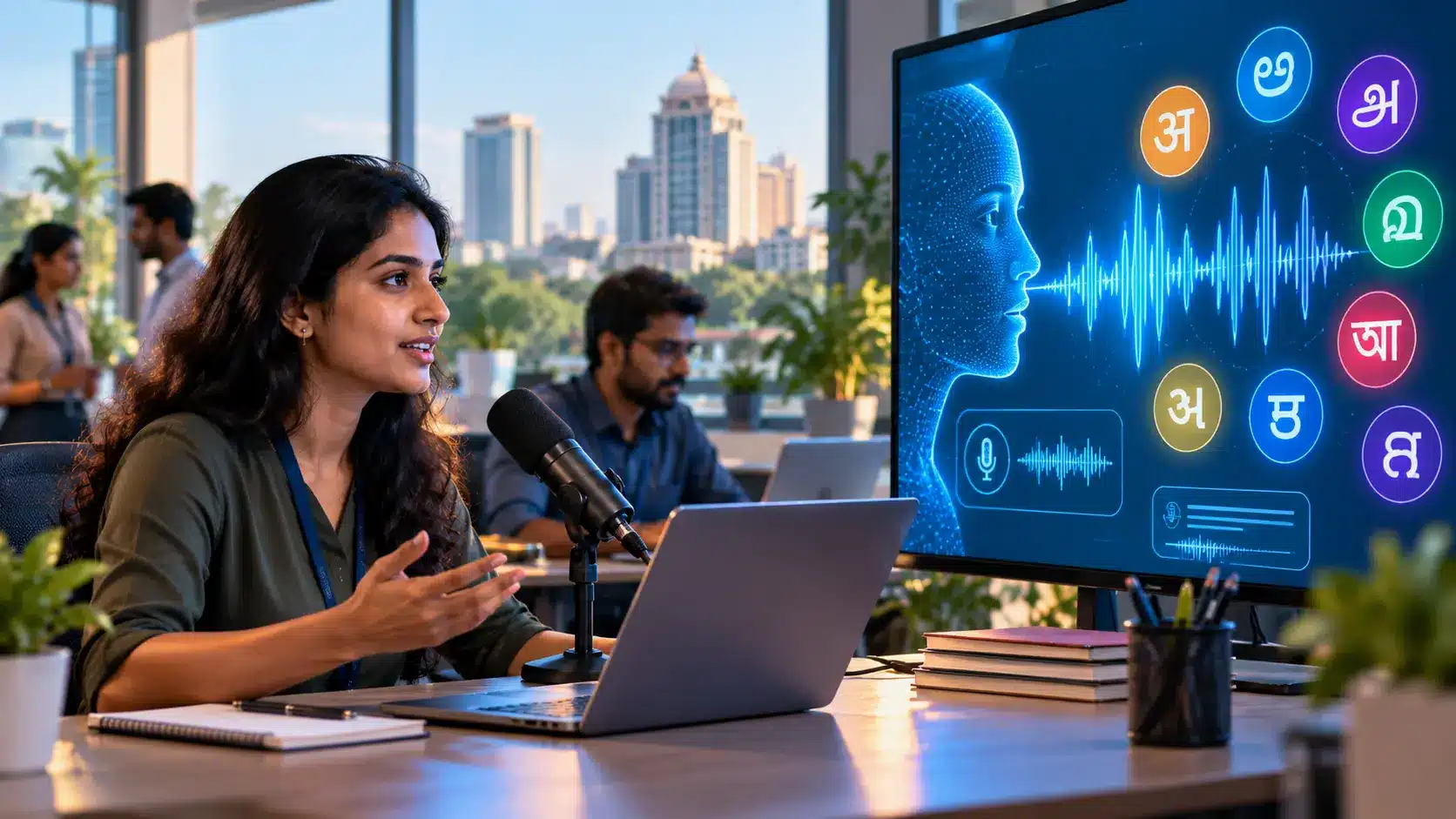
The ElevenLabs India investment plan is emerging as one of the latest major developments in India’s rapidly expanding artificial intelligence industry. The London-based voice AI company says it plans to invest hundreds of millions of dollars in India, although it has not disclosed the exact amount.
The announcement comes as ElevenLabs expands its local operations, develops AI models for Indian users and works toward broader support for Indian languages. The company also announced plans to explore acquisitions in India and deepen its relationships with businesses and government organisations.
The development is significant because India is becoming an increasingly important market for voice-based artificial intelligence. ElevenLabs says India is its largest market outside the United States, while the company is also increasing its focus on regional languages and public-service applications.
Table of Contents
What is the ElevenLabs India investment?
ElevenLabs has announced plans to invest hundreds of millions of dollars in India as it expands its presence in the country.
The company has not publicly specified the exact amount it intends to invest. According to Reuters, the planned spending will support local teams, AI model development and work focused on Indian languages. ElevenLabs is also open to potential mergers and acquisitions in India, although it has not disclosed specific targets.
This means the announcement should not be interpreted as a confirmed investment of a specific figure such as $100 million or $500 million. The verified information at present is that the company plans to invest hundreds of millions of dollars.
That distinction is important because the final investment amount, timing and allocation could change as the company develops its India strategy.
Why is India important to ElevenLabs?
India offers a combination that is particularly relevant to voice AI: a huge digital market, many languages and rapidly growing use of AI-powered services.
ElevenLabs already has a significant customer base in India. Reuters reports that the company works with more than 250 regional enterprises and that its technology has been involved in more than 100 million AI-agent conversations annually across 14 Indian languages. Indian customers mentioned in the reporting include Physicswallah, Havells and Razorpay.
For a company focused on speech and conversational AI, India’s linguistic diversity creates both a challenge and an opportunity.
A voice system designed primarily around English cannot serve the entire Indian market equally well. Support for regional languages, accents and different communication styles can make voice interfaces considerably more useful to people who are more comfortable communicating in their own language.
That is one reason ElevenLabs is putting greater emphasis on India-specific development.
ElevenLabs plans to expand to all 22 Indian languages
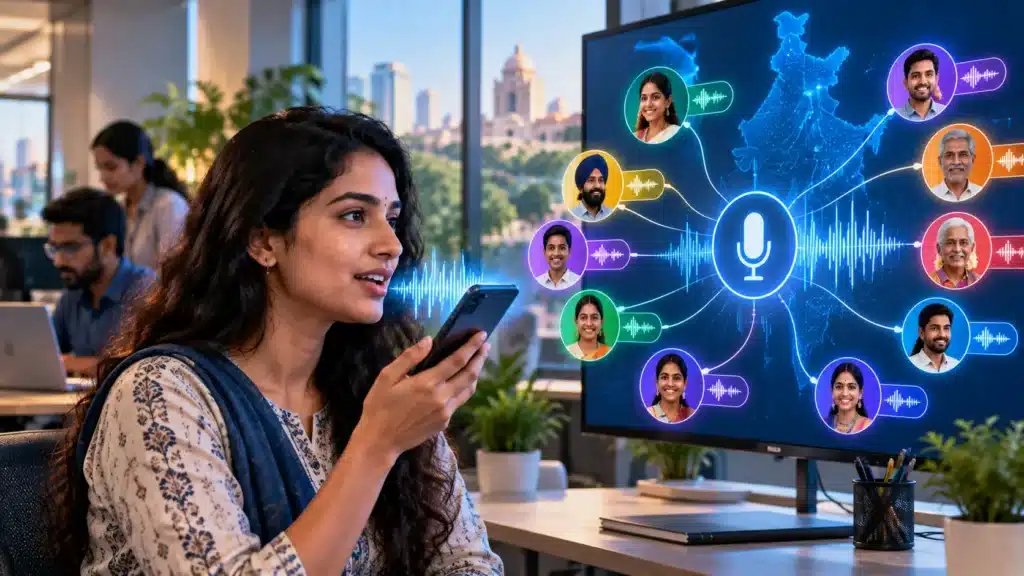
One of the most important developments announced alongside the investment is the company’s plan to expand its AI voice technology to all 22 officially recognised Indian languages.
At its Bengaluru Summit on October 6, ElevenLabs co-founder and CEO Mati Staniszewski said the company’s latest text-to-speech model currently supports 14 Indian languages and that the company plans to expand coverage to all 22 in the coming months.
The company’s current Eleven v4 model supports more than 90 languages globally, according to ElevenLabs’ own documentation. Kannada, Hindi, Bengali, Gujarati, Marathi, Malayalam, Tamil, Telugu and several other Indian languages are included in the model’s broader language coverage.
The planned expansion to all 22 officially recognised Indian languages could make voice AI more useful for education, customer service, entertainment, accessibility and government services.
However, language availability alone does not guarantee perfect performance. Quality can depend on pronunciation, accents, regional variation, context and how the technology is deployed.
What is Eleven v4?
ElevenLabs’ India expansion comes shortly after the company introduced Eleven v4, its latest text-to-speech model.
ElevenLabs describes Eleven v4 as its most expressive voice model, designed to understand factors such as emotion, context, pacing and conversational dynamics. The company says the model can generate speech in more than 90 languages and supports multi-speaker interactions.
The technology is moving beyond basic text-to-speech.
Modern voice AI systems can be used to create conversational agents that listen to users, process requests and respond using natural speech. This creates opportunities for applications such as customer support, appointment handling, education and digital assistance.
For India, the ability to combine these capabilities with regional languages could be particularly important.
How could the investment affect Indian businesses?
The investment could strengthen ElevenLabs’ ability to work directly with Indian businesses and build technology around local requirements.
Companies can use voice AI for tasks that traditionally require human agents, including customer support and routine interactions. Voice agents can potentially handle repetitive conversations while more complex cases are transferred to human employees.
The goal is not necessarily to eliminate human support.
Instead, businesses can use AI for high-volume or routine conversations and reserve human employees for situations that require judgement, empathy or specialised assistance.
ElevenLabs’ existing Indian customer base suggests that these applications are already moving beyond experimentation. Reuters reported that Indian enterprises are using the company’s technology at significant scale.
The planned investment could therefore help ElevenLabs increase its ability to develop, deploy and support these systems locally.
Could this create more AI jobs in India?
The investment is expected to expand ElevenLabs’ local teams, according to Reuters. That could create opportunities across engineering, research, product development, sales, customer implementation and other technology-related functions.
However, it would be premature to predict a specific number of jobs.
The company has not announced a confirmed employment target connected to the investment. The broader impact will depend on how much of the investment goes toward local hiring, research, infrastructure, partnerships and potential acquisitions.
For India’s technology workforce, the development nevertheless highlights growing demand for skills in areas such as artificial intelligence, machine learning, speech technology, software engineering and AI product development.
What does this mean for Indian-language AI?
This may be one of the most important long-term aspects of the announcement.
India’s digital growth has increasingly moved beyond English-first services. Voice interfaces can potentially reduce barriers for users who are more comfortable speaking than typing or who prefer regional languages.
ElevenLabs’ plan to work toward all 22 officially recognised Indian languages could therefore have applications well beyond entertainment.
Potential areas include:
- Customer support in regional languages
- Educational and training content
- Voice-based digital assistants
- Accessibility services
- Public-service information
- Healthcare communication
- Content creation and media
- Business-to-customer communication
These are potential applications rather than guarantees. Their real-world effectiveness will depend on accuracy, affordability, privacy protections and responsible deployment.
Karnataka is also entering the picture
The India expansion has a particularly strong connection to Karnataka.
On October 6, the Karnataka Innovation and Technology Society (KITS), under the Government of Karnataka, signed a memorandum of understanding with ElevenLabs to explore Voice AI for public benefit. The partnership focuses on areas including voice restoration, accessibility to government services and a Voice AI safety framework.
The partnership also includes plans for voice restoration support for eligible people who have lost the ability to speak, including work involving Kannada.
Another important element is responsible AI.
The Karnataka initiative includes safeguards related to voice fraud, deepfakes and unauthorised voice cloning. That is significant because increasingly realistic synthetic voices create both useful applications and new risks.
The partnership therefore illustrates that India’s AI expansion is not only about commercial applications. Governments are also exploring how voice technology can be used for accessibility and public services.
Why voice AI could be important for government services
Government services often need to reach people with different levels of digital literacy and different language preferences.
A voice-based interface could allow citizens to interact with services without depending entirely on complex text-based websites or applications.
For example, voice technology could potentially help users understand information, navigate services or receive instructions in a familiar language.
The Karnataka-ElevenLabs partnership is still an initiative being explored rather than proof that all government services will soon become voice-operated. The MoU establishes areas of cooperation, but individual services and deployments would require further development and implementation.
That distinction matters when assessing the announcement.
ElevenLabs is also considering acquisitions in India
Another notable part of the investment strategy is the company’s openness to acquisitions.
Reuters reported that ElevenLabs is looking at potential merger and acquisition opportunities in India, although the company did not identify specific targets.
Acquisitions could allow ElevenLabs to gain technology, talent, customers or specialised expertise more quickly than building everything internally.
But there are currently no confirmed acquisition targets to report.
Therefore, claims about particular Indian startups being acquired should not be presented as fact unless ElevenLabs or the companies involved officially announce such transactions.
What does the investment mean for India’s AI ecosystem?
The ElevenLabs announcement is part of a wider pattern of major international AI companies increasing their focus on India.
For ElevenLabs specifically, the strategy combines investment, local hiring, language development, enterprise partnerships and public-sector initiatives.
That combination could strengthen India’s position as both a consumer market and a development environment for AI products.
The significance is not simply the amount of money being invested.
The more important question is what gets built with it.
If investment results in better Indian-language models, stronger local engineering teams, improved accessibility tools and more reliable voice applications, the impact could extend beyond ElevenLabs itself.
It could also encourage more companies to develop AI products specifically for India’s linguistic and business environment.
What are the challenges?
The expansion also comes with important challenges.
1.Accuracy across languages
Supporting a language technically is different from delivering consistently accurate and natural speech across different accents, contexts and regional variations.
2.Voice cloning and misuse
Realistic synthetic voices can be misused for impersonation, fraud and misinformation. Strong safeguards and consent mechanisms are therefore essential.
3.Privacy
Voice data can be sensitive. Companies and organisations deploying voice AI need appropriate privacy, security and data-handling practices.
4.Human oversight
AI voice agents may work well for routine tasks but can struggle with unusual or sensitive situations. Human escalation remains important for many applications.
5.Cost and accessibility
Advanced AI systems need to be affordable enough for businesses, institutions and users to adopt them at scale.
These challenges will influence whether India’s voice AI market develops sustainably.
What happens next?
The immediate next stage will be to see how ElevenLabs turns its announcement into actual investment and products.
Several developments will be worth watching:
- The exact investment amount — the company has not disclosed a precise figure.
- New Indian-language support — ElevenLabs plans to move from its current coverage toward all 22 officially recognised languages.
- Local hiring — additional engineering, research and business teams could expand the company’s India presence.
- Potential acquisitions — the company has indicated that it is open to Indian M&A opportunities.
- Government applications — the Karnataka partnership could produce new voice-based accessibility and public-service projects.
- Enterprise adoption — more Indian companies may deploy voice agents for customer-facing operations.
These developments will provide a clearer picture of how ambitious the company’s India strategy really is.
Frequently Asked Questions
How much is ElevenLabs investing in India?
ElevenLabs has announced plans to invest hundreds of millions of dollars in India, but it has not disclosed the exact amount. Reuters reports that the investment will support local teams, AI model development and Indian-language work.
Why is ElevenLabs investing in India?
The company sees India as a major market for voice AI. It is expanding local teams, developing AI models and increasing its focus on Indian languages and enterprise applications.
How many Indian languages does ElevenLabs support?
ElevenLabs said on October 6 that its latest text-to-speech model currently supports 14 Indian languages and that it plans to expand to all 22 officially recognised Indian languages in the coming months.
What is ElevenLabs used for?
ElevenLabs develops voice and speech AI technology used for applications including text-to-speech, voice agents, conversational systems, voice cloning and multilingual audio experiences. Its Eleven v4 model supports more than 90 languages.
Is ElevenLabs working with the Karnataka government?
Yes. The Karnataka Innovation and Technology Society signed an MoU with ElevenLabs on October 6 to explore Voice AI applications for public benefit, including accessibility, voice restoration and AI safety.
Will the ElevenLabs investment create jobs in India?
The company plans to expand local teams, which could create additional employment opportunities, but no specific job-creation target has been announced as part of the investment.
Has ElevenLabs announced any Indian company it plans to acquire?
No specific acquisition target has been publicly identified. Reuters reported that ElevenLabs is open to potential merger and acquisition opportunities in India.
Conclusion
The ElevenLabs India investment marks a significant expansion of the company’s ambitions in one of the world’s most linguistically diverse technology markets.
The company plans to invest hundreds of millions of dollars, expand local teams, develop AI models and increase support for Indian languages. Its plan to move toward all 22 officially recognised Indian languages could make voice AI more relevant across a much wider section of the country.
The Karnataka partnership adds another important dimension by connecting voice AI with accessibility, public services and responsible AI.
Still, the investment is a plan rather than a completed deployment. The exact amount, future acquisitions and the full scale of new products remain to be seen.
For India, however, the direction is clear: voice AI is becoming an increasingly important part of the country’s broader artificial intelligence ecosystem.
Also Read:10 Best AI Study Tools for College Students in 2026

