


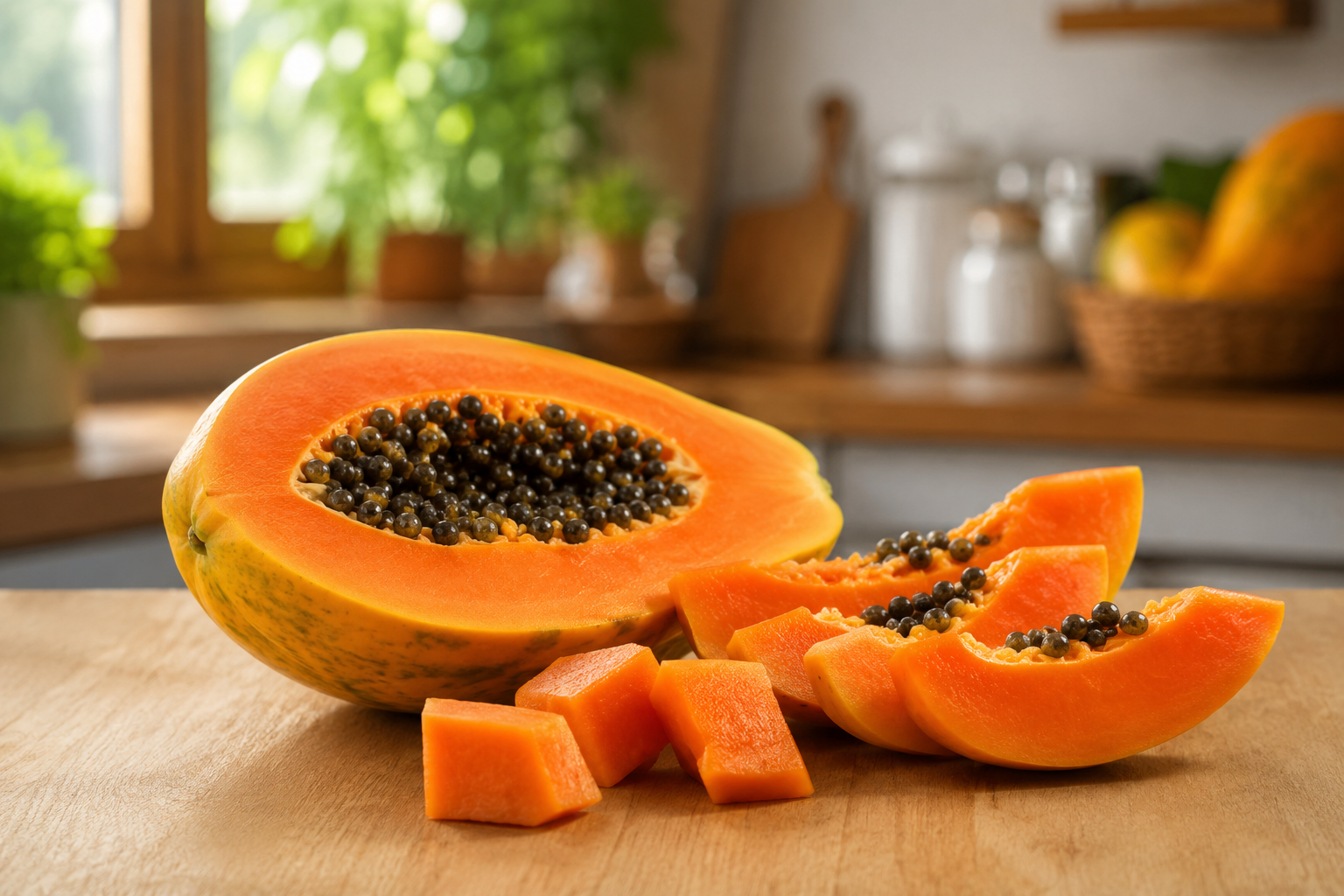
Papaya is a familiar fruit in many Indian homes, but its nutritional value is easy to overlook. It provides vitamin C, carotenoids and dietary fibre, while the fruit also contains enzymes such as papain. These components help explain why papaya is often discussed in connection with digestion and general nutrition.
At the same time, it is important to separate the ripe fruit we eat as food from concentrated preparations made from papaya leaves or unripe fruit. Evidence for one form cannot automatically be applied to another.
Table of Contents
What nutrients does papaya provide?
Papaya is a nutrient-dense fruit that can contribute vitamin C, carotenoids and dietary fibre to the diet. USDA research on tropical fruits has found papaya to be a strong source of vitamin C, with nutrient levels varying according to cultivar and ripeness.
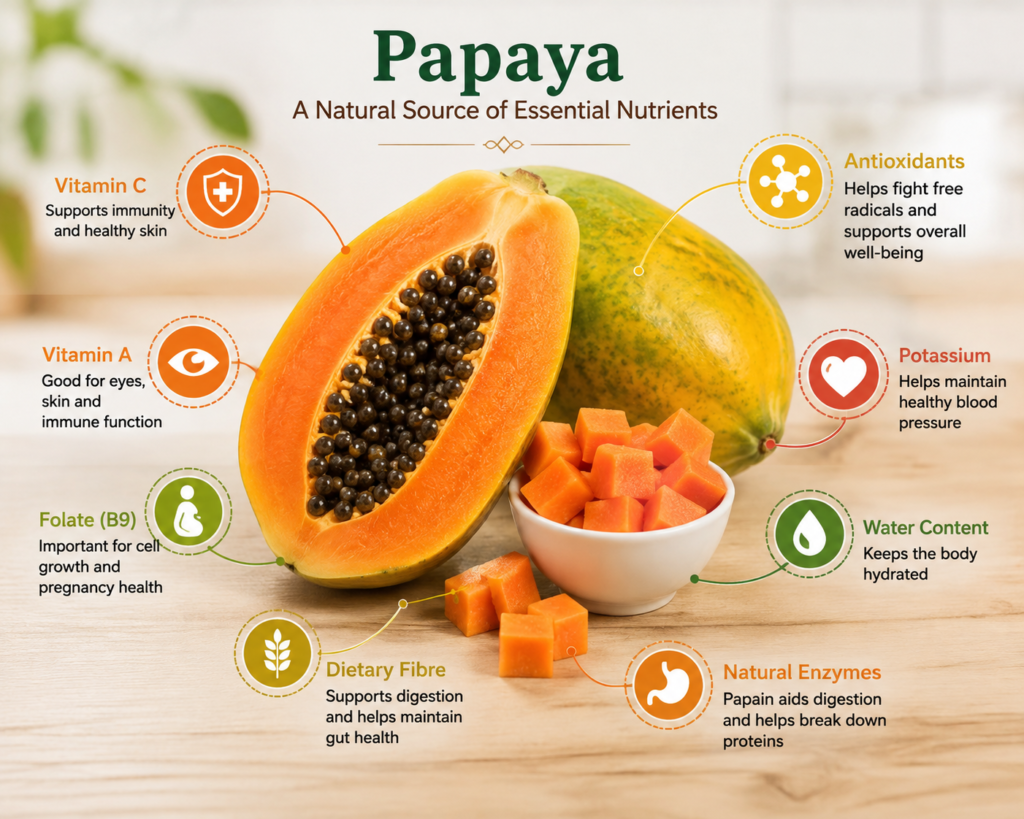
Vitamin C, which supports normal immune function and collagen formation.Carotenoids, including compounds that the body can use in vitamin A-related pathways.Dietary fibre, which contributes to normal digestive function.Naturally occurring plant compounds, including papain and other enzymes.
Can papaya support digestion?
Papaya is commonly associated with digestion partly because it contains papain, a protein-digesting enzyme. Laboratory research shows that papain can affect gastrointestinal motility, but that does not mean eating papaya will treat every digestive problem.
There is some human evidence for specific papaya preparations. In a small double-blind, placebo-controlled study, a papaya preparation called Caricol was associated with improvements in constipation and bloating. However, this was a particular preparation rather than proof that ordinary papaya cures digestive disorders.
For most people, the more useful way to think about papaya is as one fibre-containing fruit that can be part of a balanced diet—not as a replacement for medical treatment.
What about papaya and lifestyle diseases?
The transcript describes papaya as potentially helping people stay away from lifestyle-related diseases. That statement is too broad to present as a proven effect of eating papaya alone. A healthy diet containing a variety of fruits, vegetables and other nutrient-rich foods is associated with better overall nutrition, but no single fruit should be presented as a guaranteed way to prevent disease.
Papaya can therefore be included as part of a balanced eating pattern, but it should not replace prescribed medicines, medical care or other established measures for managing conditions such as diabetes, high blood pressure or digestive disease.
Is papaya leaf juice the same as eating papaya?
No. This distinction is particularly important. The concentration of plant compounds in a homemade leaf juice, standardized extract, tablet or other preparation can differ substantially from the amount present in ripe papaya fruit.
Research on papaya leaf extract has mainly focused on specific medical questions, including dengue-associated low platelet counts. A systematic review found signals of increased platelet counts in some studies, but also concluded that higher-quality and larger trials were still needed before firm treatment decisions could be made.
A later pilot randomized study also reported faster platelet recovery with a papaya leaf extract in adults with severe dengue-related thrombocytopenia, while the researchers emphasized the need for larger prospective studies.
That evidence does not mean homemade papaya leaf juice is a proven treatment for dengue. Anyone with dengue or suspected dengue should receive appropriate medical evaluation and follow medical advice.
What about unripe papaya?
Ripe papaya eaten as a fruit should not be confused with unripe papaya or concentrated papaya latex. Research has found that papaya latex contains proteolytic enzymes, and experimental work has raised particular safety questions about concentrated latex exposure during pregnancy.
The available evidence does not justify making a blanket claim that all papaya is unsafe during pregnancy. However, people who are pregnant should discuss medicinal preparations, concentrated extracts or large amounts of unripe papaya with a qualified healthcare professional rather than assuming that a food and a concentrated preparation have the same safety profile.
Who should be cautious with papaya?
People with a known papaya allergy should avoid it. Papaya allergy and cross-reactions with latex and kiwi have been reported.
People who are pregnant should seek professional advice before using papaya leaf products, concentrated extracts or preparations containing unripe papaya or latex.
Anyone considering papaya leaf extract for a medical condition should discuss it with a qualified healthcare professional.
People with persistent digestive symptoms should not use papaya as a substitute for diagnosis or treatment.
How can you include papaya in a normal diet?
For most people, the simplest approach is to eat ripe papaya as a fruit rather than turning it into a concentrated remedy. You can have it on its own, add it to a fruit bowl, or combine it with other foods in a balanced meal.
Choose ripe, fresh papaya and wash the outside before cutting.
Keep portions appropriate for your overall diet rather than assuming more is always better.
Prefer whole fruit over heavily sweetened papaya drinks or preparations.
Include a variety of fruits instead of relying on one fruit for all nutritional needs.
Papaya benefits: what is supported and what needs caution
| Claim or idea | What the evidence supports | How to interpret it |
| Nutrient-rich fruit | Papaya provides vitamin C, carotenoids and fibre. | Reasonable as part of a balanced diet. |
| Helps digestion | Some evidence exists for specific papaya preparations; papain has biological activity. | Do not treat digestive disease based on papaya alone. |
| Prevents lifestyle diseases | The transcript makes a broad claim, but this is not established for papaya alone. | Use balanced-diet language instead. |
| Papaya leaf raises platelets | Some dengue studies report platelet-count improvements, but evidence remains limited. | Not a substitute for medical dengue care. |
| Papaya leaf juice is equivalent to fruit | Not supported. | Different preparations can have different concentrations and risks. |
The bottom line
Papaya is a useful, nutrient-rich fruit that can fit comfortably into a balanced diet. Its vitamin C, carotenoids, fibre and naturally occurring enzymes help explain its nutritional appeal. Some research also suggests that specific papaya preparations may have effects on digestive symptoms or dengue-associated platelet counts, but those findings should not be stretched into claims that ordinary papaya or homemade leaf juice can prevent or treat diseases.
The safest takeaway is simple: enjoy ripe papaya as food, keep your diet varied, and treat concentrated papaya leaf or unripe-fruit preparations as something that may require professional guidance.
A simple reminder before you try a papaya remedy
If you are considering papaya leaf juice, extracts or another concentrated preparation for a medical purpose, talk to a qualified healthcare professional first. The concentration and composition can vary, and evidence for a medical preparation cannot automatically be transferred to the whole fruit.
Also Read:Brahmi Leaves Benefits

