


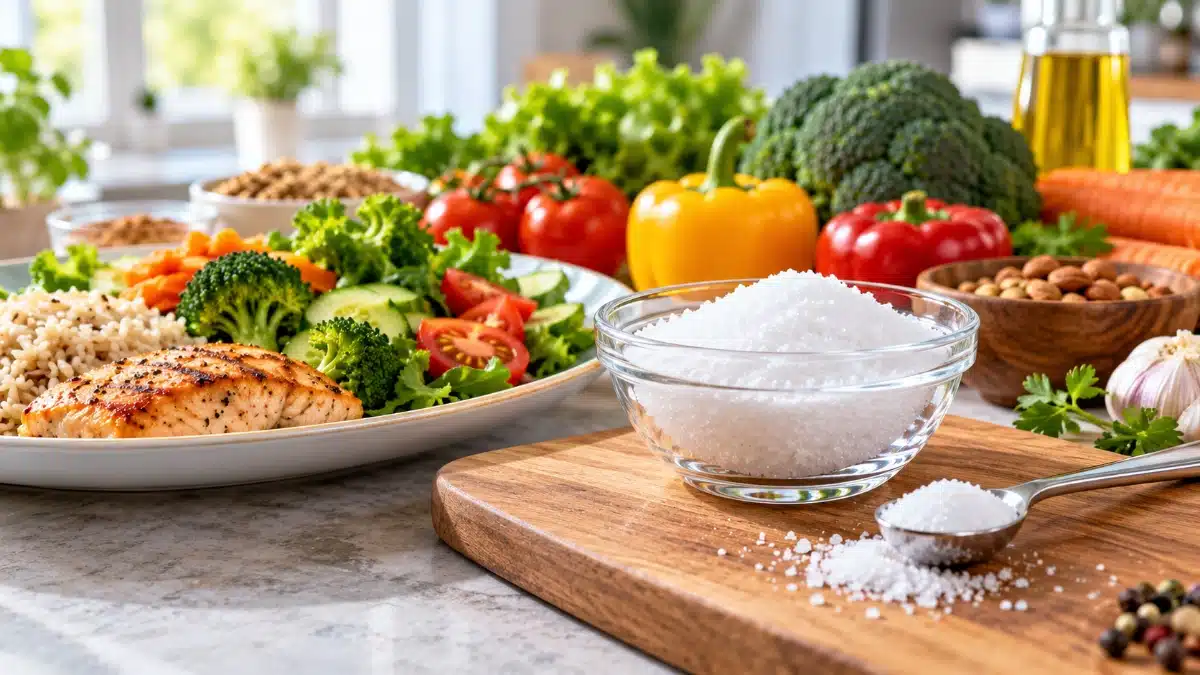
How Much Salt Is Good for Health? Salt is a common ingredient in everyday meals, but consuming too much can have negative effects on health. The World Health Organization recommends that adults consume less than 5 grams of salt per day, which is roughly equivalent to one teaspoon or less than 2,000 mg of sodium. Sodium itself is an essential nutrient that helps maintain fluid balance and supports normal nerve and muscle function. The key is to consume enough for the body’s needs without regularly exceeding the recommended limit, especially because much of the salt in our diets can come from processed and packaged foods.
Table of Contents
How Much Salt Is Good for Health?
For most adults, WHO recommends less than 5 grams of salt per day from all sources. This includes salt added while cooking or eating as well as sodium already present in packaged, prepared and restaurant foods.
It is important to understand the difference between salt and sodium. Salt is mainly sodium chloride, while sodium is one component of salt. WHO’s limit of 5 grams of salt corresponds to less than 2 grams of sodium.
The American Heart Association recommends that most adults consume no more than 2,300 mg of sodium per day, with an ideal limit of no more than 1,500 mg for most adults, particularly for people who need to lower blood pressure.
Is Salt Dangerous to Health?
Salt is not automatically dangerous. The concern is excessive salt or sodium consumption.
Your body needs some sodium for normal physiological functions, including maintaining fluid and blood volume and supporting nerve and muscle function. However, consuming too much sodium can raise blood pressure.
Over time, high blood pressure can increase the risk of cardiovascular problems, including heart disease and stroke. WHO identifies raised blood pressure as the main health effect associated with diets high in sodium.
Therefore, the goal is not necessarily to eliminate salt completely but to keep overall intake within recommended limits.
What Happens If You Eat Too Much Salt?
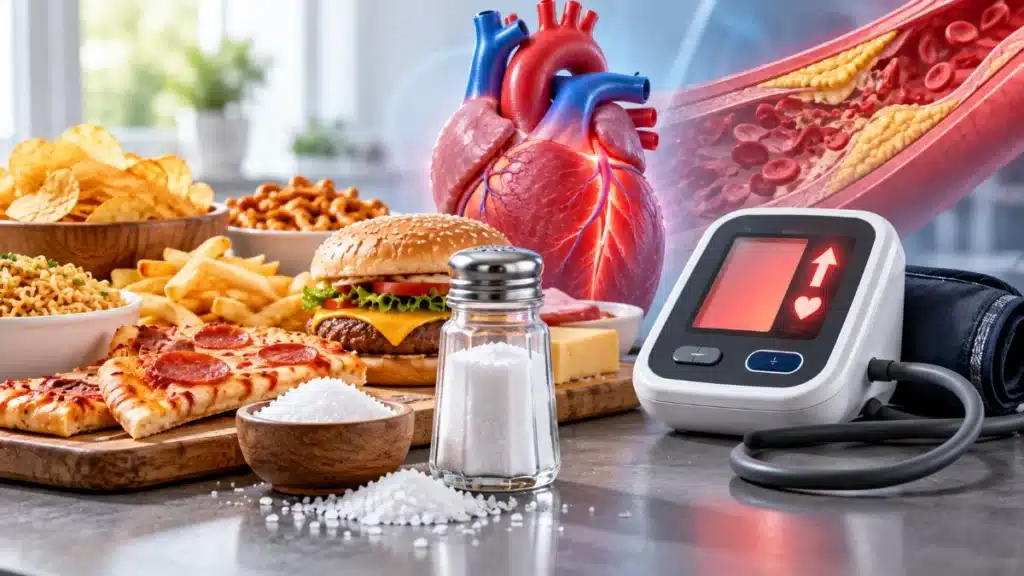
Regularly consuming excessive amounts of sodium can contribute to several health problems.
1. Higher Blood Pressure
One of the clearest health concerns associated with high sodium intake is increased blood pressure. Reducing sodium can help lower blood pressure, particularly in people with hypertension.
2. Increased Cardiovascular Risk
High blood pressure is an important risk factor for heart disease and stroke. Consequently, reducing excessive sodium intake can contribute to better cardiovascular health.
3. Kidney Concerns
High sodium intake can also be particularly important for people with kidney problems because sodium and fluid balance are closely connected to kidney function. People with kidney disease may have individual dietary requirements and should follow advice from their healthcare professional.
4. Other Health Risks
WHO reports associations between high sodium intake and several health conditions, including cardiovascular disease, kidney disease and other noncommunicable diseases.
Also Read:heart attack in young people Can Fit ,Young People Have a Heart Attack?
Where Does Most Salt Come From?

Many people think that most sodium comes from the salt shaker. However, a substantial amount can come from foods that already contain sodium.
Common sources include:
- Packaged and processed foods
- Restaurant meals
- Processed meats
- Bread and bakery products
- Sauces and condiments
- Instant noodles
- Packaged snacks
- Soup and stock products
- Cheese and other processed foods
The CDC notes that many foods that do not taste particularly salty can still contribute significant amounts of sodium to the diet.
How Can You Reduce Salt Intake?
You do not necessarily need to stop using salt completely. Small changes can help reduce overall sodium intake.
Read Food Labels
Check the sodium amount on packaged foods. Remember that the sodium listed is usually provided per serving, so check how many servings you actually eat.
Reduce Processed Foods
Eating more minimally processed foods can help reduce sodium intake because many packaged and prepared foods contain added sodium.
Use Less Salt While Cooking
Gradually reducing the amount of salt added during cooking can help your taste preferences adapt over time.
Be Careful With Sauces and Condiments
Sauces, seasoning mixes and other condiments can contribute significant amounts of sodium. Using smaller quantities can help control total intake.
Choose Fresh Foods More Often
Fresh fruits, vegetables and other minimally processed foods are useful components of a healthy eating pattern and can make it easier to control sodium intake.
Is Sea Salt Healthier Than Table Salt?
Switching from ordinary table salt to sea salt does not automatically make a high-salt diet healthy.
Different types of salt can have differences in texture and mineral content, but the important consideration for sodium intake is the total amount consumed. The American Heart Association notes that different salt varieties do not remove the need to follow recommended sodium limits.
WHO also recommends that salt used in the diet be iodized, because iodine is an essential nutrient.
What About Low-Sodium Salt Substitutes?
Some lower-sodium salt substitutes replace part of the sodium chloride with potassium chloride.
WHO published a guideline on lower-sodium salt substitutes in 2025 as part of its efforts to reduce sodium consumption and hypertension-related health risks.
However, potassium-containing salt substitutes are not suitable for everyone. People with certain kidney conditions or other medical issues, or people taking medications that affect potassium levels, may need medical advice before using them.
How Much Salt Should Children Eat?
Children generally need less salt than adults. WHO recommends adjusting the adult sodium recommendation downward for children aged 2–15 years according to their energy requirements.
Also Read:World Health Organization
Parents should therefore avoid routinely giving children highly salty processed foods and should pay attention to sodium levels in packaged foods.
How Much Salt Is Good for Health Every Day?
For a typical adult, the key figure to remember is:
Less than 5 grams of salt per day, according to WHO. This is equivalent to less than 2,000 mg of sodium.
This is a limit for total daily intake, not simply the amount of salt added from a salt shaker.
Frequently Asked Questions
How much salt is good for health each day?
WHO recommends that adults consume less than 5 grams of salt per day, equivalent to less than 2,000 mg of sodium.
Is eating salt every day unhealthy?
Not necessarily. Sodium is an essential nutrient. The health concern is consuming excessive amounts of salt or sodium regularly.
Can too much salt increase blood pressure?
Yes. Excessive sodium intake can raise blood pressure, which can increase the risk of heart disease and stroke.
Is one teaspoon of salt a day safe?
WHO’s adult recommendation is less than 5 grams of salt per day, approximately one level teaspoon. This includes salt from all dietary sources, not only salt added during cooking. World Health
Is sea salt healthier than normal salt?
Sea salt is not automatically healthier simply because it is sea salt. The total sodium consumed remains important.
What foods are high in sodium?
Processed and packaged foods, restaurant meals, sauces, processed meats, snacks and other prepared foods can contain substantial amounts of sodium.
Should everyone completely stop eating salt?
No. Sodium is an essential nutrient. The goal is to avoid excessive intake and stay within recommended limits. CDC
Conclusion
So, how much salt is good for health? For adults, WHO recommends less than 5 grams of salt per day, equivalent to less than 2,000 mg of sodium.
Salt does not need to be treated as completely harmful. The important issue is the amount consumed. Regularly eating too much sodium can raise blood pressure and increase cardiovascular risk.
Checking food labels, reducing highly processed foods, using less added salt and paying attention to sauces and packaged foods can help keep daily sodium intake under control.


[…] How Much Salt Is Good for… […]