



heart attack in young people,A practical guide to heart attacks, hidden risk factors, symptoms, prevention and the difference between heart attack and cardiac arrest
Can a Fit Young Person Still Have a Heart Attack?
A person can run, exercise regularly, maintain a healthy weight and still have cardiovascular risk. That does not mean exercise or a healthy lifestyle is useless. In fact, regular physical activity, a balanced diet, not smoking, healthy blood pressure and good cholesterol control are among the most important ways to reduce cardiovascular risk. The key point is that fitness is only one part of the picture.
A case described in the source transcript illustrates the concern: a young, active software professional and marathon runner was reportedly diagnosed with a severe coronary blockage despite having no obvious lifestyle-related risk factors. The lesson is not that fit people should fear exercise. It is that some cardiovascular risks can remain hidden, particularly when genetics, cholesterol-related factors or family history are involved.
Cardiovascular disease remains a major health problem in India. WHO identifies cardiovascular disease as a leading cause of death, and ischemic heart disease was the leading cause of death in its India estimates for 2021.
What Exactly Is a Heart Attack?

A heart attack, medically called a myocardial infarction, happens when blood flow to part of the heart muscle is blocked or severely reduced. Because the heart muscle needs a continuous supply of oxygen-rich blood, prolonged interruption of that supply can damage or kill heart muscle.
The heart has four chambers: the right atrium, right ventricle, left atrium and left ventricle. The right side sends oxygen-poor blood to the lungs, while the left side pumps oxygen-rich blood to the rest of the body. But the heart muscle itself also needs its own blood supply. That supply comes through the coronary arteries.
How Do the Coronary Arteries Supply the Heart?
The coronary arteries branch from the aorta and deliver oxygen-rich blood to the heart muscle. They form a network around the heart, which is why the term ‘coronary’ is used.
If a coronary artery becomes severely narrowed or suddenly blocked, the area of heart muscle supplied by that artery may not receive enough oxygen. The longer the interruption continues, the greater the potential damage. This is why rapid medical treatment matters so much during a suspected heart attack.
Why Can a Heart Attack Happen to Someone Who Looks Fit?
Being physically fit does not guarantee that every cardiovascular risk factor is normal. A person may look healthy on the outside while having a genetic or metabolic risk that is not obvious from appearance or exercise performance.
1. Genetics and Family History
Some people inherit a higher tendency toward cardiovascular disease. Family history of premature heart disease can be an important warning sign, even when a person exercises and eats reasonably well.
2. Lipoprotein(a) Can Be Hidden
Lipoprotein(a), or Lp(a), is a cholesterol-carrying lipoprotein whose level is largely inherited. Elevated Lp(a) can increase the risk of heart disease and stroke, and it usually causes no symptoms. The American Heart Association says an Lp(a) level of 125 nmol/L or higher can increase cardiovascular risk and recommends that adults have the level measured at least once. citeturn0search5turn0search1
This is one reason a routine cholesterol report does not always tell the whole story. A standard lipid panel does not include Lp(a), so a person can have a seemingly reassuring routine cholesterol result while still having an inherited risk factor that deserves medical attention.
3. High Blood Pressure
High blood pressure can damage the inner lining of blood vessels over time and is a major cardiovascular risk factor. It may produce no obvious symptoms, which is why checking blood pressure is important even for people who feel healthy. WHO describes raised blood pressure as one of the most important risk factors for cardiovascular disease.
4. Diabetes and High Blood Sugar
Diabetes can damage blood vessels and substantially increase cardiovascular risk. Blood sugar control is therefore part of heart-health management, not just a concern for people who already have heart disease.
5. Smoking and Tobacco Exposure
Smoking damages blood vessels and increases cardiovascular risk. Quitting smoking is one of the most effective steps a smoker can take to reduce that risk.
6. Unhealthy Diet, Excess Weight and Physical Inactivity
Diets high in saturated fat, trans fat, excess salt and added sugars, along with obesity and physical inactivity, can contribute to cardiovascular risk. However, the presence of these risks is not a reason to conclude that every heart attack is caused by lifestyle. Cardiovascular disease is multifactorial.
What Happens Inside a Coronary Artery?
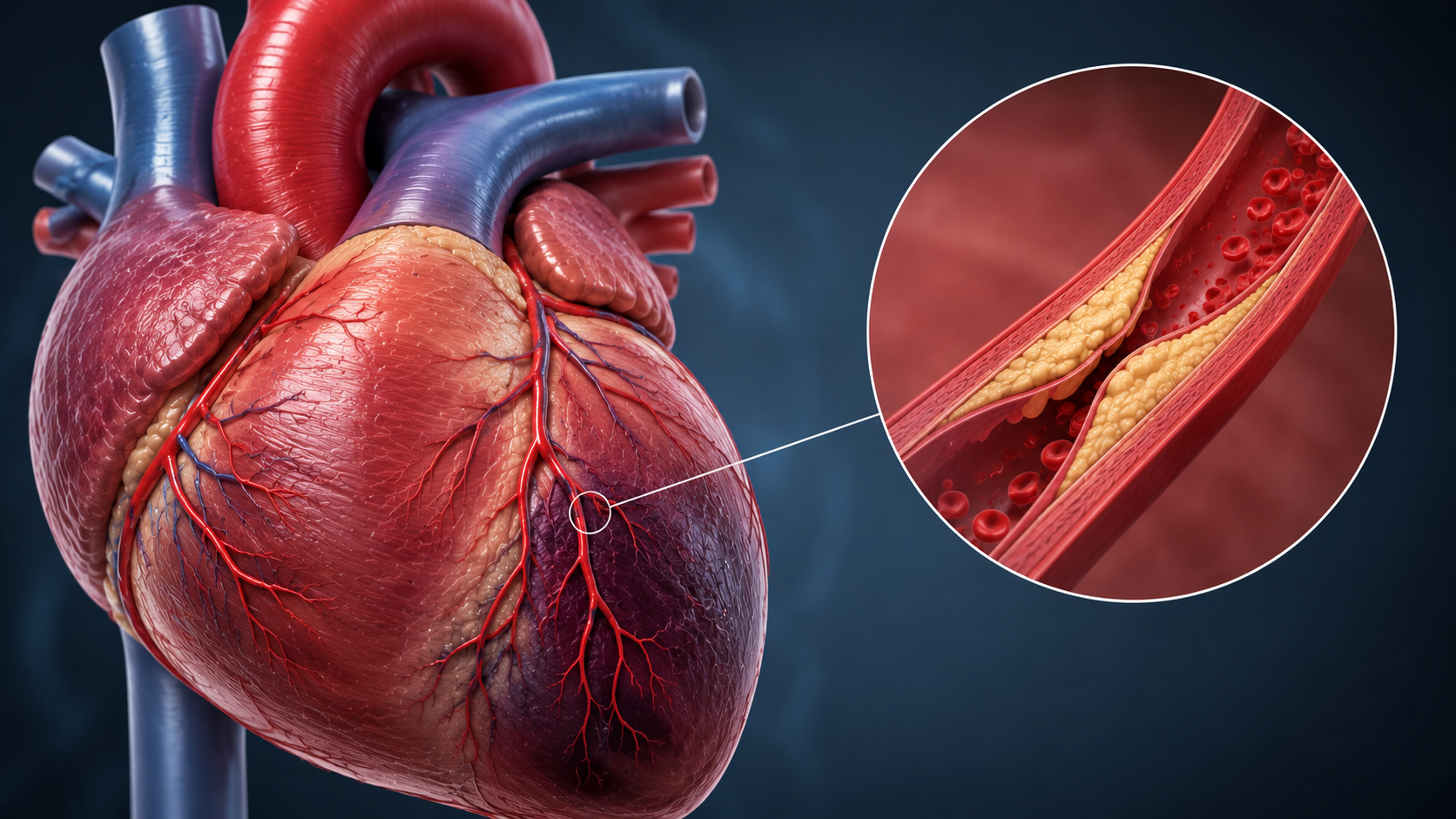
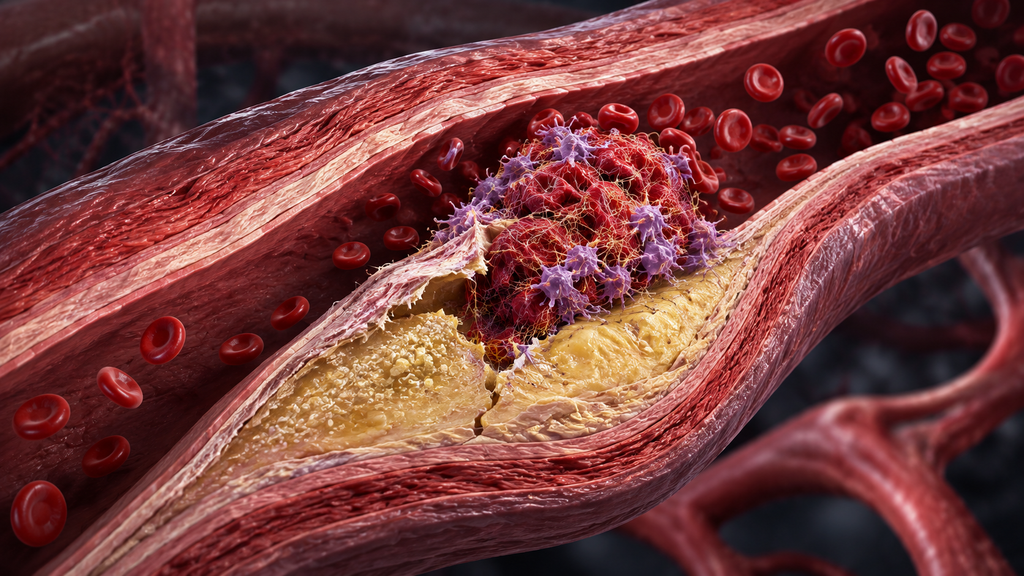
Atherosclerosis develops over time when cholesterol-containing particles and other substances accumulate in the artery wall. The process involves inflammation and the formation of plaque. As plaque grows, it can narrow the artery.
Importantly, a heart attack does not always require a long-standing artery blockage that has gradually reached a very high percentage. A plaque can become unstable, rupture or erode, and trigger a blood clot that suddenly obstructs blood flow. The European Society of Cardiology notes that many myocardial infarctions originate from lesions that were not previously critically narrowed but later became complicated by plaque rupture or erosion and thrombosis.
STEMI and Non-STEMI: What Is the Difference?
Doctors classify acute coronary syndromes using the ECG, symptoms, blood tests and other findings. Two major heart-attack categories are STEMI (ST-elevation myocardial infarction) and non-STEMI.
A STEMI usually reflects a complete or near-complete acute coronary occlusion and requires urgent reperfusion treatment. A non-STEMI is also a heart attack, but it does not show the same ST-elevation pattern on the ECG and the coronary obstruction may be partial or otherwise different. Both are medical emergencies. Current American Heart Association guidance describes STEMI and non-STEMI as two types of heart attack.
What Is a ‘Widowmaker’ Heart Attack?
The term ‘widowmaker’ is an informal expression often used for a severe blockage involving the left anterior descending (LAD) coronary artery, especially when a large portion of the heart is at risk. It is not a separate official medical category of heart attack. The seriousness depends on the exact location and severity of the blockage, the area of heart muscle affected and how quickly blood flow is restored.
Heart Attack vs Cardiac Arrest: They Are Not the Same
These terms are often confused, but they describe different emergencies.
| Heart attack | Cardiac arrest | Key difference |
| Blood-flow problem | Electrical/pumping problem | A heart attack is caused by blocked blood flow to heart muscle; cardiac arrest occurs when the heart suddenly stops pumping effectively. |
| Heart usually continues beating | Person becomes unresponsive and is not breathing normally | Cardiac arrest requires immediate CPR and, when available, an AED. |
| Can cause cardiac arrest | Can have several causes | A heart attack can trigger a dangerous rhythm and lead to cardiac arrest, but the two are not interchangeable. |
The American Heart Association emphasizes that a heart attack is primarily a circulation problem, while cardiac arrest is an electrical problem. A heart attack can sometimes lead to cardiac arrest. citeturn0search0turn0search3
What Are the Warning Signs of a Heart Attack?
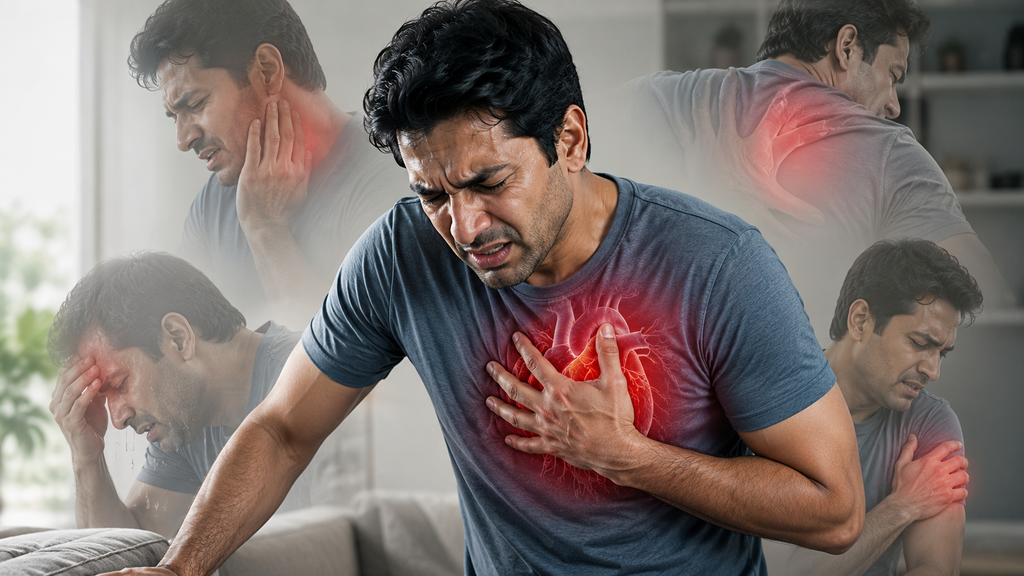
Symptoms can vary. Some heart attacks begin suddenly and intensely, while others start with milder discomfort. Possible warning signs include:
- Pressure, squeezing, fullness or pain in the centre of the chest
- Pain or discomfort in one or both arms
- Pain or discomfort in the back, neck, jaw or upper stomach
- Shortness of breath, with or without chest discomfort
- Cold sweating
- Nausea or vomiting
- Light-headedness or unusual weakness
Women, people with diabetes and some older adults may experience less typical symptoms, such as breathlessness, nausea, back or jaw discomfort, sweating or light-headedness. Do not assume that chest symptoms are simply acidity or indigestion when the symptoms are unusual, severe, persistent or associated with breathlessness or sweating.
What Should You Do If You Suspect a Heart Attack?
- Treat the situation as an emergency and activate local emergency medical services immediately.
- Do not wait to see whether the symptoms disappear.
- If possible, use an ambulance rather than arranging a private vehicle, because emergency medical teams can begin care during transport.
- Follow the emergency team’s instructions while waiting.
- Aspirin may be appropriate for some alert adults with suspected heart attack, but it is not suitable for everyone. Allergy, bleeding risk and prior medical advice matter; if there is uncertainty, wait for medical guidance.
The American Heart Association recommends activating emergency medical services for suspected heart attack. Its first-aid guidance says an alert adult with non-traumatic chest pain may be encouraged to chew and swallow aspirin 162–325 mg unless they have an aspirin allergy or have been advised not to take it by a healthcare professional. If there is uncertainty about aspirin, waiting for EMS is reasonable.
When Is CPR Needed?
CPR is primarily used when a person is in cardiac arrest — meaning they are unresponsive and not breathing normally. It is not a routine treatment for a person who is conscious and experiencing a heart attack while the heart is still pumping.
If someone suddenly collapses, does not respond and is not breathing normally, call emergency services, begin CPR and use an AED as soon as one is available. Rapid CPR and defibrillation can be lifesaving in cardiac arrest.
How Is a Heart Attack Diagnosed and Treated?
Doctors may use an ECG, cardiac blood tests such as troponin, echocardiography and coronary angiography. Depending on the situation, CT or cardiac MRI may also be used. The exact tests depend on symptoms, examination and clinical risk. citeturn0search11
Treatment aims to restore or improve blood flow to the heart and prevent further clotting or damage. Depending on the type and severity of the heart attack, treatment can include medicines, urgent coronary intervention such as angioplasty and stent placement, or coronary artery bypass surgery. The appropriate approach is decided by the treating medical team.
Can Exercise Prevent Heart Attacks?
Regular physical activity is strongly associated with better cardiovascular health and is an important part of prevention. But exercise should not be treated as a guarantee against heart attack.
The practical goal is not to choose between exercise and medical check-ups. It is to combine healthy habits with awareness of personal risk. A person who exercises regularly can still benefit from knowing their blood pressure, cholesterol profile, blood sugar status and family history. For people with a strong family history or other risk factors, a healthcare professional may recommend additional assessment, including Lp(a) testing.
How to Reduce Your Heart Attack Risk

- Do not smoke or use tobacco; if you smoke, seek help to quit.
- Stay physically active according to your age, fitness and medical condition.
- Eat a balanced diet rich in vegetables, fruits, whole grains, legumes and other minimally processed foods.
- Limit excess saturated fat, trans fat, salt, added sugar and highly processed foods.
- Maintain a healthy weight where appropriate.
- Check and manage blood pressure.
- Check cholesterol and blood sugar when medically appropriate.
- Limit alcohol or avoid it, particularly if a healthcare professional has advised you not to drink.
- Know your family history of premature heart disease.
- Discuss additional risk assessment with a healthcare professional if you have a strong family history or other cardiovascular risk factors.
Does a Normal Cholesterol Report Mean You Are Completely Safe?
No single test gives a complete picture of cardiovascular risk. LDL cholesterol is important, but risk is influenced by multiple factors, including age, blood pressure, diabetes, smoking, family history and inherited markers such as Lp(a). The American Heart Association’s 2026 dyslipidemia guidance recommends measuring Lp(a) at least once to identify people with elevated inherited risk. citeturn0search1
This does not mean everyone needs every possible heart test. Screening should be individualized. More testing is not automatically better; the right question is which assessment is appropriate for a person’s age, history and risk profile.
The Biggest Lesson: Fitness Is Valuable, but It Is Not a Guarantee
The story of a fit young person experiencing a heart attack can create two opposite mistakes. One is to think, ‘If even a marathon runner can have a heart attack, exercise is pointless.’ That conclusion is wrong. The other is to think, ‘I exercise, so I cannot have heart disease.’ That conclusion is also wrong.
Exercise, healthy food, avoiding tobacco and managing blood pressure, cholesterol and diabetes can reduce cardiovascular risk. At the same time, genetics and less visible risk factors can influence an individual’s baseline risk.
For South Asians, earlier cardiovascular disease is a well-recognized concern. The Indian Heart Association reports that heart attacks in Indian men often occur at younger ages, including its widely cited estimate that about half occur before age 50 and a quarter before age 40. These figures come from the association’s own materials and should be understood as population-level observations rather than a prediction for any individual.
When Should You See a Doctor?
Do not self-diagnose a heart problem from an article or a video. Seek medical attention for new, unexplained or recurring chest discomfort, unusual breathlessness, fainting, unexplained marked fatigue, palpitations or other symptoms that concern you.
If symptoms suggest a heart attack — especially chest pressure or discomfort with breathlessness, sweating, nausea, light-headedness or pain spreading to the arm, back, neck or jaw — treat it as an emergency rather than waiting for a routine appointment.
Conclusion
A heart attack in a young or physically fit person is a reminder that cardiovascular health is more complicated than body weight or gym performance. Coronary artery disease can involve lifestyle factors, blood pressure, diabetes, cholesterol, smoking, family history and inherited factors such as Lp(a).
The right response is not fear of exercise. It is a balanced approach: stay active, eat well, avoid tobacco, manage known risk factors, understand your family history and seek medical help quickly when warning signs appear.
If you found this explanation useful, share it with family and friends. Awareness of heart-attack symptoms and the difference between heart attack and cardiac arrest can help people act faster when every minute matters.
Medical Disclaimer
This article is for general information and awareness only. It is not a diagnosis or a substitute for medical advice, examination or treatment. If you have symptoms of a possible heart attack or cardiac arrest, seek emergency medical care immediately. Do not start, stop or change medicines based solely on this article.
Sources
- World Health Organization — Cardiovascular diseases / India cardiovascular disease information.
- American Heart Association — What Is a Heart Attack?
- American Heart Association — What Is Cardiac Arrest?
- American Heart Association — Warning Signs of a Heart Attack.
- American Heart Association — 2025 Acute Coronary Syndromes patient guidance.
- American Heart Association — 2026 Guideline on the Management of Dyslipidemia.
- American Heart Association — Lipoprotein(a).
- European Society of Cardiology — 2023 Acute Coronary Syndromes Guideline and 2026 plaque update.
- Indian Heart Association — Overview of heart disease risk among Indians.

