



Introduction
Toxic Pre-Release Business Explained
Yash’s Toxic: A Fairy Tale for Grown-Ups is reaching theatres on August 26, 2026, with unusually strong pre-release attention. The film’s advance booking had already crossed ₹30 crore in domestic gross by August 24, while later reports put the total at more than 9 lakh tickets and over ₹41 crore by the morning of August 25. Karnataka has been the strongest market in the advance-sales picture.
At the same time, a much larger figure has been circulating around the film: nearly ₹600 crore in pre-release business. That number needs an important qualification. It is not the same thing as ₹600 crore in box-office collections. It refers to a reported pre-release business figure cited by producer G. Dhananjayan, covering the broader commercial value of rights and deals associated with the film. It should therefore not be presented as audited theatrical revenue.
The bigger lesson is useful beyond Toxic: a large film can generate business before the first ticket is scanned. Distribution rights, digital and television rights, music, overseas business and other commercial arrangements can all form part of a film’s overall revenue model.
What Does Toxic’s Pre-Release Business Actually Mean?
The most important distinction is between advance ticket sales and pre-release business. Advance booking is money generated from tickets sold before the theatrical release. Pre-release business is a much broader industry term that can include the value of rights sold, territory agreements and other commercial arrangements made before release.
So when reports say Toxic has done close to ₹600 crore in pre-release business, readers should not interpret that as the film having already collected ₹600 crore from audiences. The ₹600-crore figure was publicly attributed to producer G. Dhananjayan in March 2026. The exact underlying deal-by-deal breakup has not been publicly established in a way that would justify treating every component as confirmed revenue.
Toxic Advance Booking: What the Latest Numbers Show

Advance booking is a more directly measurable part of the story. India Today reported that Toxic had crossed ₹30 crore in domestic advance bookings from around six lakh tickets by August 24. By the morning of August 25, another report placed the total at about 9.07 lakh tickets and more than ₹41 crore across languages and markets. These figures can move quickly as additional shows open, so they should always be treated as time-stamped trade estimates rather than a final box-office result.
| Measure | Reported figure | What it means |
| Domestic advance booking by Aug. 24 | ₹30+ crore; about 6 lakh tickets | Pre-release ticket sales reported before the final booking window |
| Reported total by Aug. 25 morning | 9.07 lakh tickets; ₹41+ crore | A later time-stamped estimate including multiple languages/markets |
| Reported pre-release business claim | Nearly ₹600 crore | Broader pre-release business claim, not theatrical box-office collection |
Why Is Toxic Getting Strong Pre-Release Demand?
One reason is Yash’s established nationwide visibility after the KGF films. But the film’s commercial positioning has also been described as a deliberately pan-India strategy rather than a plan based only on one star.
G. Dhananjayan specifically pointed to the use of recognisable actors from different regional markets. The cast includes Nayanthara, Rukmini Vasanth, Tovino Thomas and Hindi-film names such as Kiara Advani and Huma Qureshi. The business logic is straightforward: a familiar face can reduce the perceived market risk for audiences and distributors in that actor’s strongest territory.
This does not guarantee a hit. It simply helps a film build awareness and commercial confidence across multiple markets before release.
How Do Movies Make Money Before Release?
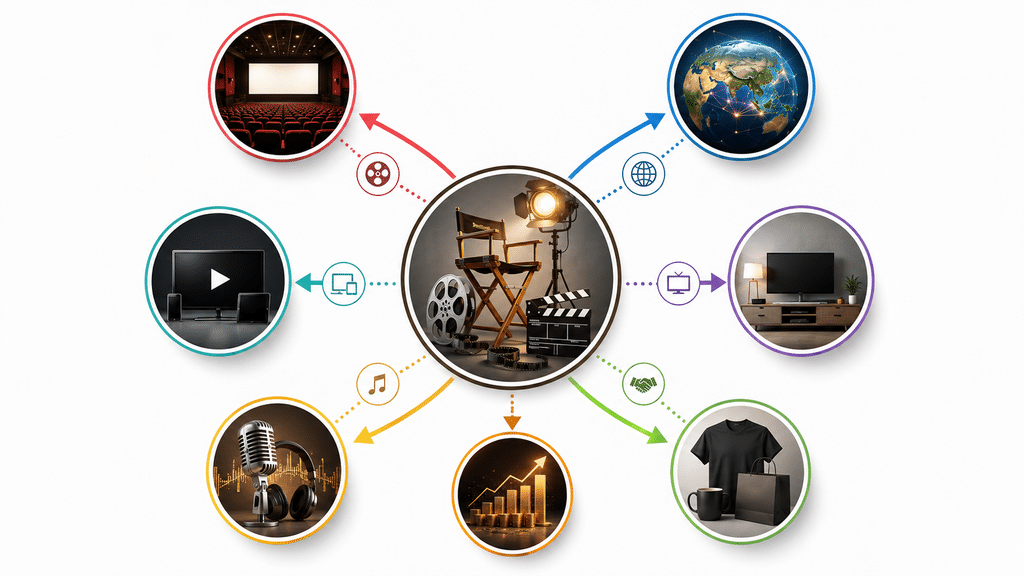
A film does not have to wait for opening day to start generating commercial value. The main routes can include:
Theatrical distribution rights: distributors can acquire rights to release a film in particular territories or under particular commercial arrangements.
Overseas rights: international theatrical distribution can be sold or structured separately from domestic business.
Digital or OTT rights: a streaming platform may acquire post-theatrical streaming rights, although the timing and terms vary by film.
Satellite or television rights: television networks can acquire broadcast rights for later use.
Music rights: music labels may acquire rights to distribute and monetise a film’s songs.
Brand and promotional partnerships: some films enter commercial arrangements with brands, subject to the specific contract.
Not every film uses every route in the same way, and rights may be sold, licensed, shared or retained depending on the producer’s strategy. Reported trade figures should therefore be read as deal values or industry estimates unless the producers or rights holders disclose a confirmed figure.
Theatrical Distribution: Where Does the Ticket Money Go?
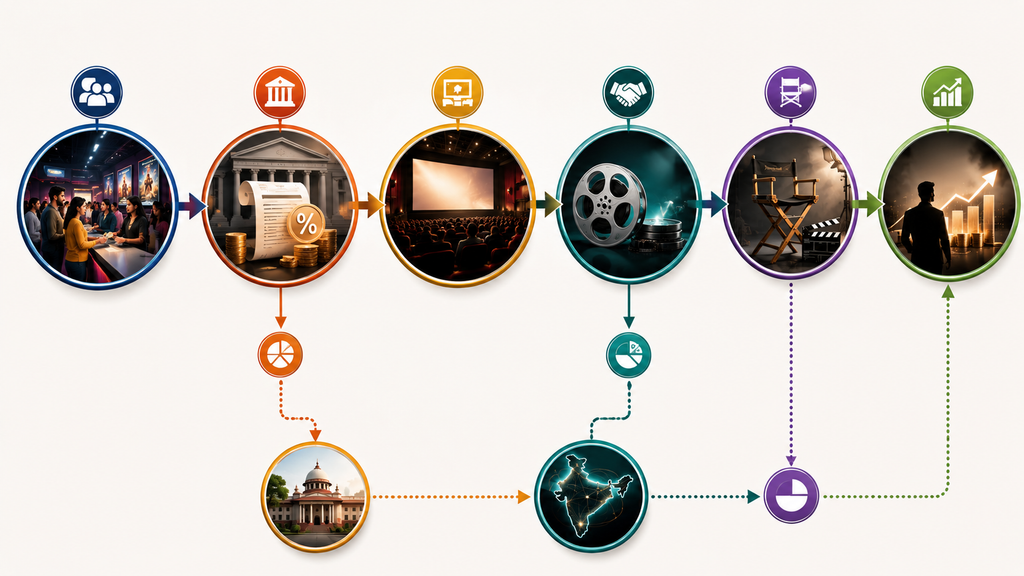
A common misunderstanding is that if a film records ₹100 crore at the box office, the producer receives the full ₹100 crore. That is not how theatrical revenue works.
The amount paid by the audience first includes applicable taxes and then moves through the commercial chain involving exhibitors and distributors. The exact sharing formula depends on the contract, territory, type of cinema and week of release. Multiplex and single-screen arrangements can differ, and a film may also be released through different distribution structures in different territories.
In some arrangements, a distributor pays the producer an agreed amount or minimum guarantee for rights. The distributor then takes the theatrical risk in that territory. In other arrangements, the producer may appoint a distributor or release the film through a commission-based model, with revenue sharing determined by the agreement.
What Happens After the Distributor Recovers the Investment?
This is where the distinction between gross collection, distributor share and producer revenue becomes important. A film can have a large reported gross but still produce very different financial outcomes for the producer, distributor and exhibitor.
If the commercial agreement includes profit sharing after a distributor recovers an agreed investment, additional money can flow according to that contract. There is no single percentage that applies to every film, every theatre and every territory.
OTT, TV and Music Rights: Why They Matter
Non-theatrical rights can become a major part of a big film’s financial plan. Streaming platforms may acquire digital rights, television networks may acquire satellite rights, and music companies can acquire music rights.
However, reports about Toxic’s OTT and satellite deals have changed over time. As of August 2026, public trade reporting indicated that its OTT and satellite rights were still being negotiated, so earlier speculative figures about specific streaming offers should not be treated as confirmed deals.
That is an important example of why a reported price tag should not automatically be described as money already received by the producer.
Why Overseas Business Is Important for Pan-India Films
A large Indian film can also build substantial commercial value outside India. Overseas theatrical rights and ticket sales in markets such as North America, the Gulf, the United Kingdom and other regions can form an important part of the overall business.
For a film positioned as a global or pan-India release, international distribution is therefore another part of the financial picture. But, again, a territory deal and a final box-office collection are different measurements.
A Simple Example of the Film Business Model
Imagine a fictional film that has the following pre-release arrangements: domestic distribution rights are sold to several territory partners, overseas rights are structured separately, a streaming deal is completed, a TV network buys broadcast rights and a music label acquires the songs. The film can therefore have substantial commercial value before the first day’s box-office collection is counted.
After release, ticket sales create another layer of revenue. That money is then distributed through the theatrical chain according to taxes, territory arrangements and contracts. This is why a headline saying “₹100 crore box office” does not mean “₹100 crore profit for the producer.”
Does ₹600 Crore in Pre-Release Business Mean Toxic Is Already a Blockbuster?
No. A reported pre-release business figure and a film’s final box-office performance are separate questions.
The nearly ₹600-crore figure is a reported pre-release business claim attributed to producer G. Dhananjayan. It is useful for understanding the scale of commercial expectations around Toxic, but it does not prove that the film has already earned ₹600 crore in theatrical revenue or profit.
The more meaningful test will come after release, when the film’s actual theatrical performance, distributor economics and other rights income can be assessed together.
The Bigger Lesson: A Film Is Also a Business Model
Toxic’s pre-release story shows why movie economics cannot be understood from a single box-office number. A major film can create value through several connected channels: theatrical distribution, overseas business, digital rights, television, music and other commercial arrangements.
At the same time, reported numbers need context. Advance ticket sales are not the same as final box-office collections, and pre-release business is not automatically the same as profit. Understanding these distinctions makes it much easier to interpret the big numbers that appear around major film releases.
Conclusion
Toxic is entering its August 26 release with strong advance-booking momentum and significant industry attention. The film’s reported pre-release business has also highlighted a broader truth about modern Indian cinema: large movies can generate commercial value through multiple rights and distribution channels before theatrical release.
The key takeaway is simple: when you see a headline about a film earning hundreds of crores before release, first ask what the number actually measures—advance tickets, a rights deal, pre-release business, box-office gross, distributor share or profit. Those figures are not interchangeable.

