


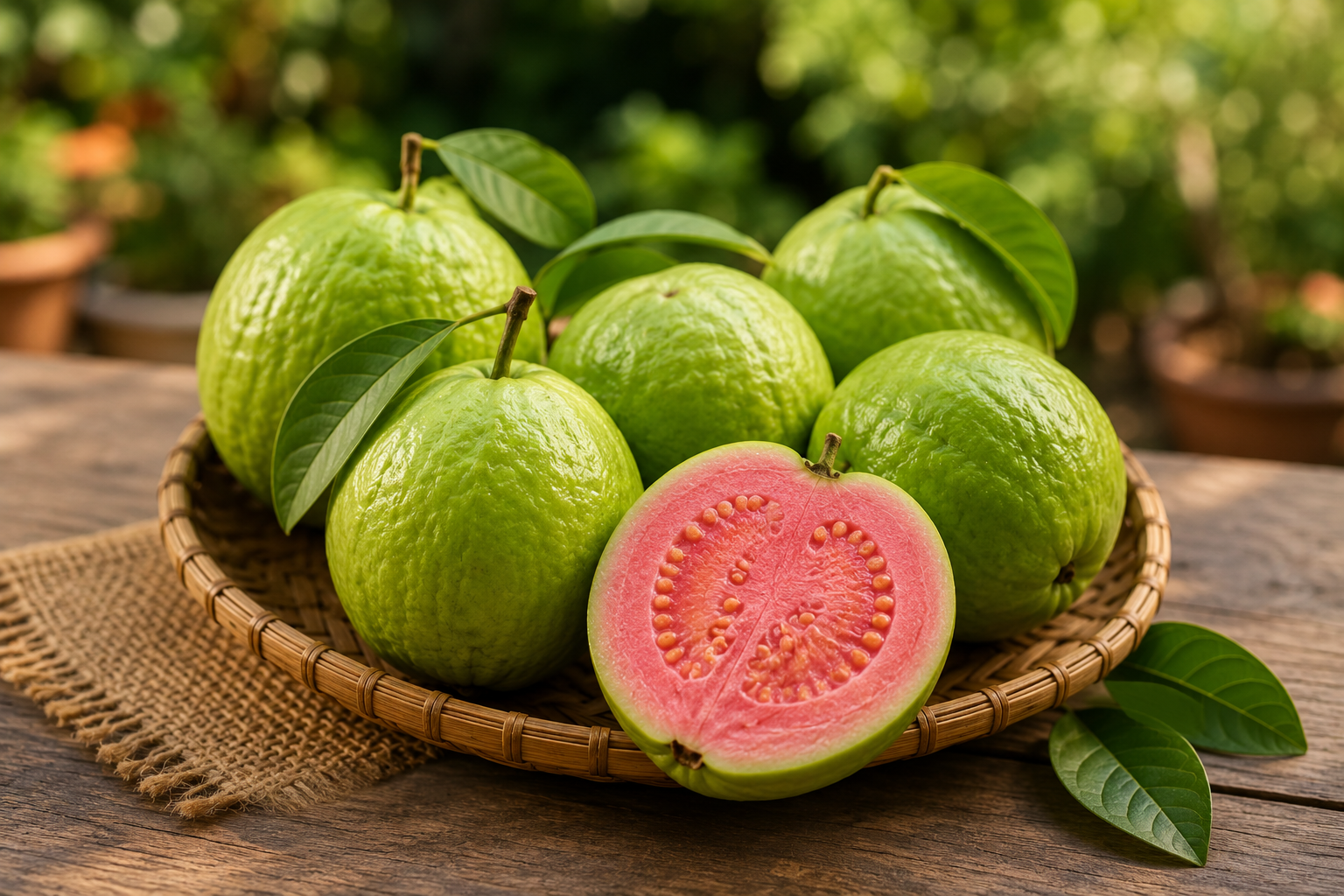
Guava Benefits : Guava is one of those fruits that is easy to overlook because it is inexpensive and widely available. But its nutritional profile makes it a valuable addition to a balanced diet. It provides vitamin C, dietary fiber, potassium and other micronutrients, while pink-fleshed varieties also contain carotenoids such as lycopene.
Why guava deserves a place in your diet
The common guava (Psidium guajava) belongs to the Myrtaceae family. Although it is not originally from India, the fruit has become widely cultivated and naturalized in tropical and subtropical regions, including India. Its popularity is easy to understand: the fruit is relatively affordable, versatile and nutrient-dense.
The idea that guava is simply a cheap alternative to imported fruits misses the bigger point. Different fruits provide different nutrients and plant compounds, so guava should not be treated as a direct replacement for every other fruit. Its real strength is the combination of vitamin C, fiber, potassium and other nutrients in a familiar fruit.
Guava nutrition: what 100 grams provides
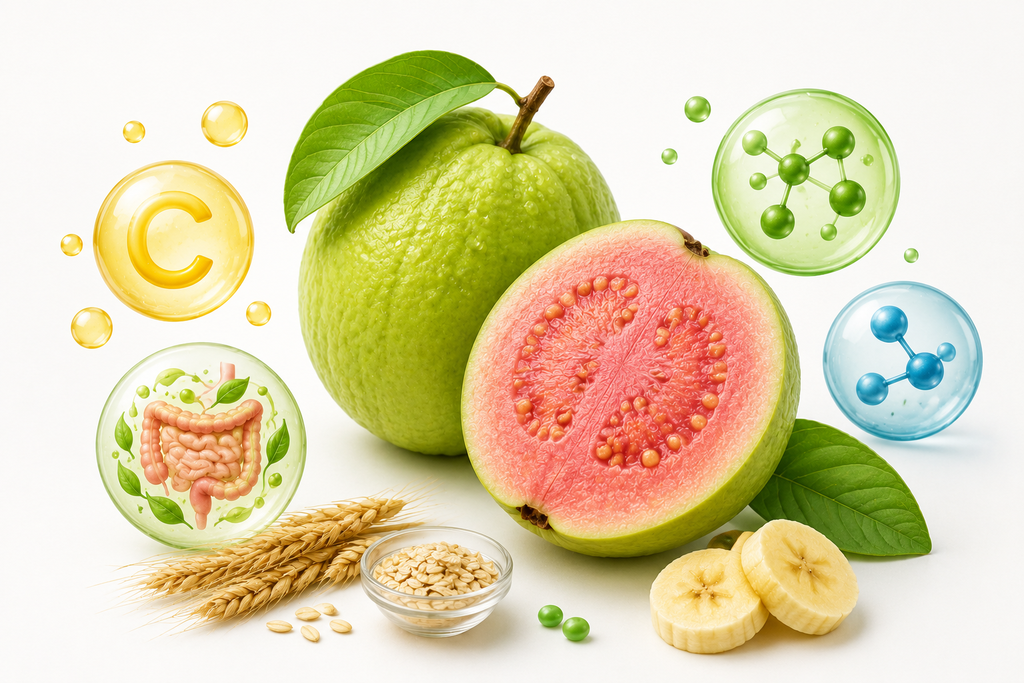
For common raw guava, USDA-derived food-composition data list about 68 kcal, 2.55 g protein, 5.4 g dietary fiber, 417 mg potassium, 18 mg calcium, 22 mg magnesium and 228.3 mg vitamin C per 100 g of edible portion.
| Nutrient | Per 100 g | Why it matters |
| Energy | 68 kcal | Provides relatively modest energy |
| Protein | 2.55 g | Contributes to daily protein intake |
| Dietary fiber | 5.4 g | Supports normal digestive function |
| Vitamin C | 228.3 mg | Supports normal immune function and antioxidant protection |
| Potassium | 417 mg | Important for normal muscle, nerve and fluid balance |
| Calcium | 18 mg | Contributes to normal bone and muscle function |
| Magnesium | 22 mg | Supports normal muscle and nerve function |
1. Guava is especially rich in vitamin C
Vitamin C is one of guava’s standout nutrients. A 100 g serving of common raw guava contains about 228 mg of vitamin C in the USDA-derived dataset. Vitamin C is needed for normal immune function, collagen formation and protection of cells from oxidative stress.
That does not mean guava can ‘boost immunity’ in a magical way or prevent infections by itself. It is better understood as a food that can make a useful contribution to an overall nutrient-rich diet.
2. The fiber content can support digestion
With about 5.4 g of dietary fiber per 100 g, guava can contribute meaningfully to daily fiber intake. Fiber helps support normal bowel function and is part of a healthy eating pattern. Drinking enough water and eating a varied diet are also important when increasing fiber.
3. Guava provides potassium
Guava contains about 417 mg of potassium per 100 g. Potassium is an essential mineral involved in normal nerve signaling, muscle function and fluid balance. A fruit’s potassium content alone, however, should not be presented as a treatment for high blood pressure or heart disease.
4. Pink guava contains carotenoids such as lycopene
Pink- or red-fleshed guava varieties contain carotenoids, including lycopene. Research has identified lycopene as a major carotenoid contributing to the characteristic color of pink guava. The amount can vary substantially with variety and ripeness.
Carotenoids are plant compounds with antioxidant activity. That is useful nutritional context, but it is not evidence that eating guava can prevent or cure cancer.
5. White and pink guava are not exactly the same
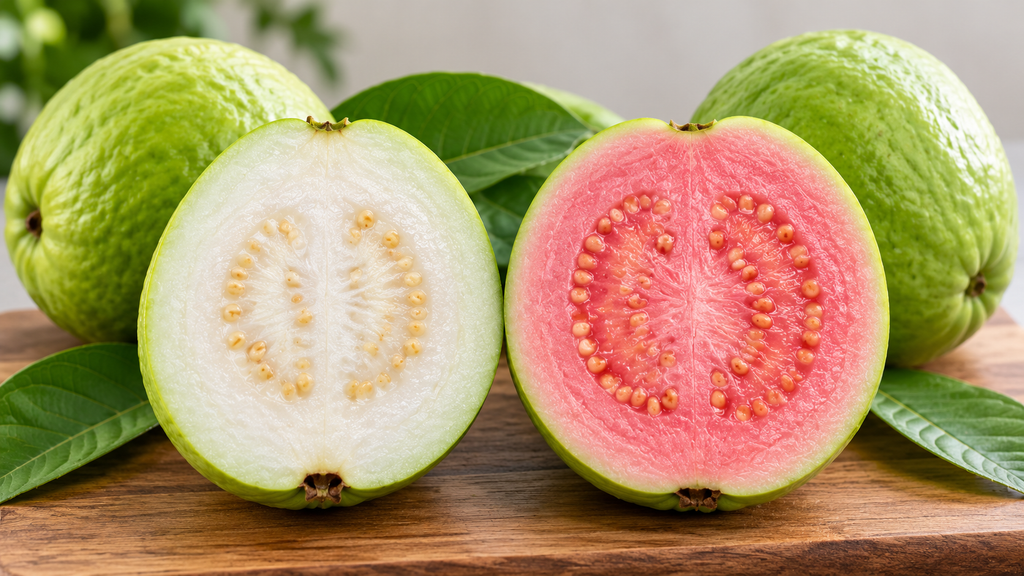
Guava varieties can differ in pulp color, sweetness, texture and phytochemical composition. Pink-fleshed types are notable for carotenoids such as lycopene, while nutrient levels can vary according to cultivar, maturity and growing conditions.
So there is no need to declare one color universally ‘best’. Choose ripe, fresh fruit that you enjoy eating regularly, and include a variety of fruits and vegetables in your diet.
Is guava good for people with diabetes?
Guava has a relatively low glycemic index in published fruit testing, but the exact value depends on the test method, serving and fruit characteristics. One study of tropical fruits reported a low GI for guava.
That makes whole guava a reasonable fruit to consider within a balanced eating pattern, but it should not be described as a ‘cure’ for diabetes or automatically safe in unlimited amounts. People with diabetes should consider portion size, their overall carbohydrate intake and individual medical advice.
What about guava leaves and guava leaf tea?
Guava leaves contain bioactive compounds and have been studied for possible effects on blood glucose and other metabolic measures. However, much of the evidence comes from laboratory, animal or limited clinical research. Reviews have noted that more human evidence is needed before guava leaf preparations can be treated as established medical treatments.
Guava leaf tea should therefore not replace prescribed diabetes medicines or other medical treatment. Anyone taking medication for diabetes or another chronic condition should discuss regular use of concentrated herbal preparations with a qualified healthcare professional.
Does guava prevent cancer?
Guava contains vitamin C, carotenoids and other plant compounds with antioxidant activity, and laboratory research has examined some guava-derived compounds in relation to cancer biology. But laboratory findings are not the same as proof of cancer prevention in people.
The accurate takeaway is simple: guava can be part of a healthy, plant-rich diet, but it should never be promoted as a cancer-prevention or cancer-treatment food.
Can guava help with weight management?
At about 68 kcal and 5.4 g of fiber per 100 g in USDA-derived data, whole guava can fit comfortably into many calorie-conscious diets. Its fiber may also contribute to fullness.
Still, no single fruit causes weight loss. Body weight is influenced by overall energy intake, food quality, physical activity, sleep and many other factors.
How to grow guava at home
Guava can be grown in suitable warm climates, and improved planting material is available through horticultural systems in India. For home growers, the most important basics are adequate sunlight, well-drained growing media, suitable space and regular but not excessive watering.
1. Choose a suitable space: Select a sunny location with enough room for the plant to develop and good drainage.
2. Use a healthy planting material: A quality nursery plant can be preferable when the goal is earlier and more predictable fruiting. Cultivar choice matters.
3. Prepare a well-drained growing medium: Use fertile soil or a suitable potting mix enriched with mature organic matter. Avoid waterlogging.
4. Provide strong sunlight: Guava performs well in full-sun conditions. Make sure a terrace or balcony plant receives adequate direct light.
5. Water sensibly: Water according to soil moisture and weather rather than keeping the soil continuously wet.
6. Prune and manage the plant: Appropriate pruning and canopy management can help maintain a manageable plant shape and support fruit production.
Exact pot size, fertilizer schedule, pruning method and expected yield depend on the cultivar, climate, soil, training system and local growing practices. For commercial or high-density cultivation, follow region-specific recommendations from agricultural experts rather than relying on a generic recipe.
A simple way to include guava in your diet
- Eat ripe whole guava as a snack.
- Add sliced guava to a fruit bowl.
- Pair it with a meal that contains other whole foods rather than relying on fruit alone.
- Wash fresh fruit properly before eating.
- If you have diabetes or another condition requiring dietary management, consider your portion size and individual advice.
The bottom line
Guava is a nutrient-rich, affordable fruit that deserves more attention. Its strongest evidence-based nutritional advantages include high vitamin C content, useful dietary fiber and potassium, with pink varieties also providing carotenoids such as lycopene.
The bigger lesson is not that guava is ‘better than’ every expensive imported fruit. Different fruits have different nutritional profiles. Guava simply offers an excellent combination of nutrients at a food that is widely available in India.
Want more practical nutrition and everyday health explainers?
Explore more useful guides on A1InfoHub and build your diet around a variety of whole, minimally processed foods.
Sources & further reading
USDA-derived nutrient data for common raw guava (100 g): FoodData Central data reproduced by nutrition databases.
ICAR information on guava varieties and cultivation, including Arka Kiran.
Published research on guava carotenoids and pink guava.
Published research on the glycemic index of tropical fruits.
PubMed reviews on guava leaves and their potential metabolic effects.

