


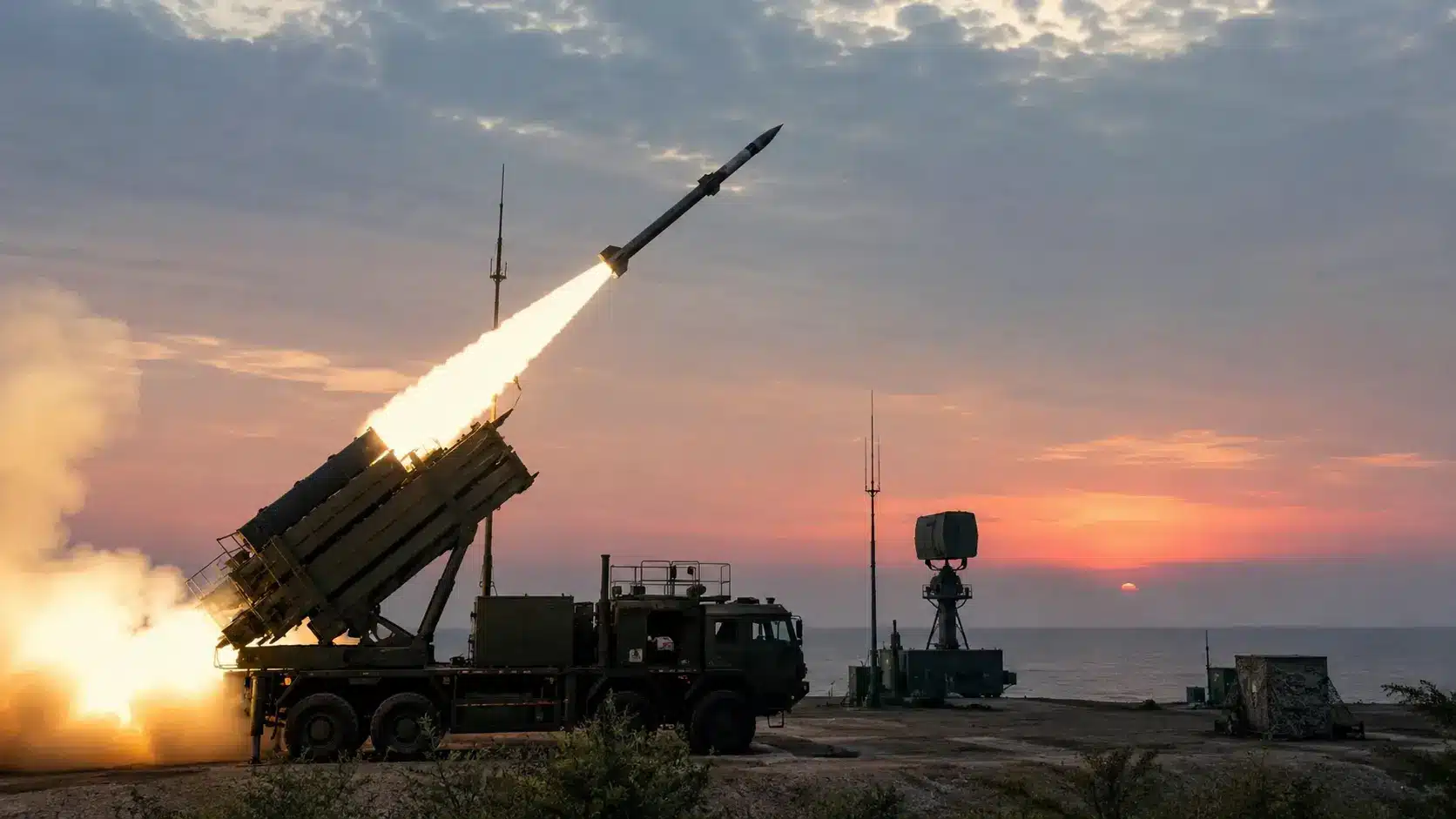
What is Project Kusha? It is India’s indigenous long-range air defence missile programme, and on July 23, 2026, the DRDO carried out the system’s maiden flight test from APJ Abdul Kalam Island off the Odisha coast. The test intercepted an electronic target simulating a high-speed, high-altitude aerial threat. The aim is to reduce India’s dependence on imported long-range air defence systems by building the missiles, radars and command-and-control elements at home.
What Is Project Kusha?
Project Kusha is India’s indigenous long-range air defence missile programme, developed by DRDO with Indian defence manufacturers Bharat Electronics Limited (BEL) and Bharat Dynamics Limited (BDL). The goal is to build a system capable of detecting and destroying enemy aircraft, drones and missiles at long range, in the same broad category as Russia’s S-400 or Israel’s Iron Dome, but designed, built and controlled within India. The programme is also known officially as the Extended Range Air Defence System.
The Cabinet Committee on Security cleared the programme in May 2022. The Ministry of Defence then granted Acceptance of Necessity in September 2023 for five Indian Air Force squadrons, at a sanctioned cost of ₹21,700 crore. Wikipedia’s Project Kusha entry summarises this approval history.
What is Project Kusha within India’s wider defence plans? Its role is a key part of the effort to strengthen the country’s air defence network, and the programme is expected to work alongside the existing S-400 squadrons rather than replace them.
A Three-Layer Shield, Not a Single Missile
Kusha’s layered design means threats face three separate interception zones instead of one.
The real strength of Project Kusha is the layered structure behind it. Most air defence systems protect a fixed radius. Kusha is designed to intercept threats at three different distances, so that whatever gets through one layer runs into the next.
ThePrint reports that the plan includes three interceptor variants, designated M1, M2 and M3, with ranges of 150 km, 250 km and 350–400 km. Based on that description, the layers work roughly like this:
| Layer | Approximate range | Role |
|---|---|---|
| Long-range interceptor (M3) | 350–400 km | Strikes high-value targets such as AWACS aircraft, aerial refuelling tankers and command aircraft before they approach Indian airspace |
| Medium-range interceptor (M2) | About 250 km | Engages fighter aircraft and other aerial threats that come closer |
| Short-range interceptor (M1) | About 150 km | Handles fast, close-in threats such as cruise missiles and drones that get past the outer layers |
The idea is simple: if an adversary launches a large-scale air operation, Kusha does not wait for the threat to get close. The outer layer can, in theory, strike targets while they are still hundreds of kilometres away.
A note on the figures: DRDO has not published an official range chart for each variant, so readers should treat the ranges above as the planned figures reported in the media, not as officially confirmed specifications.
What Did the July 2026 Test Show?
The test was a developmental flight trial, not an announcement that the complete system has entered service. DRDO’s September 2026 newsletter describes the maiden flight test of the ‘Kusha’ long-range surface-to-air missile against an electronic target simulating a high-speed and high-altitude aerial threat.
Defence Minister Rajnath Singh congratulated DRDO on the successful maiden flight test and said the capability to develop a long-range surface-to-air missile system is possessed by only a handful of nations.
Why Build This When India Already Has the S-400?
This is the question most people ask first, and it is a fair one. India already operates S-400 squadrons, with more on order from Russia. Indian Air Force officials have said that the additional S-400 squadrons will not reduce the requirement for Project Kusha. The two systems are meant to complement each other.
The main reasons for building a domestic system come down to a few practical points:
- Control over the technology. With an imported system, the supplying country controls many aspects of software access, training and upgrades. Kusha is designed so that DRDO and the armed forces can manage the software and upgrade path within India.
- Production on India’s timeline. Because the system is built domestically, manufacturing and deployment can be scaled up without waiting on a foreign production queue.
- Future upgrades. Owning the underlying technology makes it easier to extend range, upgrade radars or adapt the system to new threats without depending on another country’s approval.
- Strategic depth, not replacement. Kusha is designed to add an independent layer to India’s air defence network alongside the S-400, rather than depending on a single imported system.
This fits into India’s broader Atmanirbhar Bharat (self-reliance) push in defence manufacturing, where the priority is reducing dependence on imported weapons systems over time.
What Happens Next?
So what is Project Kusha today? A system still in development. The July 2026 test was the first flight trial of the system, not the final word. Project Kusha is expected to go through further rounds of testing before it is inducted into the Indian Air Force. Phased induction of the three interceptor variants is expected between 2028 and 2030, according to Wikipedia’s Project Kusha entry.
Bharat Electronics has also said it expects Project Kusha production orders worth more than ₹40,000 crore by FY2029, according to IDRW’s report on BEL’s comments. That is a company projection rather than a confirmed order.
Zoomed out, Project Kusha reflects a broader shift in how India approaches national defence: building the capability to design, produce and upgrade its own weapons systems, rather than depending entirely on imports.
The Bottom Line
What is Project Kusha in one line? It is India’s attempt to build an S-400-class air defence system on its own terms: layered across three interception ranges, built around indigenous radar and missile technology, and under Indian control from design to deployment. It is not going to replace the S-400 soon, but as more tests are completed over the next few years, it is set to become a significant, independently controlled layer in India’s air defence network.
Also read: India’s Sixth-Generation Fighter Jet

