


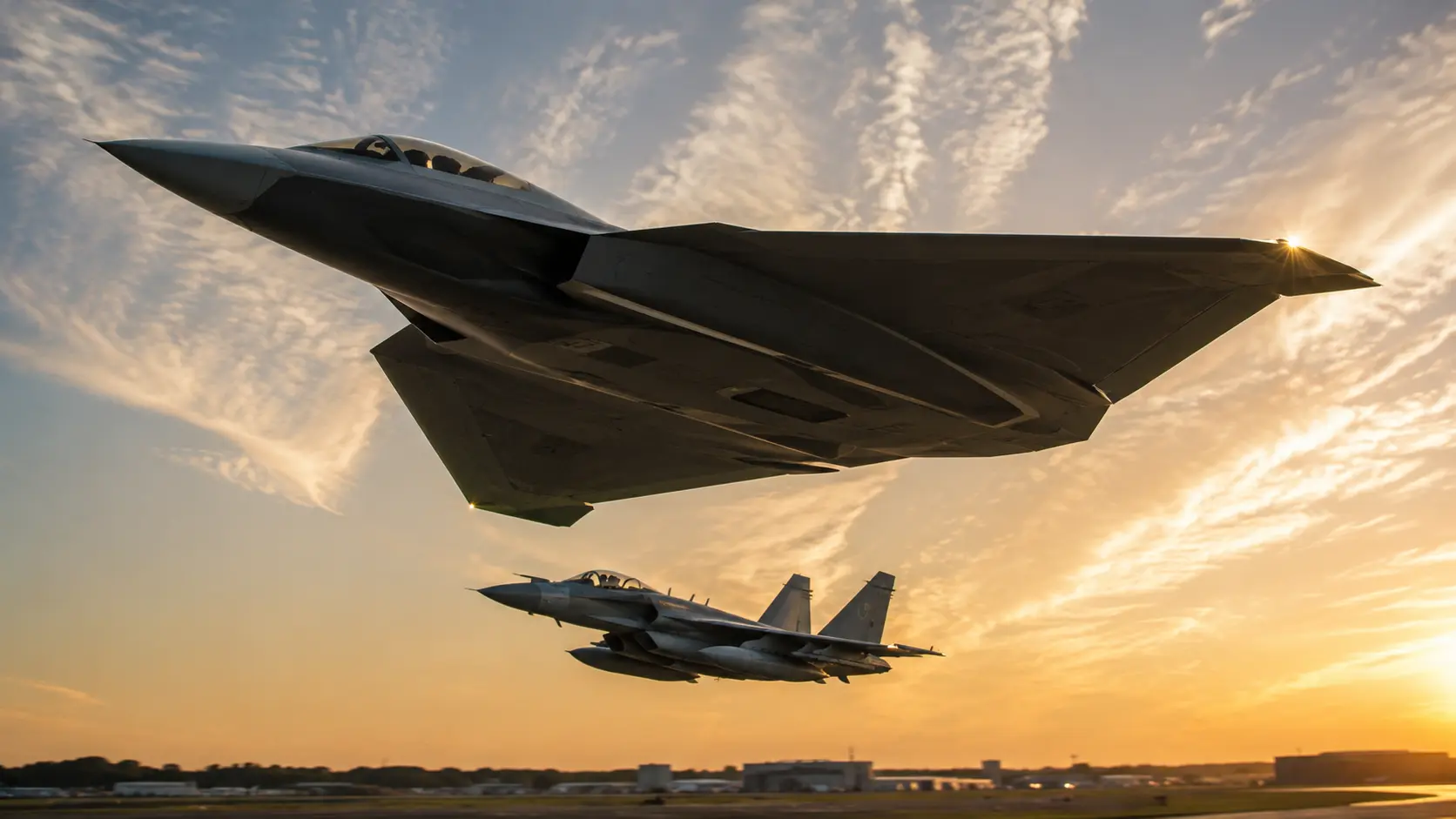
India’s Sixth-Generation Fighter Jet
India has quietly stepped into one of the most exclusive races in modern defense technology: building a sixth-generation fighter jet. After Europe’s biggest defense project lost one of its founding members, India has opened talks with France to fill that gap — and both sides seem eager to make it work.
What’s Actually Happening: India Enters FCAS Talks
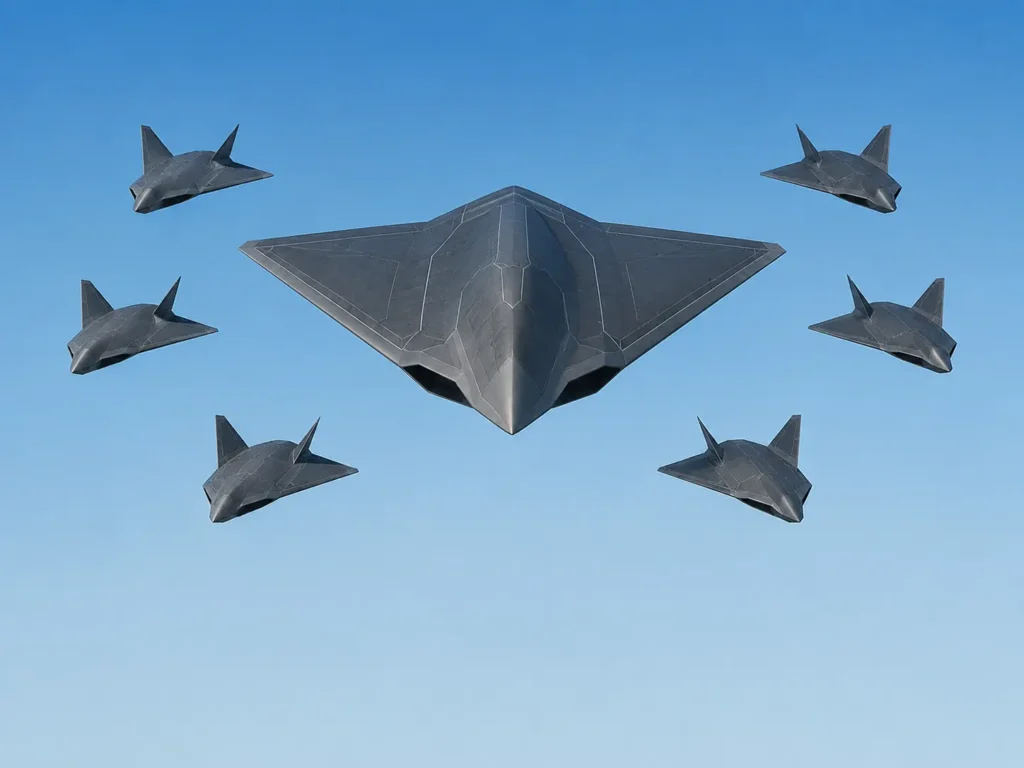
On August 7, 2026, India’s Ministry of Defence confirmed to a Parliamentary Standing Committee that it has “initiated efforts in a concerted manner to co-join” the Future Combat Air System, or FCAS — the French-led program to build a sixth-generation fighter jet. That’s a single sentence in an official report, but it marks a real shift for a program that, just two months earlier, looked like it might collapse entirely.
FCAS — known as SCAF in French — was originally a joint venture between France, Germany, and Spain, aimed at fielding an advanced fighter jet by around 2040. France’s Dassault Aviation and Germany’s Airbus were meant to build it together. India stepping in now isn’t just about writing a check, either: New Delhi has reportedly also asked for a genuine share of the technology development work, not just a financing role.
Why Germany Walked Away From the Program
To understand why India suddenly has an opening here, you need to know why Germany left in the first place.
The core problem was never the technology — it was a dispute over leadership, workshare, and intellectual property between Dassault and Airbus. Dassault, drawing on decades of experience building the Rafale, wanted primary design authority and a larger share of the work. Germany’s Airbus pushed for a more equal split. On top of that, the two governments actually needed different aircraft: France wanted a lighter, carrier-capable jet certified to carry its next-generation nuclear cruise missile as part of its independent nuclear deterrent, while Germany needed a heavier, land-based air-superiority jet with no nuclear role and no carrier requirement. Those two sets of requirements pull an aircraft’s design in opposite directions, and neither country would budge.
On June 8, 2026, Germany and France formally ended the joint fighter element of FCAS at the ILA Berlin Air Show — though they agreed to keep developing the “combat cloud” battlefield-networking system together. Spain, which held a stake through its firm Indra but had no independent design authority of its own, was left without a clear path forward on the fighter component, though it continues contributing to the sensor and combat-cloud side of the program.
That collapse left France needing a new, financially and technically capable partner — and left an opening exactly where India happens to have a matching need: India, like France, maintains an independent nuclear deterrent and needs fighters that can support it, something Germany never required.
What Makes a Fighter Jet “Sixth-Generation”?
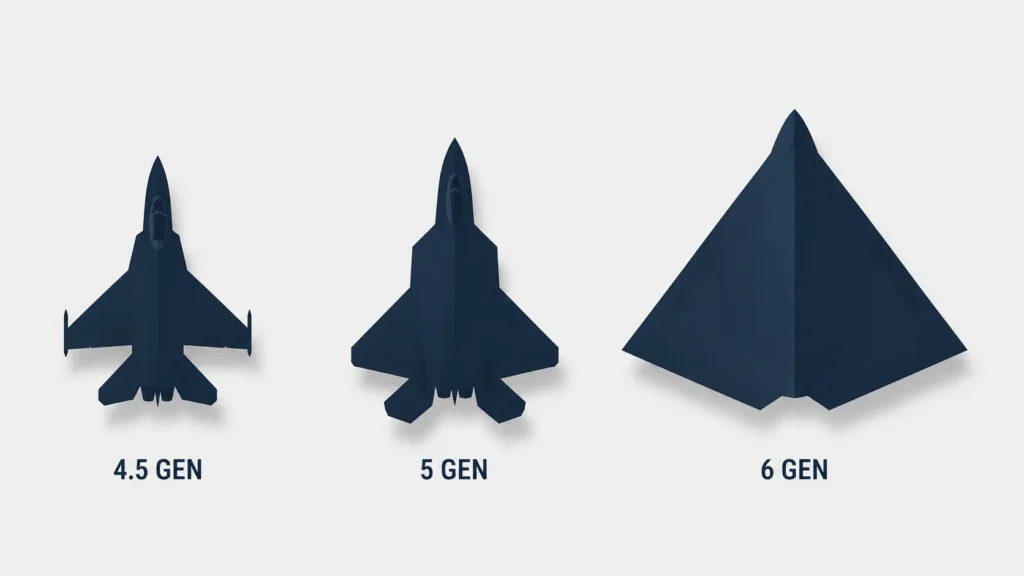
For comparison, India’s current Rafale is considered a 4.5-generation jet, and America’s F-35 is fifth-generation. A sixth-generation fighter isn’t just a faster or stealthier version of those — it’s built around a fundamentally different idea: the aircraft as a networked command center rather than a solo hunter. A few features define the category:
- Combat cloud networking: The jet shares large volumes of real-time data with satellites, ships, and ground units, acting as an airborne data hub rather than an isolated aircraft.
- Loyal wingman drones: A single piloted jet can control roughly five to ten smaller companion drones, which can absorb an incoming missile hit or strike a target directly — keeping the human pilot out of the most dangerous exchanges.
- Directed-energy weapons: Alongside conventional missiles, these jets are expected to carry laser weapons capable of burning down an incoming missile before it connects.
- Multi-spectral stealth: Fifth-generation jets rely mainly on radar-evading shape and materials. Sixth-generation designs go further, using techniques intended to reduce their signature across infrared, electromagnetic, and even camera-based detection — not just radar.
What India Gets Out of This: The AMCA Spillover Effect
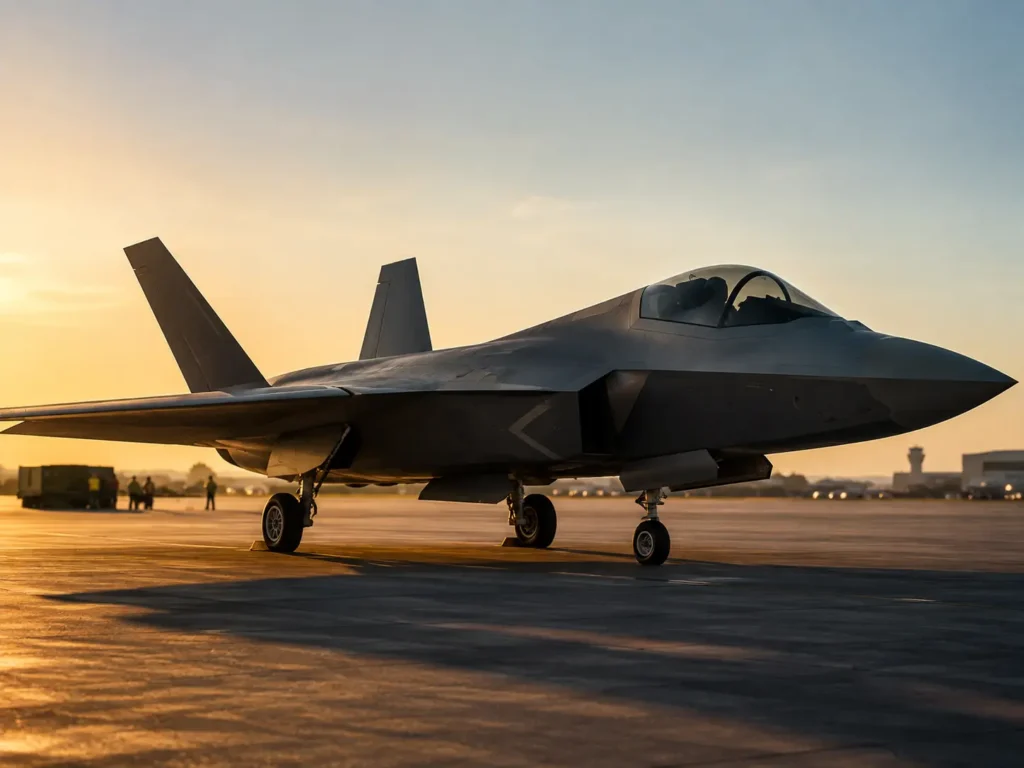
None of this replaces India’s own fifth-generation fighter program. DRDO and the Aeronautical Development Agency have been developing India’s AMCA (Advanced Medium Combat Aircraft) for years, with the Cabinet Committee on Security approving the project at an estimated ₹15,000 crore back in March 2024. Joining FCAS wouldn’t slow that down — supporters argue it would actually speed it up, through what’s sometimes called a “spillover effect.”
Two areas stand to benefit directly. First, the AMCA Mk2 needs a powerful new engine in the 110–140 kN thrust class, and India has separately been negotiating a joint venture between DRDO’s Gas Turbine Research Establishment and France’s Safran — the same company that leads engine work on the FCAS side — to co-develop exactly that engine, reportedly with full technology transfer and Indian intellectual-property ownership. Second, the “combat cloud” architecture being built for FCAS could plausibly be adapted for the AMCA’s own networking systems, letting India’s jet connect with satellites and drones in ways that would otherwise take years to develop independently. If both pieces come together, engineers in this space describe AMCA evolving from a straightforward fifth-generation fighter into what’s sometimes informally called a “5.5-generation” aircraft.
The China Factor: Why Speed Matters
Timing here isn’t incidental. China’s air force already fields close to 500 J-20 fifth-generation stealth fighters — a fleet India, with zero operational fifth-generation jets of its own, doesn’t currently have a direct answer to.
China isn’t stopping there. It’s simultaneously flight-testing two separate sixth-generation prototypes — the Chengdu J-36, a large tailless aircraft with three engines, and the Shenyang J-50, a smaller tailless twin-engine design believed to be aimed partly at carrier operations. US defense assessments suggest China could field an operational sixth-generation fighter by around 2035, which would put it years ahead of Western programs still in the design and negotiation stage. For India, that gap is exactly why locking in a seat at FCAS’s table now — rather than waiting to build everything alone — matters strategically, not just technologically.
How This Fits India’s Bigger Defense Relationship With France
An FCAS partnership wouldn’t be happening in isolation. France and India already have significant defense business underway. India is finalizing a roughly ₹3.25 lakh crore deal for 114 additional Rafale jets, with the majority to be manufactured domestically under India’s Make in India framework. Separately, DRDO and Safran have been working toward that new AMCA Mk2 engine partnership described above.
Layer a sixth-generation fighter partnership on top of those existing deals, and the relationship moves well past “customer and supplier.” If negotiations succeed, India would move from being a buyer of French jets to a genuine co-developer of one of the world’s most advanced weapons systems — a status very few countries hold.
What’s Still Uncertain
It’s worth being direct about how early this still is. As of mid-August 2026, no bilateral agreement, financial commitment, industrial workshare arrangement, or technology-transfer framework had actually been signed — India’s Ministry of Defence has confirmed only that talks have begun. Basic questions remain open: whether France intends to restart a full manned-fighter program at all, whether Dassault would retain sole design authority the way it insisted on with Germany, how much of the workshare Germany and Spain once held would go to India, and whether India’s role would include real design ownership or mostly financing and production. The parliamentary committee itself has asked India’s defense ministry for a detailed roadmap and timeline, which hasn’t been made public yet.
A quick reality check: a 30–40% stake in a program valued at roughly €100 billion (about ₹10.9 lakh crore) is a serious financial commitment, and history — including FCAS’s own collapse — shows that multinational fighter programs can unravel even after years of political goodwill. This is a genuine opportunity, not a done deal.
Conclusion
India’s move into FCAS talks is a calculated bet: that partnering with France now, while there’s a seat open at the table, is worth more than trying to build sixth-generation capability entirely alone later. Whether it pays off depends on questions that haven’t been answered yet — leadership, workshare, and how much real technology actually changes hands. But if it works, it could reshape both India’s air power and its aerospace industry for decades.
Curious how India’s homegrown AMCA program is progressing on its own timeline, or want to understand China’s J-20 fleet in more depth? Those are good places to dig in next on A1InfoHub.

