


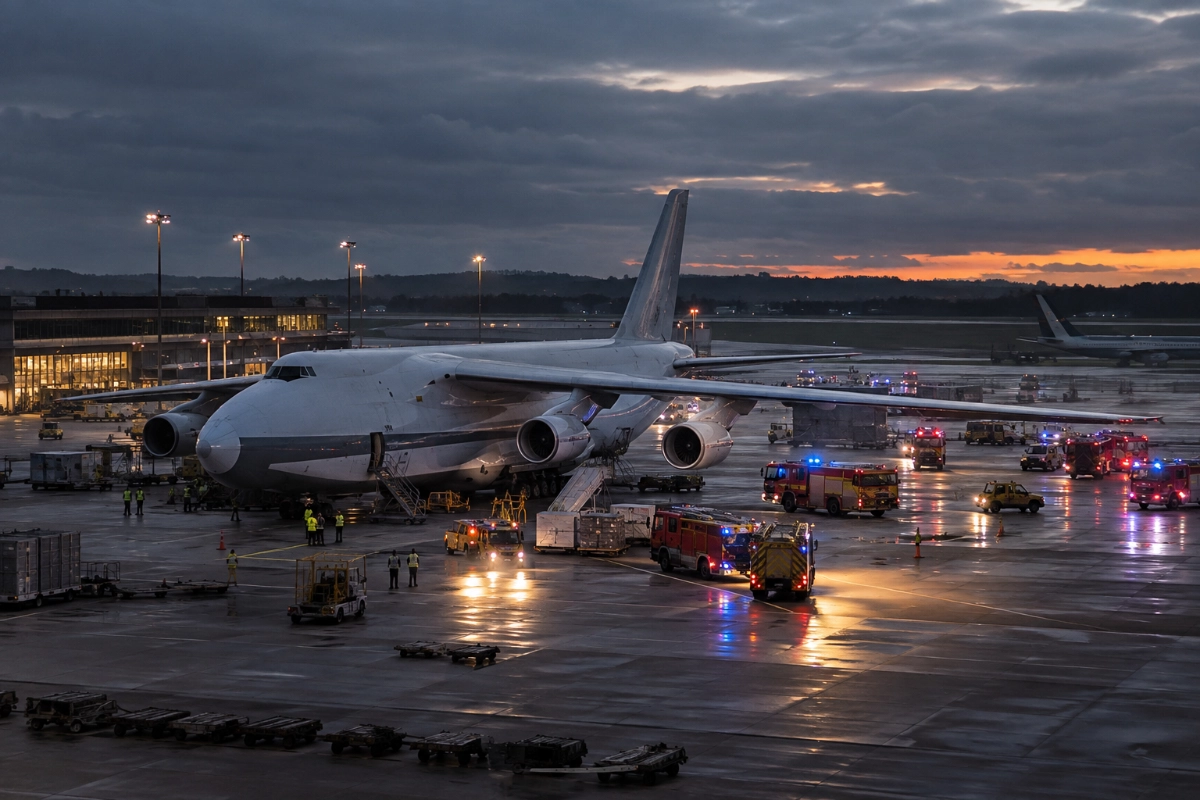
A single drone that failed to explode has pushed Germany and Russia into their coldest standoff since the Cold War itself ended. In August 2026, an explosive-laden drone struck a Ukraine-bound cargo plane at Leipzig/Halle Airport in eastern Germany. The device never detonated, but the fallout has been anything but quiet. Berlin has formally blamed Moscow, shut down Russian diplomatic and cultural missions on German soil, and Russia has fired back with matching closures of its own. Both sides are now trading accusations laced with historical bitterness, including comparisons to Nazi Germany and warnings about a “real war.”
This article breaks down what actually happened at Leipzig Airport, how the diplomatic crisis escalated in the weeks that followed, and why a decades-old history of invasion, division, and mutual suspicion is shaping how both nations are reacting today.
Table of Contents
What Happened at Leipzig/Halle Airport
The First Drone Strike on August 4
On the night of August 4, 2026, a small quadcopter drone carrying roughly 800 grams to 1 kilogram of explosives flew into Leipzig/Halle Airport in Saxony, Germany. The airport is one of Europe’s largest air-freight hubs and a regular stop for the giant Antonov An-124 cargo plane, which was being used at the time to move military equipment toward Ukraine and other parts of Eastern Europe.
The drone struck the parked An-124 near its wing and fuel tank area. Investigators later said its detonator failed at the last moment, so the explosive charge never went off and the drone simply fell to the tarmac instead of causing a major fire or explosion.
The device went unnoticed for roughly four hours until an airport bus driver spotted it. A bomb-disposal team was called in, recovered the drone, and made it safe. Officials said the drone carried a 5G router and two SIM cards, which would have allowed it to be flown from almost anywhere in the world and helped it slip past the airport’s anti-drone detection systems.
A Second Drone and a Diverted Flight
With the runway closed after the first incident, a DHL-operated Boeing 757 cargo plane that had been trying to land was forced to circle overhead. While flying at roughly 400 meters, it was struck by a second drone. Investigators believe this drone carried no explosives and was fitted only with a camera, likely sent to film the aftermath of the first attack rather than to cause damage. The impact still left visible damage to the aircraft’s nose, and the flight was diverted to Hannover Airport, where it landed safely.
A Third Device Found Ten Days Later
On August 14, roughly ten days after the first incident, a third explosive-laden drone was discovered near Kabelsketal, about 11 kilometers from Leipzig/Halle Airport. It carried a smaller charge of around 50 grams of explosives and, like the first device, failed to detonate. Police also traced and recovered an antenna nearby that investigators believe was used to control the drones’ signals.
German authorities said the common thread across the three devices was clear: each appeared aimed at aircraft and infrastructure tied to the supply of weapons and military equipment to Ukraine.
Germany Formally Blames Russia
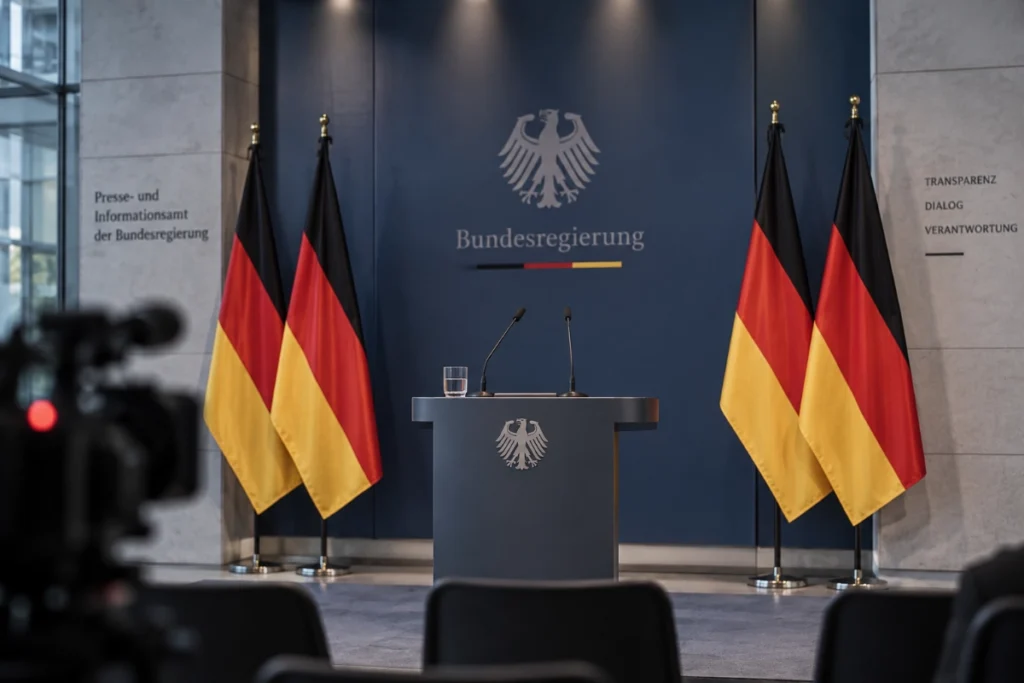
Leipzig/Halle Airport sits only about 850 to 900 kilometers by air from western Ukraine, making it a key logistics hub for NATO and German military support flowing toward Kyiv. That location, combined with forensic evidence, intelligence assessments, and the pattern of the attacks, led German investigators to conclude that the drones were tied to Russian hybrid warfare operations.
On September 1, 2026, German Interior Minister Alexander Dobrindt and Foreign Minister Johann Wadephul held a joint press conference in Berlin and formally attributed the attempted attack to Russia. Dobrindt said that, taken together, police investigations, the pattern of the offense, and intelligence findings established Russian responsibility for the attack, marking the first time Berlin had directly blamed Moscow for an attack on German airport infrastructure.
Germany’s Foreign Ministry said the Russian ambassador had been summoned over the incident, and Interior Minister Dobrindt raised the country’s national threat level from “general” to “high,” describing Germany as a daily target of hybrid attacks.
Consulate and Cultural Center Closures
Germany announced it would close Russia’s consulate general in Bonn, a large diplomatic complex that dates back to the Cold War era, by September 18. Berlin also ordered the closure of the Russian House for Science and Culture in Berlin and said it would push for tighter immigration screening and further visa restrictions on Russian nationals, particularly those linked to hybrid operations.
Russia’s embassy in Germany immediately denied any involvement, calling the accusation a fabrication and accusing Berlin of pinning blame on Moscow without solid proof.
Russia’s Retaliation
Closing the St. Petersburg Consulate and Goethe-Institut
Russia responded within days. On September 7, 2026, Russia’s Foreign Ministry announced it would close Germany’s consulate general in St. Petersburg, giving diplomats and staff until September 18 to cease operations and leave the country. Moscow also confirmed it was shutting down Germany’s Goethe-Institut cultural centers in Moscow, St. Petersburg, and Yekaterinburg, ordering their staff to leave by September 13.
The Russian Foreign Ministry described the closures as a direct, symmetrical response to Germany’s decision to shut the Russian consulate in Bonn and the Russian House in Berlin, and said Berlin had once again provoked a new round of escalation in bilateral relations. Russia also declared a member of Germany’s embassy staff in Moscow persona non grata.
Lavrov’s “Real War” Warning
Russian Foreign Minister Sergei Lavrov used unusually sharp language in response to the German findings. In a September 6 interview, he argued that no one had properly investigated the drone’s origin before it was labeled Russian, and characterized Germany’s response as, in his words, the beginning of a real war.
Lavrov went further, linking Chancellor Friedrich Merz’s stated goal of rebuilding Germany into Europe’s leading military power to what he called a resurgence of old patterns, drawing a comparison between Germany’s current diplomatic closures and moves made by German authorities before the outbreak of World War II. German officials rejected the comparison, with Dobrindt noting that Germany was not at war but was the target of hybrid warfare.
A History Stretching Back to World War II

To understand why this dispute escalated so quickly and so emotionally, it helps to look at the long and difficult history between Germany and Russia.
Operation Barbarossa and the Eastern Front
On June 22, 1941, Nazi Germany launched Operation Barbarossa, a massive invasion of the Soviet Union under Adolf Hitler. The campaign was driven partly by Hitler’s ambition to seize Soviet oil fields, farmland, and resources. The fighting on the Eastern Front proved catastrophic for the Soviet Union, with historians estimating millions of Soviet soldiers and civilians killed, wounded, or missing over the following years. Germany’s eventual defeat in 1945, following Hitler’s death and Berlin’s fall to Soviet forces, ended the war in Europe but left deep scars in Russian collective memory that still surface in Kremlin rhetoric today.
A Divided Germany and Reunification
After the war, Germany was split into two states: West Germany, aligned with the United States, France, and Britain, and East Germany, under Soviet influence. The two halves were not reunified until 1990, alongside the fall of the Berlin Wall, and the Soviet Union itself collapsed in December 1991. Russia-Germany relations gradually improved through the 1990s and 2000s, particularly after Vladimir Putin became president of Russia.
Crimea, Ukraine, and the Unraveling of Trust
That improved relationship unraveled in 2014, when Russia annexed Crimea from Ukraine, a move Germany and much of the West condemned. Relations deteriorated further after Russia’s full-scale invasion of Ukraine at the end of February 2022, which has now stretched into a war of nearly four years and turned Germany into one of Ukraine’s most significant military backers in Europe.
Why Germany and Russia Fear Each Other Now
Beneath the immediate drone incident and consulate closures lies a deeper dynamic: two powerful states, each increasingly convinced the other represents an existential threat.
Germany’s Fear: Russian Expansionism
German officials and security analysts have repeatedly voiced concern about what they describe as Russia’s expansionist ambitions. The worry is that if Ukraine were to fall, Russia would not stop there, and could eventually turn its attention toward Poland or the Baltic states of Estonia, Latvia, and Lithuania, gradually pushing its influence closer to Germany’s own borders. Putin has previously described the Soviet Union’s collapse as one of the great geopolitical tragedies of the 20th century, a remark Western officials point to as evidence of his broader ambition to restore Russian influence over territory once tied to the former Russian and Soviet empires.
Russia’s Fear: A Remilitarized Germany
From Moscow’s perspective, the concern runs in the opposite direction. Germany does not possess nuclear weapons of its own and relies on NATO’s nuclear umbrella, but Chancellor Merz has publicly pledged to rebuild Germany’s conventional military into the strongest in Europe. Russian officials have pointed to comments from U.S. President Donald Trump about weakening NATO’s cohesion as one reason Moscow feels it must respond forcefully to any sign of a resurgent, more assertive Germany.
Russian officials argue that a militarily powerful Germany, allied with France, would make it far harder for Moscow to counter European support for Ukraine and could strengthen NATO’s overall position, which Russia views as a threat to its own security and standing.
Germany’s Military Buildup and Support for Ukraine
Germany’s posture has shifted substantially since Russia’s annexation of Crimea in 2014, and even more so since 2022. Key elements of that shift include:
- A successful German test of the Israeli-made LORA ballistic missile system, which has a range of roughly 500 kilometers.
- Active German interest in acquiring U.S.-made Tomahawk cruise missiles, which have a range of up to roughly 2,000 kilometers, along with Typhon missile launchers.
- Continued supply of weapons to Ukraine, including IRIS-T air defense systems, Leopard tanks, artillery shells, and ammunition.
- A formal commitment of about 11.5 billion euros for Ukraine’s military support in Germany’s 2026 federal budget alone.
According to Germany’s federal government, Berlin has provided or earmarked roughly 57.6 billion euros in military support for Ukraine since Russia’s invasion began in February 2022, in addition to more than 43 billion euros in non-military bilateral aid, making Germany one of Ukraine’s largest backers after the United States.
What This Means for Europe and NATO
Analysts have described the Leipzig incident as a new level of escalation in what is widely referred to as hybrid warfare: sabotage, disinformation, and covert pressure that stops short of open conflict but is designed to intimidate and destabilize a target country. Because the drones targeted aircraft directly tied to NATO logistics and Ukraine-bound weapons shipments, some German intelligence figures and Western officials view the attack as one of the first attempts by Russia to strike military supply lines inside NATO territory itself.
For now, both Germany and Russia have limited their response to diplomatic and cultural measures rather than military ones. But the rapid, tit-for-tat nature of the closures, combined with heated rhetoric from senior officials on both sides, has drawn close attention from NATO allies and the wider international community, who are watching to see whether the standoff stabilizes or continues to escalate.
Frequently Asked Questions
What caused the Germany-Russia drone attack dispute?
An explosive-laden drone struck a Ukraine-bound cargo plane at Leipzig/Halle Airport in Germany on August 4, 2026. Two more drones were later found nearby. After a monthlong investigation, German authorities formally blamed Russia for the attack on September 1, 2026, triggering a series of diplomatic retaliations from both countries.
Did the drone attack cause an explosion or any injuries?
No. In both confirmed explosive-drone incidents, the detonators failed and the devices did not explode. There were no reported injuries, though the second, non-explosive drone caused visible damage to a cargo plane’s nose.
Why did Germany close Russian consulates?
Germany closed Russia’s consulate general in Bonn and the Russian House cultural center in Berlin after concluding that Russia was behind the Leipzig drone attack. Officials also cited a broader pattern of Russian hybrid warfare activity across Europe.
How did Russia respond to Germany’s actions?
Russia retaliated by ordering the closure of Germany’s consulate general in St. Petersburg and its Goethe-Institut cultural centers in Moscow, St. Petersburg, and Yekaterinburg, giving German staff until mid-September 2026 to leave.
Is Germany at war with Russia?
No formal state of war exists between Germany and Russia. German officials have described the country as the target of Russian hybrid warfare rather than a party to open conflict, while Russian Foreign Minister Sergei Lavrov has controversially described the situation as the beginning of a real war, a characterization Germany rejects.
Why does history between Germany and Russia matter in this dispute?
Germany and Russia share a difficult history dating back to Nazi Germany’s invasion of the Soviet Union in 1941 and the millions of deaths that followed. That history continues to shape political rhetoric today, with Russian officials invoking Nazi-era comparisons whenever Germany expands its military or takes a harder diplomatic line, while Germany remains wary of any sign of Russian territorial expansion in Europe.
Conclusion
What began as a failed drone strike on a cargo plane in eastern Germany has evolved into one of the sharpest diplomatic confrontations between Berlin and Moscow since the Cold War. Behind the consulate closures and pointed rhetoric lies a familiar pattern: a Germany rearming out of fear of Russian expansion, and a Russia growing anxious about a resurgent German military and its role in supporting Ukraine. With formal accusations now on record and diplomatic missions shutting down on both sides, the world is watching closely to see whether this standoff cools or continues to climb toward something far more serious.
Read More about World Affairs –World Affairs – A1-InfoHub

