


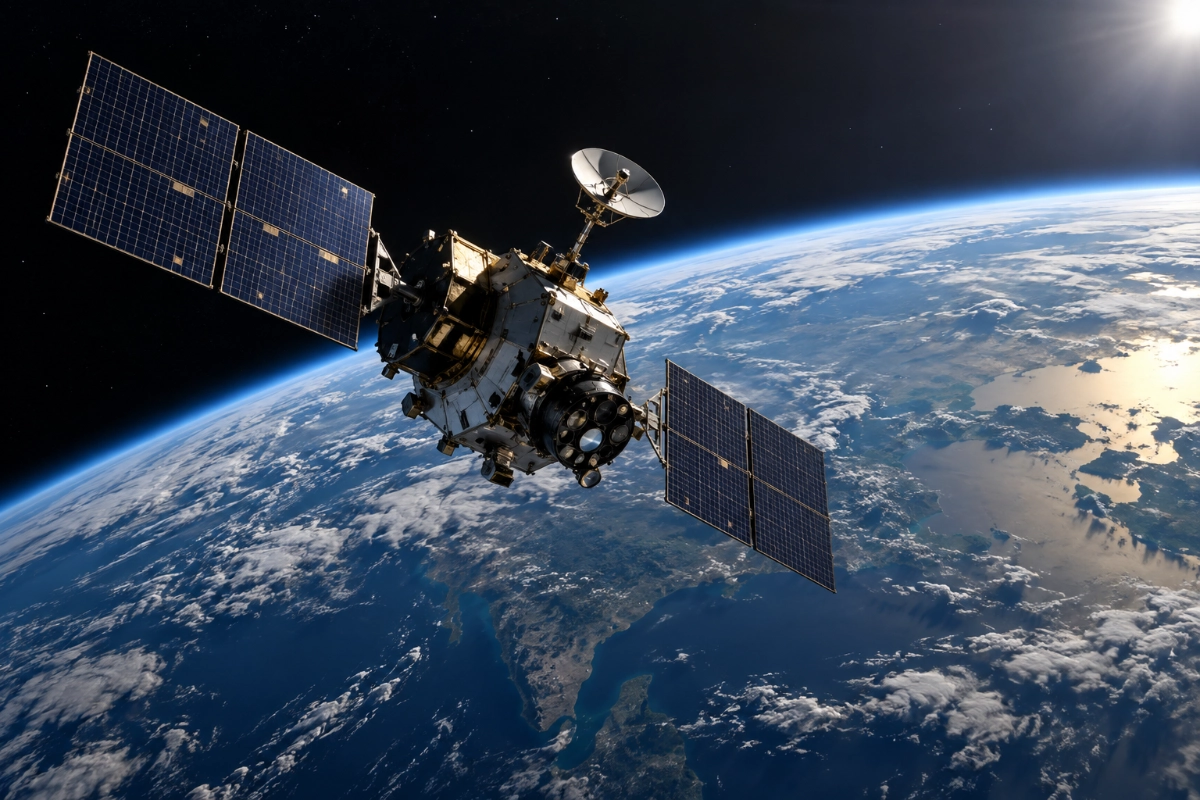
US deploys space weapons for first time in orbit:
US deploys space weapons for first time in orbit is the headline emerging from a major U.S. military disclosure in September 2026. On September 14, Secretary of the Air Force Troy Meink said the United States now has “on-orbit space control weapons” capable of defending the Joint Force against hostile adversary action. The statement is significant because it is the clearest public confirmation yet that the U.S. military has weapon capabilities physically operating in orbit. However, the Pentagon has not publicly identified the systems, their number, their launch dates, or whether they are kinetic or non-kinetic.
The announcement does not mean that every weapon imagined in science fiction is now deployed in space. It also does not establish that the United States has placed conventional missiles or nuclear weapons in orbit. The available public information is much narrower: U.S. officials have acknowledged the existence of on-orbit space-control weapons, while deliberately withholding technical details.
Table of Contents
What Did the United States Actually Confirm?
At the Air, Space & Cyber Conference in National Harbor, Maryland, Meink said the Space Force has on-orbit space-control weapons intended to defend the joint force. The following day, Chief of Space Operations Gen. Douglas Schiess said Guardians operate on-orbit weapons capable of defending the Joint Force against space-enabled attacks.
Those statements establish that the systems are already in orbit, rather than merely being planned or under development. They do not publicly establish the exact weapon design or the date on which each system was placed in orbit.
That distinction matters. The phrase “space control weapon” is broader than “missile.” Space-control operations can involve capabilities intended to protect friendly space systems, interfere with or deny an adversary’s use of space capabilities, or create effects against hostile systems. Public reporting following the announcement said officials did not disclose whether the acknowledged weapons are kinetic or non-kinetic.
What Is Still Unknown About the Weapons?
The U.S. government has intentionally left several important questions unanswered:
- Weapon type: Officials have not publicly identified the systems.
- Number deployed: No public figure has been given for how many weapons are in orbit.
- Deployment dates: The government has not disclosed when the systems were launched or placed into operational orbit.
- Target set: Officials have not specified whether the systems are intended to affect satellites, other space objects, or provide another type of space-control effect.
- Kinetic versus non-kinetic operation: Public statements have not established whether the systems physically strike objects or produce effects through non-kinetic means.
- Operational details: Orbital locations, ranges, command arrangements and specific capabilities have not been publicly disclosed.
Does This Mean the U.S. Has Missiles in Orbit?
There is not enough public evidence to make that claim. The available official statements use the term “on-orbit space control weapons,” not “missiles.” Public reporting has likewise noted that the U.S. has not disclosed whether the weapons are kinetic or non-kinetic.
That leaves several technological possibilities open, but it would be inaccurate to select one without evidence. Concepts such as lasers, electronic warfare, cyber effects, rendezvous-and-proximity operations, or physically destructive systems are discussed in the broader counterspace field, but the September 2026 announcement does not identify which of these are represented by the acknowledged weapons.
Why Is the Announcement Important?
The most important change is transparency, not necessarily the sudden creation of a completely new military capability. The United States has operated military systems in space for decades, and several countries have developed counterspace technologies. What changed in September 2026 is the public acknowledgment that the Space Force has weapons on orbit.
Space has become essential to modern military operations. Communications, navigation, timing, missile warning, intelligence, surveillance and reconnaissance, weather information and other services depend heavily on space systems. A disruption to critical satellites can therefore affect operations far beyond the space domain.
The disclosure also signals that the U.S. wants potential adversaries to know that it has the ability to respond to attacks against space-enabled forces. U.S. officials have described the weapons in the context of defending the Joint Force and deterring hostile action.
The Role of Russia and China
The announcement comes against a background of growing concern over counterspace capabilities developed by Russia and China. Both countries have demonstrated or been accused of developing technologies that can threaten satellites.
China conducted a well-known anti-satellite test in 2007 that destroyed one of its own weather satellites and created a large debris cloud. Russia conducted an anti-satellite test in 2021 that destroyed the Cosmos 1408 satellite and generated debris that posed a hazard to other spacecraft. These events are part of the broader reason space-security officials treat satellites as potential targets during a major conflict.
Following the U.S. disclosure, Chinese and Russian officials criticized the move and warned about the consequences of an expanding space arms competition. Those statements are political and strategic reactions; they do not independently establish the technical details of the U.S. weapons.
What Is Space Warfare?
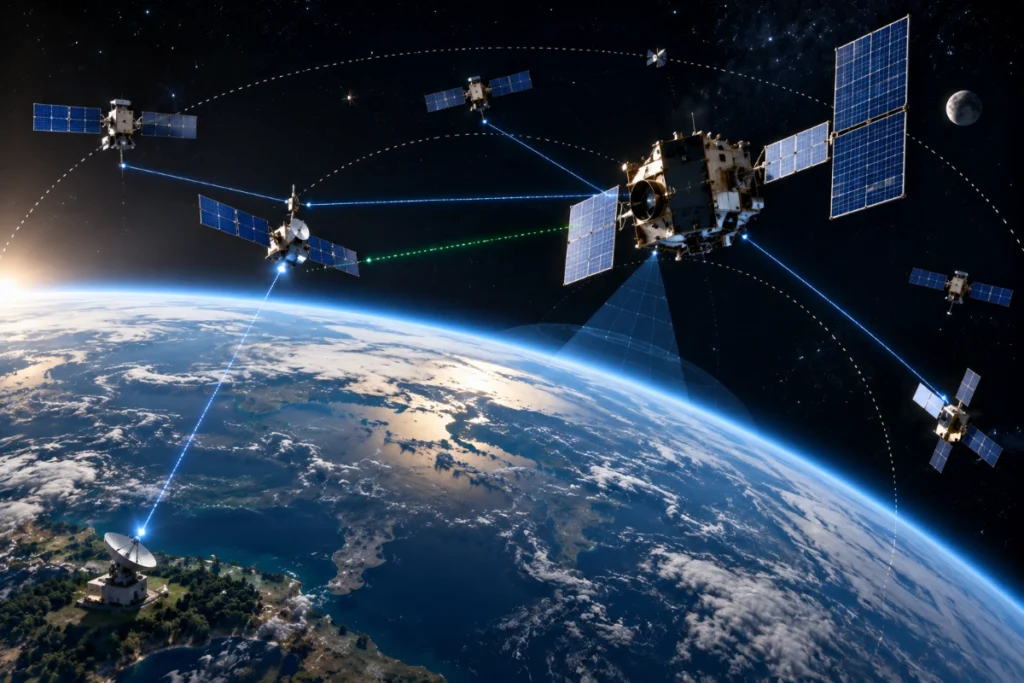
Space warfare does not necessarily mean firing missiles from orbit at cities. It can include operations designed to protect, disrupt, degrade, deny or destroy space capabilities.
A useful way to understand the field is to separate capabilities into three broad categories:
- Earth-to-space: Ground-launched systems can be used against satellites. Anti-satellite missiles are an example of this category.
- Space-to-space: A system operating in orbit may be designed to interfere with, approach, disable or otherwise affect another spacecraft.
- Space-to-ground: A space-based system could theoretically create effects against targets on Earth, although the existence and operational status of any specific U.S. capability should not be inferred from the September 2026 announcement.
Why Satellites Matter So Much in Modern Conflict
Satellites provide services that are deeply integrated into modern military and civilian infrastructure. Positioning, navigation and timing services support transportation, communications and financial systems, while military satellites support communications, surveillance, reconnaissance and early warning.
The war in Ukraine has also demonstrated how important commercial and military satellite services can become during a conflict. Satellite communications have supported connectivity when terrestrial infrastructure has been disrupted, while satellite imagery and other space-based data can contribute to battlefield awareness.
Because so many functions depend on space infrastructure, an attack on satellites could have consequences that extend well beyond a single spacecraft.
What About the Outer Space Treaty?
The 1967 Outer Space Treaty does not simply prohibit all military activity in Earth orbit. It prohibits placing nuclear weapons or other weapons of mass destruction in orbit or stationing them in outer space, and it prohibits placing such weapons on celestial bodies. It also establishes other rules governing the peaceful exploration and use of outer space.
Therefore, the existence of conventional military or counterspace capabilities in orbit is a more complicated legal issue than saying that any weapon in space automatically violates the treaty. Whether a particular system complies with international law depends on its nature, use and the circumstances of its operation.
The September 2026 disclosure does not provide enough technical information to make a legal determination about every system covered by the announcement.
What Is the Risk of a Space Arms Race?
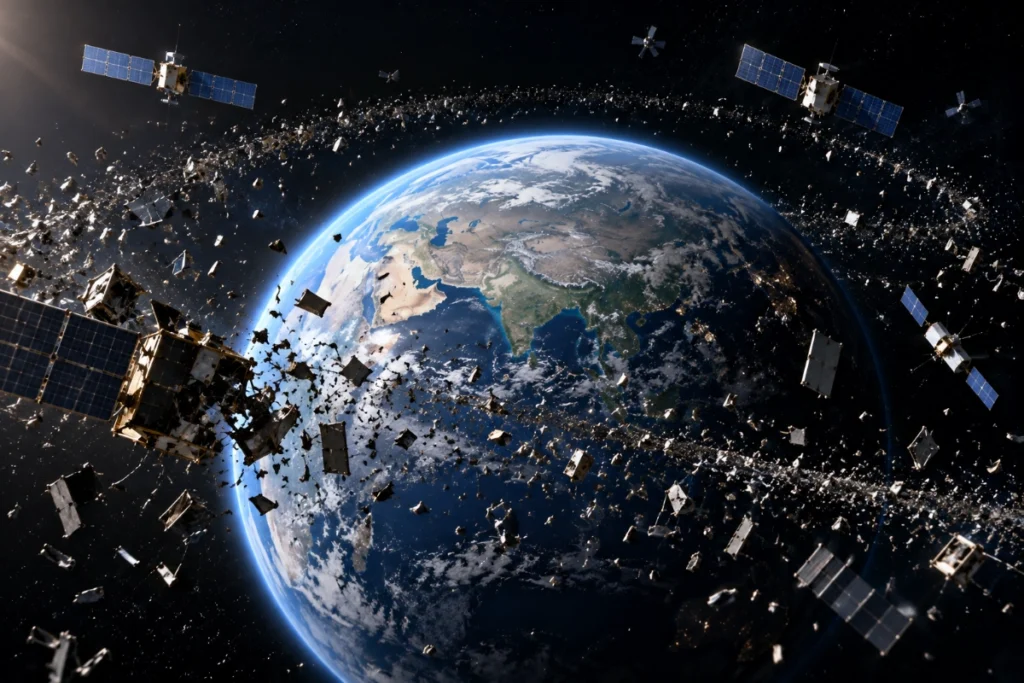
One concern is a security cycle in which one country’s defensive preparations are interpreted by another country as offensive preparations. That can encourage additional weapons development and reduce incentives for transparency.
Another major risk is space debris. A destructive collision or anti-satellite test can create fragments that remain in orbit and threaten spacecraft that were not involved in the conflict. The danger can grow when debris causes further collisions, a scenario often discussed under the term Kessler Syndrome.
This is why space security is not only about who possesses weapons. It is also about escalation control, responsible behavior, debris mitigation, communication and the protection of critical space infrastructure.
What Does the U.S. Disclosure Mean for India?
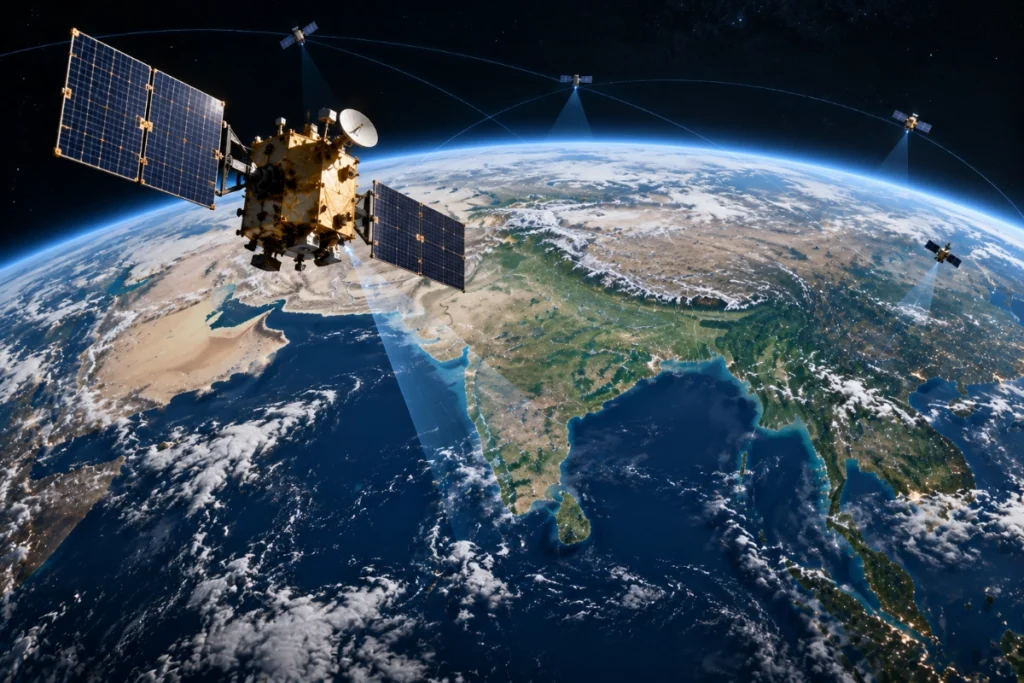
India is also a major spacefaring country with military, civilian and commercial interests in orbit. India demonstrated an anti-satellite capability in the 2019 Mission Shakti test, which destroyed an Indian satellite in low Earth orbit.
The U.S. disclosure therefore matters to India mainly because it reinforces the importance of space situational awareness, satellite protection, secure communications and responsible counterspace policy. It does not mean that India must copy the U.S. approach, and the available evidence does not establish that a particular Indian response has been decided.
For India, protecting satellites from collision, interference and hostile action is increasingly relevant as the country’s space activities expand. Maintaining reliable tracking and coordination with other space actors can also reduce the risk of accidental collisions and debris-producing incidents.
What Happens Next?
- More details may emerge about the nature and mission of the acknowledged U.S. systems.
- Other countries may adjust their space-security planning in response to the public disclosure.
- International discussions about responsible military behavior in space may receive renewed attention.
- Space situational awareness and protection of critical satellites are likely to remain major priorities for spacefaring countries.
Frequently Asked Questions
Did the U.S. really confirm weapons are in orbit?
Yes. On September 14, 2026, Air Force Secretary Troy Meink publicly said the Space Force has “on-orbit space control weapons” capable of defending the Joint Force. Gen. Douglas Schiess made a similar statement the following day.
What type of space weapons does the U.S. have?
The U.S. has not publicly disclosed the specific weapon types. Officials have not confirmed whether the acknowledged systems are kinetic or non-kinetic.
Does this mean the U.S. has nuclear weapons in orbit?
No. The public announcement does not say that. The Outer Space Treaty prohibits placing nuclear weapons and other weapons of mass destruction in orbit.
Can satellites be attacked during a war?
Yes. Several countries have demonstrated anti-satellite or other counterspace capabilities. Such actions can create serious debris and escalation risks.
Does India have anti-satellite capability?
Yes. India demonstrated an anti-satellite capability in the 2019 Mission Shakti test.
Is every weapon in space illegal?
No. International space law does not prohibit every military capability in Earth orbit. The legal status of a particular system depends on the weapon, its use and applicable international law.
Conclusion
The phrase “US deploys space weapons for first time in orbit” describes a major new public disclosure, but it needs an important qualification: the September 2026 announcement is the first clear public confirmation by U.S. officials that such weapons are already operating in orbit, not proof that the United States had never possessed or developed related capabilities before. The Pentagon has deliberately kept the technical details secret.
What is clear is that space is now treated as a critical military domain in which countries are preparing both defensive and counterspace capabilities. The next stage will depend on how the United States, China, Russia, India and other spacefaring countries balance deterrence and security with debris prevention, international law and the long-term sustainability of the space environment.
Read More about World Affairs :World Affairs – A1-InfoHub

