


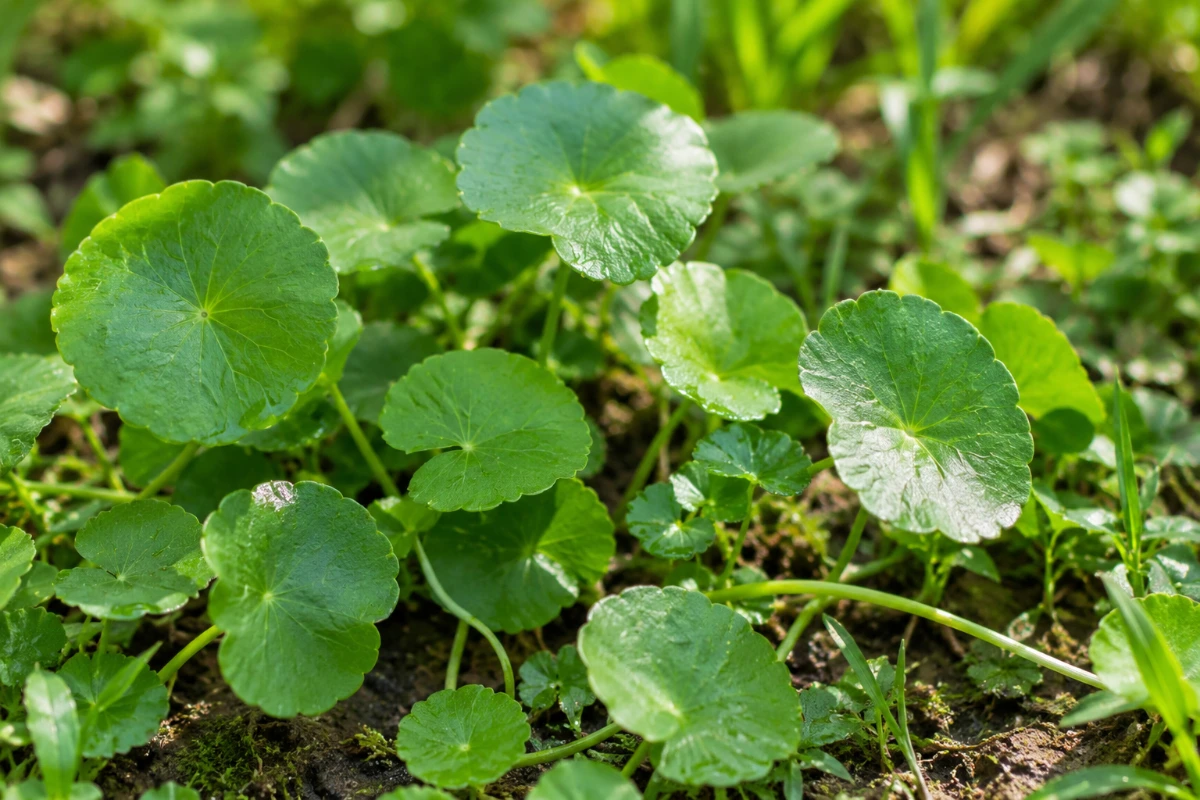
Brahmi leaves benefits are often discussed in traditional Indian medicine, especially for memory, mental well-being and skin health. But the name “Brahmi” can refer to different plants, so identifying the botanical species is important before interpreting health claims.
Centella asiatica, commonly known as gotu kola and called Mandukaparni in Indian medicinal-plant resources, is the plant described in the supplied source. It is different from Bacopa monnieri, which the Ministry of AYUSH lists separately as Brahmi. Because these plants are sometimes given the same common name, products and advice should be checked by botanical name.
Table of Contents
What Is Brahmi and How Does It Work?
In this article, Brahmi refers to Centella asiatica, the plant called Mandukaparni in Ministry of AYUSH resources. Centella contains triterpenoid compounds including asiatic acid, madecassic acid and glycosides such as asiaticoside and madecassoside. Laboratory and clinical research has investigated these compounds for effects related to skin repair, inflammation, oxidative stress and cognition.
Traditional use does not automatically establish that a plant treats a disease. Human evidence for Centella asiatica is still limited for several commonly promoted uses, and preparation, dose and standardization vary between studies.
Brahmi Leaves Benefits: What Does Research Show?
Memory and cognitive function
Centella asiatica has a long history of traditional use as a brain-related herbal medicine. However, a systematic review and meta-analysis of randomized trials found no strong evidence of improvement across cognitive domains compared with placebo. Some mood-related measures, including alertness and anger, showed signals of benefit, but the authors noted important limitations in dose, preparation and product standardization.
This means it is not accurate to describe Centella leaves as a proven memory booster or as a treatment that regenerates damaged brain cells. Research is continuing, including newer controlled studies, but stronger evidence is needed before making disease-treatment claims.
Stress and mood
Small clinical studies have investigated Centella asiatica for mood and stress-related outcomes. The evidence is not strong enough to say that eating fresh leaves or drinking a home preparation reliably treats anxiety, depression or insomnia. People with persistent symptoms should seek appropriate medical care rather than replacing treatment with an herb.
Skin and wound healing
Wound healing is one area where the research base is more developed, particularly for standardized topical preparations. A systematic review of clinical studies found signals involving wound contraction, granulation, re-epithelialization and wound appearance, while also concluding that more well-designed research is needed. Studies have investigated mechanisms involving collagen and other repair pathways.
This evidence should not be interpreted as proof that raw leaves can safely or effectively treat burns, infected wounds or serious injuries. Such wounds may require medical assessment and appropriate wound care.
Traditional and Food Uses
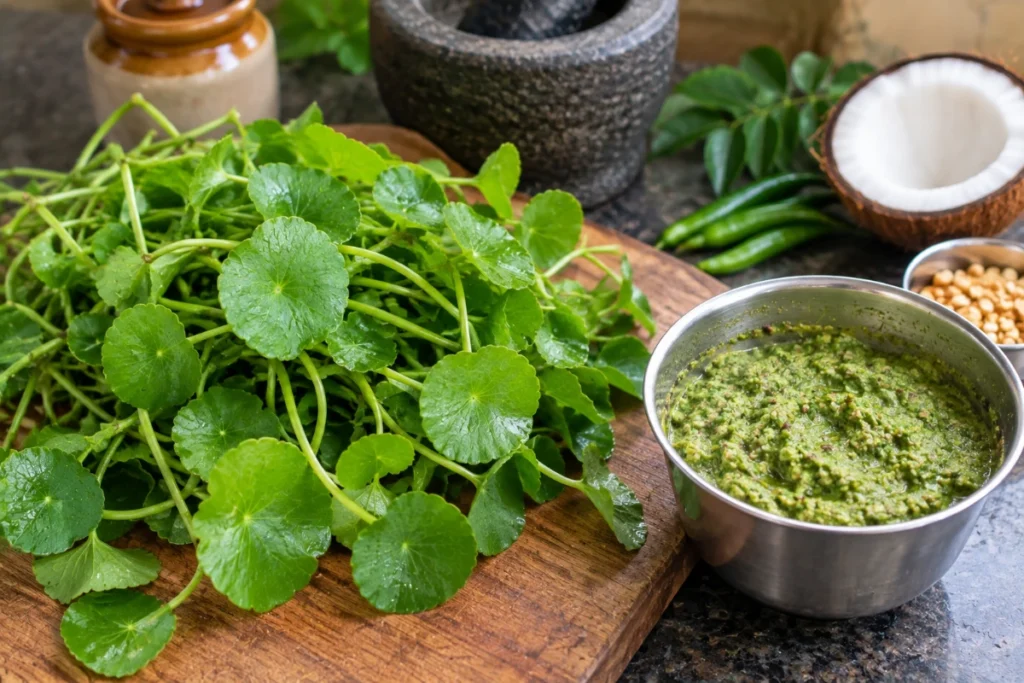
The supplied source describes fresh leaves being washed and used in foods such as chutney, and some people prepare them in drinks or other traditional preparations. These are traditional or dietary uses, not standardized medical doses. Preparation and plant identification matter.
How to Use It Safely
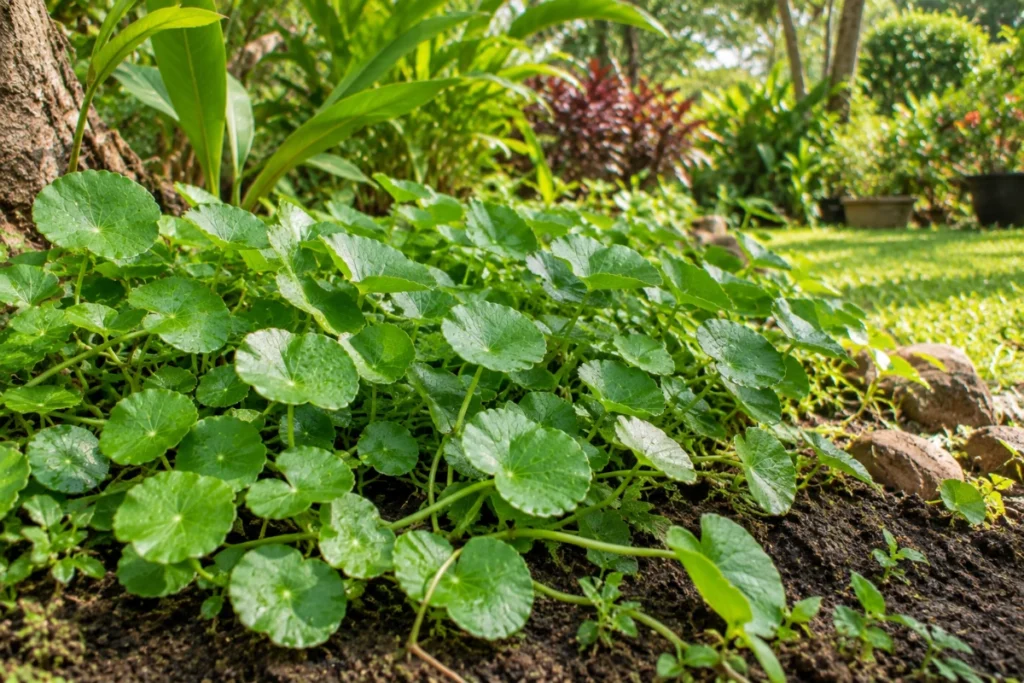
If you choose to consume Centella asiatica as a food, use correctly identified, clean plant material from a safe source. Avoid collecting plants growing beside drains, polluted water, industrial areas or places that may have pesticide or heavy-metal contamination. Washing cannot be assumed to remove all contaminants absorbed by a plant.
Do not assume that a larger amount provides greater benefit. Concentrated extracts and supplements can differ substantially from fresh leaves or culinary amounts.
Possible Side Effects and Precautions
Human studies have generally reported limited adverse effects, but mild problems such as gastrointestinal discomfort, nausea, headache, sedation or skin reactions have been reported in studies of Centella-containing products. A previous case report has also raised concern about liver injury, so unexplained symptoms such as jaundice, dark urine or significant abdominal discomfort warrant medical attention.
People who are pregnant or breastfeeding, people with liver disease, children, and anyone taking regular medicines should discuss medicinal use of Centella with a qualified healthcare professional. Herbal products can vary in strength and may interact with medicines; the evidence for specific interactions is not complete.
Brahmi vs Bacopa: Why the Name Matters
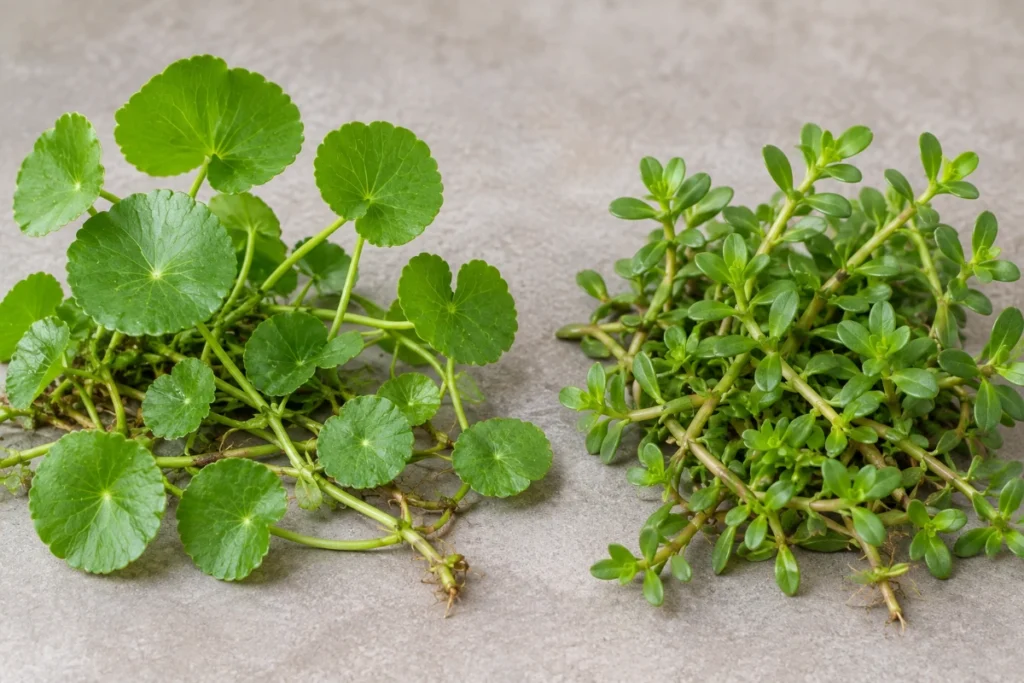
A major source of confusion is the word “Brahmi.” Ministry of AYUSH resources list Bacopa monnieri as Brahmi and Centella asiatica as Mandukparni. Therefore, an article or product that says only “Brahmi” may not identify the same plant discussed here. Check the botanical name on the label or ask a qualified practitioner before using a medicinal preparation.
Frequently Asked Questions
What are the health benefits of Brahmi?
For Centella asiatica, research has investigated cognitive and mood-related effects as well as skin and wound-healing applications. Evidence for cognitive improvement is not strong, while some clinical research suggests potential benefits in wound healing. It should not be presented as a proven treatment for Alzheimer’s disease, depression or other medical conditions.
What is Brahmi & how does it work?
The name Brahmi can refer to different plants. In this article it refers to Centella asiatica, also called Mandukparni or gotu kola. Its compounds, including asiaticoside and asiatic acid, have been studied for biological effects involving inflammation, oxidative stress and tissue repair.
What are the side effects of Brahmi?
Possible adverse effects reported with Centella-containing products include gastrointestinal discomfort, nausea, headache, sedation and skin reactions. Rare liver injury has also been reported, so medicinal use deserves caution, particularly for people with liver problems or those taking medicines.
What is Brahmi used for in Ayurveda?
Centella asiatica has a long history of traditional medicinal use and is known as Mandukparni in Indian medicinal-plant resources. Traditional uses include preparations associated with cognition, general well-being and skin health. Traditional use should be distinguished from modern clinical evidence for treating specific diseases.
Conclusion
Brahmi leaves benefits are best understood with the plant’s botanical identity and the strength of the evidence in mind. Centella asiatica has traditional importance and has been studied for cognition, mood and wound healing, but several popular claims go beyond what current human evidence can establish. If you use it medicinally, choose correctly identified products, avoid contaminated plant material, and seek professional advice when you have a medical condition, are pregnant or breastfeeding, or take regular medicines.
Read More helth article:Health – A1-InfoHub

