


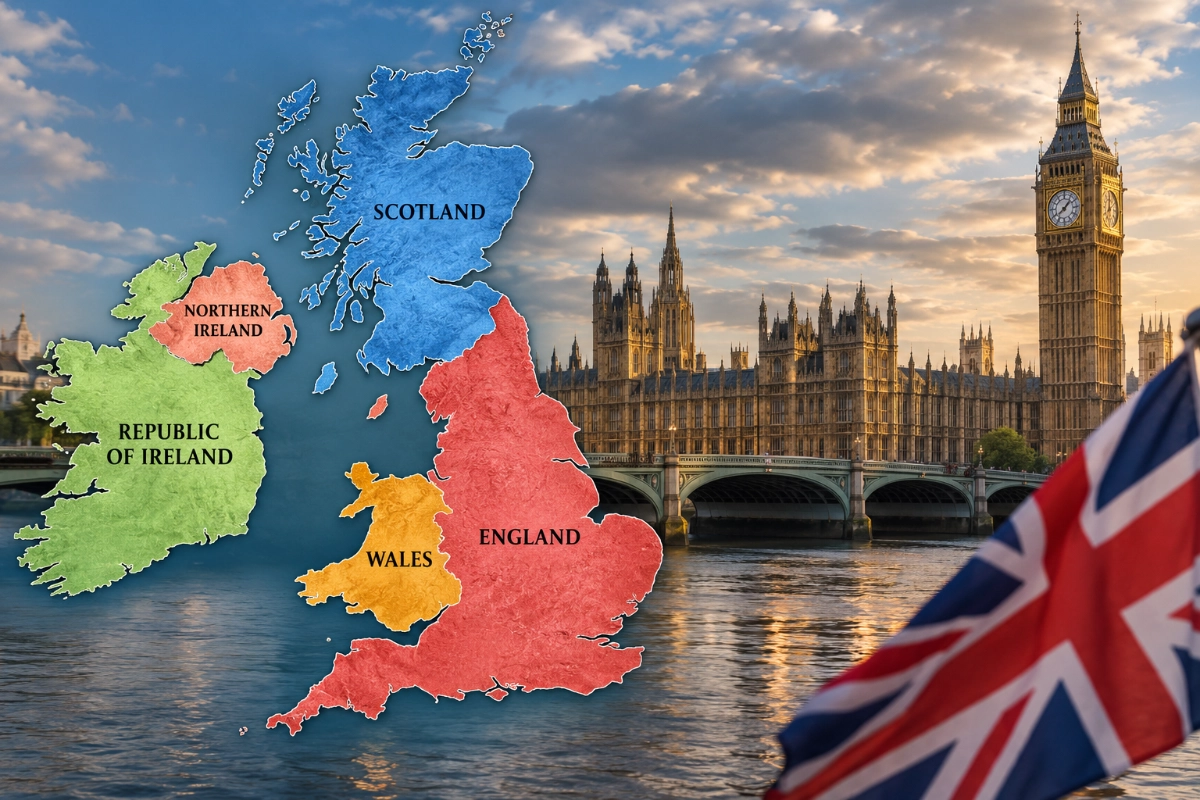
Is the United Kingdom Breaking Up?:
The United Kingdom is facing renewed debate about its constitutional future. Questions about Scottish independence, Welsh self-government and Irish reunification have become more visible in political discussions. However, this does not mean that the United Kingdom has already broken apart.
The debate is about whether the current union should continue in its present form, receive greater devolution, or eventually be replaced by separate independent states.
Table of Contents
What Is the United Kingdom?
The United Kingdom, officially called the United Kingdom of Great Britain and Northern Ireland, consists of four constituent countries:
- England
- Scotland
- Wales
- Northern Ireland
The capital of the United Kingdom is London.
Great Britain is the name of the island containing England, Scotland and Wales. It does not include Northern Ireland. The British Isles is a geographical term referring to Great Britain, the island of Ireland and several surrounding islands.
The Republic of Ireland is an independent country and is not part of the United Kingdom. Northern Ireland, however, remains part of the UK.
How the United Kingdom Was Formed

The United Kingdom developed through several political and historical stages rather than through one single event.
Wales and England
English control over Wales expanded during the medieval period. Edward I conquered much of Wales in the late thirteenth century. Later legislation incorporated Wales more closely into the English legal and administrative system.
Wales now has its own devolved legislature and government, but constitutional authority remains divided between Cardiff and Westminster.
Scotland and England
In 1603, James VI of Scotland became James I of England, creating a union of the crowns. England and Scotland still remained separate kingdoms at that time.
The Acts of Union in 1707 created the Kingdom of Great Britain. The union followed years of political and economic pressure, including the financial difficulties associated with Scotland’s failed Darien scheme.
Ireland and the United Kingdom
The Act of Union of 1800 brought the Kingdom of Ireland into the United Kingdom in 1801.
The island of Ireland was partitioned in the early twentieth century. In 1921, the Anglo-Irish Treaty established the Irish Free State, which later became the Republic of Ireland. Northern Ireland remained within the United Kingdom.
The constitutional position of Northern Ireland is still connected to the principle of consent. Under the Good Friday Agreement, Northern Ireland can become part of a united Ireland if a majority of people in Northern Ireland support that outcome in a properly authorised referendum.
Why Is the Union Being Debated Again?
Several issues have contributed to renewed constitutional debate.
Scottish Independence
The Scottish National Party supports Scottish independence. Scotland already has its own parliament and government, with powers over areas such as health, education and justice.
The Scottish Government has continued to argue that Scotland should have the right to decide its constitutional future. The UK Government has generally opposed holding another independence referendum without its agreement.
The issue remains politically significant, but independence would require a legal and political process. It has not occurred simply because independence-supporting parties campaign for it.
Welsh Self-Government
Wales has a devolved parliament and government. Some Welsh political parties support greater autonomy, while others support independence.
The Welsh constitutional debate is not identical to the Scottish debate. It includes questions about financial powers, the distribution of public investment, the relationship with Westminster and the extent of decision-making authority in Cardiff.
Claims that Wales has already declared independence or formally decided to leave the UK should not be treated as established facts without evidence of an official constitutional decision.
Northern Ireland and Irish Reunification
Northern Ireland’s future is particularly sensitive because it involves both British unionist and Irish nationalist identities.
Unionists generally support Northern Ireland remaining in the United Kingdom. Nationalists generally support Northern Ireland becoming part of a united Ireland.
The Good Friday Agreement provides a democratic framework for addressing this question. A referendum, often called a border poll, may be held if the UK Government believes that a majority would support Irish unity.
A political statement supporting reunification is not the same as a referendum result or a constitutional change.
The Role of Brexit
The 2016 Brexit referendum added another layer to the debate.
The United Kingdom voted to leave the European Union, but voting patterns differed across its constituent countries. Scotland and Northern Ireland voted to remain, while England and Wales voted to leave.
Brexit created new questions about:
- Trade and customs arrangements
- Northern Ireland’s relationship with the Republic of Ireland
- Scotland’s relationship with the European Union
- The distribution of economic and political power
- Whether decisions made in Westminster reflect the preferences of all parts of the UK
Brexit did not automatically cause the union to dissolve. However, it intensified existing disagreements about the UK’s constitutional structure and international direction.
Who Leads the United Kingdom?
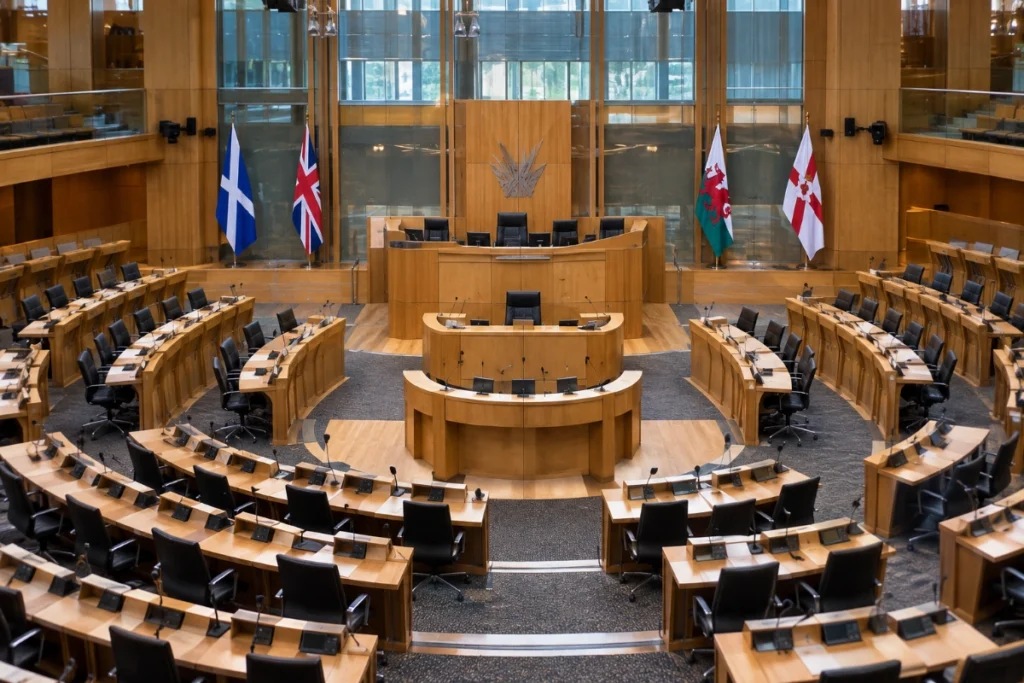
The UK Government is based at Westminster in London. As of September 2026, Andy Burnham is the UK Prime Minister. The official UK Government website states that he became Prime Minister on 20 July 2026.
Scotland, Wales and Northern Ireland also have devolved institutions.
John Swinney is the First Minister of Scotland.
The devolved governments do not have the same powers as sovereign national governments. Westminster retains authority over reserved matters such as defence, foreign affairs and several major constitutional questions.
Did Donald Trump Support Irish Reunification?
During a visit to Ireland in September 2026, US President Donald Trump said that he would like to see Ireland unified and described reunification as a “fantastic” development. He also acknowledged that the United Kingdom would have a role in the matter.
Trump’s comments represent his stated opinion. They do not change the legal position of Northern Ireland or create a referendum.
Any change to Northern Ireland’s constitutional status would have to follow the arrangements established under the Good Friday Agreement and relevant UK and Irish law.
Is the United Kingdom Already Breaking Apart?
There is no established evidence that the United Kingdom has already dissolved.
The more accurate description is that the union is experiencing constitutional pressure. Political movements in Scotland, Wales and Northern Ireland are debating different futures, while the UK Government is discussing devolution and the balance of power.
The possible outcomes include:
- The United Kingdom continuing in its current form.
- Additional powers being transferred to devolved governments.
- A future Scottish independence referendum.
- A future referendum on Irish reunification.
- Further constitutional reform involving Wales or other parts of the UK.
These outcomes are political possibilities, not confirmed events.
What Would Happen If the Union Changed?
A major constitutional change would involve complex negotiations.
Important questions would include:
- Citizenship and passports
- Currency and central banking
- Defence and military assets
- Public debt
- Trade and customs
- Borders and movement of people
- Government pensions and public services
- International treaties
- Membership of organisations such as the United Nations and European Union
It is therefore not possible to calculate the consequences simply by adding or subtracting the land area of different countries. Economic and political effects would depend on the terms of any future agreement.
Frequently Asked Questions
Is Scotland an independent country?
Scotland is a constituent country of the United Kingdom. It has a devolved parliament and government but is not currently an independent sovereign state.
Is Wales leaving the United Kingdom?
There is an independence movement in Wales, but Wales has not left the United Kingdom.
Is Northern Ireland part of the UK?
Yes. Northern Ireland is part of the United Kingdom unless its constitutional status changes through the process established by the Good Friday Agreement.
Did Brexit cause the UK to break up?
Brexit did not break up the United Kingdom. It increased debate about the union and created new political and economic disagreements.
Can Northern Ireland join the Republic of Ireland?
Yes, but only through the democratic and legal process established by the Good Friday Agreement and related law.
Conclusion
The United Kingdom is not currently breaking apart in a completed constitutional sense. However, its future is being debated more openly because of Scottish independence, Welsh self-government, Northern Ireland’s constitutional question and the effects of Brexit.
The most important distinction is between political demands and actual constitutional change. Independence campaigns, public statements and political meetings can influence debate, but they do not by themselves dissolve the United Kingdom.
read more about World Affair: World Affairs – A1-InfoHub

