


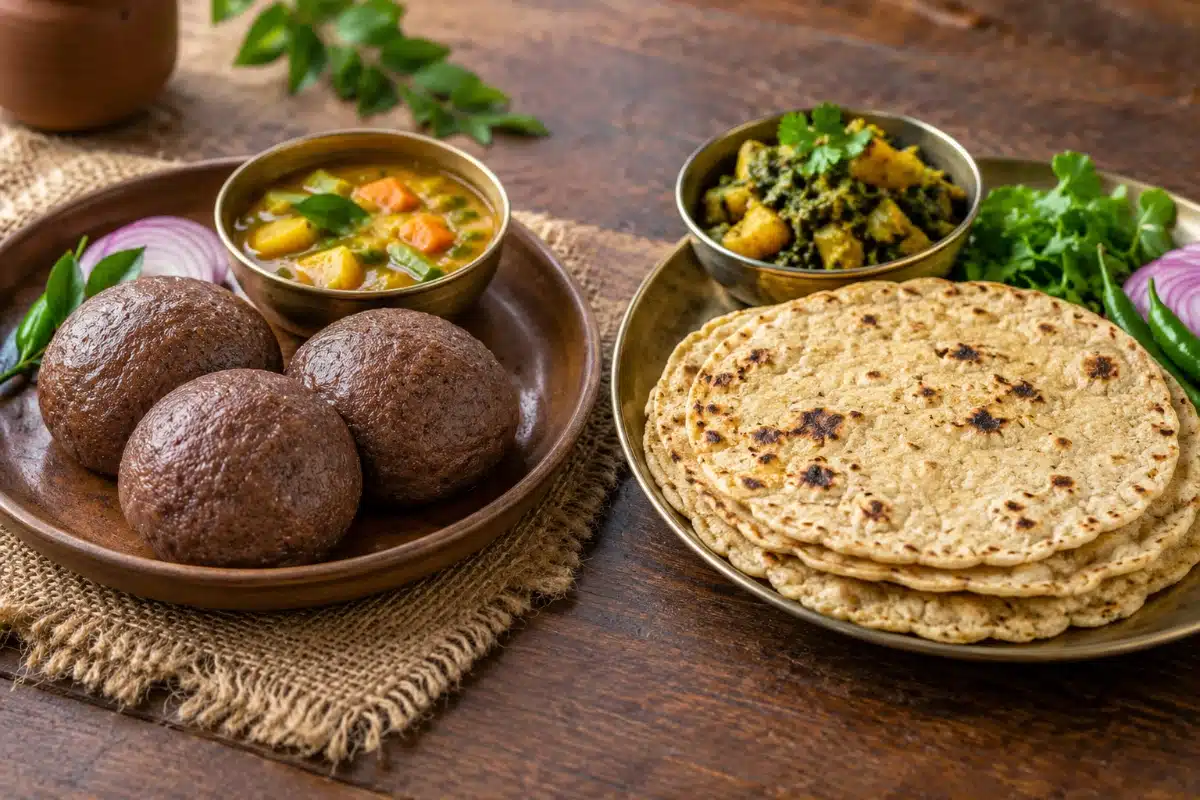
Ragi Mudde vs Jowar Roti is a common food comparison for people choosing between two traditional millet-based meals. Both can be nutritious parts of an everyday diet, but they offer different strengths: ragi is especially known for its calcium content, while jowar provides useful carbohydrates, protein, fibre and minerals. The healthier choice depends on your nutritional needs, portion size, preparation method and what you eat alongside the meal.
Ragi mudde is a firm ball prepared by cooking finger millet flour with water. Jowar roti is a flatbread made from sorghum flour. Neither food is automatically best for everyone, and neither should be treated as a cure for diabetes, anaemia, poor sleep or weight gain. Here is how they compare in practical terms.
Table of Contents
Ragi Mudde vs Jowar Roti: Key Differences
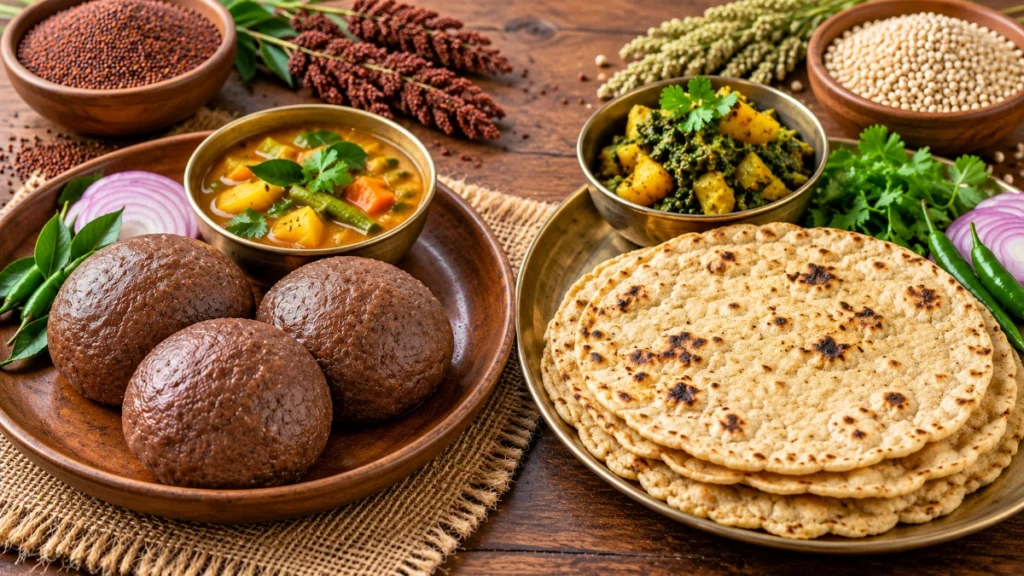
| Feature | Ragi Mudde | Jowar Roti |
|---|---|---|
| Main grain | Finger millet (ragi) | Sorghum (jowar) |
| Notable nutritional strength | High calcium content in the grain | Carbohydrates, plant protein, fibre and minerals |
| Typical preparation | Finger millet flour cooked with water | Sorghum flour mixed with water and cooked as a flatbread |
| Texture | Soft to firm, dense ball | Flatbread, usually soft or slightly crisp |
| Common accompaniments | Sambar, saaru, vegetables or pulses | Vegetable curries, pulses, chutney or curd |
| Gluten | Naturally gluten-free | Naturally gluten-free |
| Best choice | Useful when calcium intake is a priority | Useful as a versatile whole-grain staple |
Nutrition: What Makes Ragi Different?
Ragi, also called finger millet, stands out for its calcium content. Calcium is needed for normal bones and teeth, muscle function and nerve signalling. Ragi also supplies carbohydrates, dietary fibre and other minerals. Its nutrient profile makes it a valuable grain, particularly in diets where calcium-rich foods are limited.
The amount of calcium a person absorbs from a meal is not determined by the number on a food-composition table alone. The overall diet, preparation method and compounds naturally present in grains can affect mineral availability. Ragi can contribute to calcium intake, but it should not be considered a complete replacement for every other source of calcium.
Nutrition: What Makes Jowar Different?
Jowar, known internationally as sorghum, is a cereal grain that supplies energy mainly through carbohydrates, along with plant protein, dietary fibre and minerals such as magnesium and phosphorus. The exact nutrient values vary by variety and processing. Whole-grain sorghum flour generally retains more of the grain’s components than heavily refined flour.
Jowar is also naturally gluten-free. People who need to avoid gluten may use it as an alternative grain, but they should check flour packaging and preparation practices for possible cross-contact with wheat or other gluten-containing grains. This matters particularly for people with coeliac disease.
Which Is Better for Bone Health?
Ragi has the clearer advantage when comparing the grains specifically for calcium. However, bone health depends on more than one food: adequate overall calcium and vitamin D intake, sufficient protein, physical activity, age and other health factors all matter. Jowar can still fit into a balanced diet, even if it is not as calcium-rich as ragi.
If you enjoy both foods, you do not need to choose one permanently. Eating ragi on some days and jowar on others can add variety to your diet. Include other calcium sources that suit your dietary pattern, such as dairy foods or appropriate fortified alternatives, and vegetables and pulses for a broader range of nutrients.
Which Is Better for Blood Sugar?
There is no reliable rule that every serving of ragi mudde will produce a lower blood-sugar response than every jowar roti, or the other way around. Glycaemic response can vary with the grain variety, how finely it is milled, the cooking method, portion size and the foods eaten with it. Research on millets suggests potential benefits in meal planning, but results vary across millet types and preparations.
If you have diabetes, pay attention to the total carbohydrate portion rather than assuming a traditional grain will not raise blood glucose. Pair a moderate portion with vegetables and a protein source such as dal, beans, curd, eggs or another suitable food. Follow your clinician’s or dietitian’s advice and use your own glucose readings, if recommended, to understand your response.
Which Is Better for Weight Management?
Neither ragi mudde nor jowar roti automatically causes weight loss. Both can be part of a weight-management plan because they can serve as satisfying staple foods, especially when meals include fibre-rich vegetables and protein. Weight change depends on overall energy intake, activity, sleep, health and consistency over time.
Pay attention to serving size and accompaniments. Large portions, generous amounts of oil or ghee, and calorie-dense side dishes can change the overall energy content of a meal. Choose the portion that fits your appetite and needs rather than assuming that a food is unlimited because it is a millet.
Are Ragi Mudde and Jowar Roti Good for Digestion?
Both grains provide dietary fibre, which can support normal bowel function as part of a varied diet. Tolerance differs from person to person, and increasing fibre suddenly may cause bloating or discomfort. Increase fibre gradually and drink enough fluids. If either food repeatedly causes symptoms, seek individual advice rather than assuming it is healthy for everyone.
How to Make Either Meal More Balanced
The side dishes often matter as much as the choice of staple. To build a more balanced meal:
- Add a protein source such as dal, sambar with pulses, beans, curd, eggs or another suitable option.
- Include vegetables, preferably a variety of colours and types.
- Use oil, ghee, salt and sugary accompaniments in amounts appropriate for your needs.
- Choose a portion that matches your hunger, activity level and health goals.
- Vary your grains across the week instead of relying on a single food for every nutrient.
Ragi Mudde vs Jowar Roti: Which Should You Choose?
Choose ragi mudde more often if you particularly want to increase the calcium contribution from your staple grain and enjoy its texture. Choose jowar roti if you prefer a flatbread or want another whole-grain option with a different taste and texture. Both can be good choices when prepared simply and eaten as part of a balanced meal.
For people managing diabetes, kidney disease, coeliac disease or another condition requiring specific dietary choices, personal needs and clinical advice should guide the decision. A food’s reputation alone is not enough to determine whether it suits an individual.
Frequently Asked Questions
1. Is ragi mudde healthier than jowar roti?
Not for everyone. Ragi is notably rich in calcium, while jowar provides a useful mix of carbohydrates, protein, fibre and minerals. The better option depends on your nutritional priorities, serving size and the rest of your meal.
2. Which has more calcium, ragi or jowar?
Ragi generally contains substantially more calcium than jowar. Exact amounts vary by sample and food-composition source, and the amount absorbed by the body may differ from the amount present in the grain.
3. Can people with diabetes eat ragi mudde or jowar roti?
Many people with diabetes can include either food in a planned diet, but portions and preparation matter. Both contain carbohydrates and can raise blood glucose. Pair them with vegetables and protein, and follow individual medical advice.
4. Are ragi mudde and jowar roti gluten-free?
Ragi and jowar are naturally gluten-free grains. People with coeliac disease should still check labels and avoid cross-contact during milling, storage and cooking.
5. Which is better for weight loss?
Neither food guarantees weight loss. Portion size, overall calorie intake, side dishes and long-term eating habits are more important than choosing one grain alone.
6. Can I eat ragi and jowar in the same week?
Yes. Alternating them can add variety. A balanced diet benefits from different grains, vegetables, pulses and suitable protein sources.
Also Read:“Indian Food Composition Tables”
Conclusion
In the comparison of Ragi Mudde vs Jowar Roti, ragi has a strong advantage for calcium, while jowar offers a versatile, naturally gluten-free grain option. Neither is the universal winner for blood sugar, weight loss or overall health. Choose the one you enjoy, keep portions appropriate, and combine it with vegetables and protein for a more balanced meal.
Also Read:How Much Salt Is Good for Health? Daily Limit and Risks Explained

