


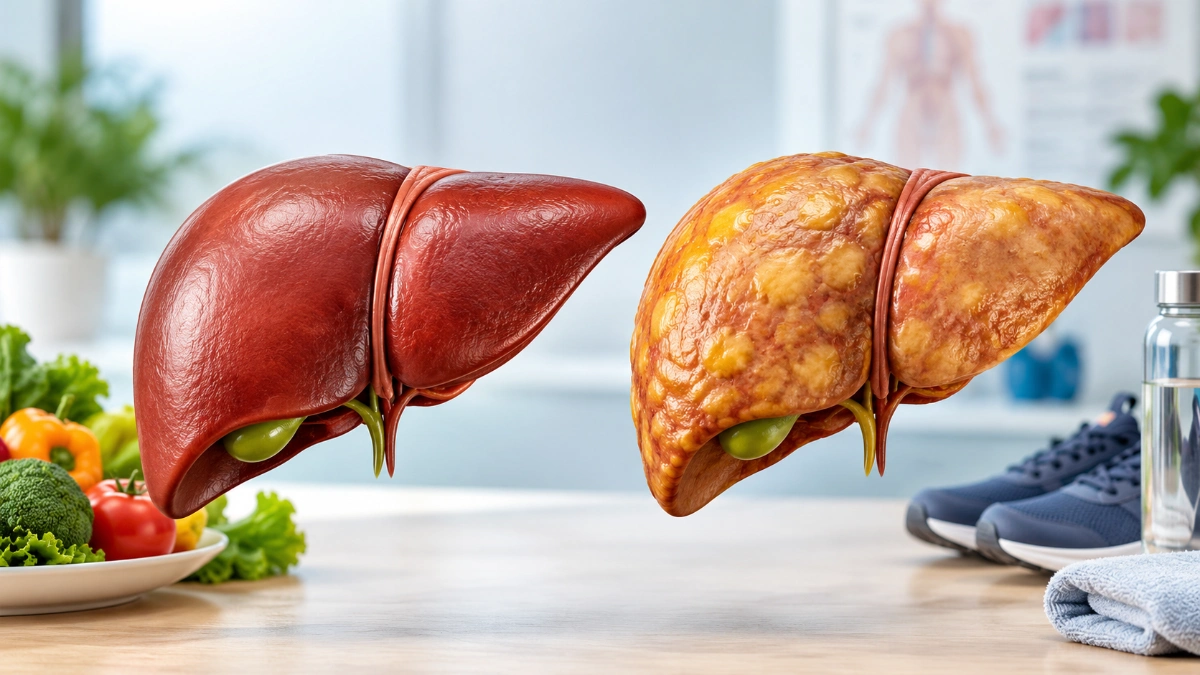
Fatty liver disease occurs when excess fat builds up in the liver. One common form linked to metabolic risk factors is called metabolic dysfunction-associated steatotic liver disease (MASLD). It can affect people who do not drink alcohol, and it often causes few or no noticeable symptoms in its early stages. Understanding the risk factors, possible complications, and evidence-based lifestyle changes can help people take sensible steps to protect their liver health.
Table of Contents
What Is Fatty Liver Disease and MASLD?
The liver processes nutrients, produces bile, stores energy, and helps manage substances in the blood. When too much fat accumulates in liver cells, the condition is described as steatotic liver disease, commonly called fatty liver disease.
MASLD is the current name for fatty liver disease associated with at least one cardiometabolic risk factor, such as excess weight, type 2 diabetes, high blood pressure, or abnormal blood fats, in the absence of harmful alcohol intake. The older term non-alcoholic fatty liver disease (NAFLD) is still used in many studies and patient resources. MASLD can occur in people who are not visibly overweight, so body size alone cannot rule it out.
Fat in the liver does not automatically mean severe liver damage. Some people have fat accumulation without significant inflammation, while others develop metabolic dysfunction-associated steatohepatitis (MASH), a more serious form involving inflammation and liver-cell injury. Some cases progress to scarring, known as fibrosis, and in advanced cases to cirrhosis.
How Common Is Fatty Liver Disease in India?
A 2022 systematic review and meta-analysis of Indian studies estimated that about 38.6% of adults included in the analysed datasets had NAFLD. The estimate varied substantially between studies and populations, and the researchers reported high statistical heterogeneity. This figure should therefore not be interpreted as a precise current rate for every Indian community or as a direct estimate of MASLD under today’s definition.
The important takeaway is that fatty liver disease is common enough to merit attention, especially among people with metabolic risk factors. It is not accurate to assume that the condition affects only people who drink alcohol.
What Causes Fatty Liver Disease?
MASLD is closely linked to metabolic health. Risk factors include:
- Overweight or obesity, particularly excess fat around the waist.
- Type 2 diabetes or insulin resistance.
- High triglycerides or other abnormal blood-fat levels.
- High blood pressure and metabolic syndrome.
- Low levels of physical activity and diets high in ultra-processed foods, added sugars, or sugar-sweetened drinks.
- Family history or genetic susceptibility, which may contribute to risk.
Alcohol can cause a separate form of liver disease and may complicate assessment. Tell a healthcare professional honestly about alcohol intake and medicines or supplements you use; this helps them identify the likely cause and choose appropriate care.
What Are the Symptoms of Fatty Liver Disease?
Many people with fatty liver disease have no symptoms, even when liver damage has begun. When symptoms occur, they may include tiredness or discomfort in the upper-right abdomen. These symptoms are not specific to liver disease and cannot confirm a diagnosis on their own.
Do not rely on symptoms, waist size, or how fit you feel to decide whether your liver is healthy. People with diabetes, obesity, abnormal liver blood tests, or imaging that suggests liver fat should discuss appropriate assessment with a clinician.
How Is Fatty Liver Disease Diagnosed?
A clinician may review medical history, alcohol intake, medicines, weight and waist measurements, and conditions such as diabetes or high cholesterol. Evaluation can include blood tests, imaging, and non-invasive tests that estimate the likelihood of liver scarring.
An ultrasound may show fat in the liver, but routine imaging cannot reliably establish the degree of inflammation or fibrosis by itself. Blood-based scores such as FIB-4 and tests such as elastography may help assess the risk of advanced fibrosis. A liver biopsy is needed only in selected cases when a specialist believes it will clarify the diagnosis or severity.
Possible Complications
Many people do not progress to advanced liver disease, but some develop inflammation and scarring over time. Possible liver-related complications include:
- MASH, in which fat accumulation is accompanied by inflammation and liver-cell injury.
- Fibrosis, or scar tissue in the liver.
- Cirrhosis, which is advanced scarring that can interfere with liver function.
- In advanced disease, complications such as fluid build-up, internal bleeding, liver failure, or liver cancer.
MASLD is also associated with higher cardiometabolic risk, including cardiovascular disease and type 2 diabetes. The individual risk varies; having fatty liver does not mean that these complications are inevitable.
Lifestyle Changes That Can Help Protect Liver Health
1. Improve food quality
Build meals around vegetables, whole fruit, pulses, whole grains, nuts and seeds, and suitable protein sources. Reduce sugar-sweetened drinks, frequent sweets, highly processed snacks, and foods high in saturated fat.
Portion sizes and your overall dietary pattern matter more than a single so-called liver-cleansing food.
2. Aim for gradual weight management when appropriate
For people with overweight or obesity, sustained weight loss can reduce liver fat and may improve inflammation and fibrosis.
European clinical guidelines indicate that:
- Losing at least 5% of body weight can reduce liver fat.
- A 7–10% reduction may improve liver inflammation.
- A reduction of 10% or more may improve fibrosis in some people.
These are general clinical targets, not a reason for rapid or unsupervised weight loss. People who are not overweight can still benefit from a healthier diet and regular activity.
3. Move regularly
Work toward at least 150 minutes per week of moderate-intensity physical activity, such as brisk walking, if your health and ability allow.
Strength training can complement aerobic activity. Start at a manageable level and increase gradually; some activity is better than none. Ask a clinician for tailored advice if you have other medical conditions or exercise limitations.
4. Manage related health conditions
Keep up with recommended care for diabetes, high blood pressure, and abnormal cholesterol or triglycerides.
Follow medical advice about medicines and monitoring. Do not stop prescribed medicines or start supplements advertised as liver treatments without discussing them with a healthcare professional.
5. Be cautious about coffee, supplements, and home remedies
Some observational studies associate coffee consumption with better liver outcomes, but they do not prove that coffee treats fatty liver disease, and it is not necessary for everyone.
Consider your sleep, heartburn, pregnancy status, and other health needs. Evidence for many herbal products and supplements is limited, and some can injure the liver.
No detox drink or home remedy should replace medical assessment.
6. Avoid harmful alcohol use
Alcohol can damage the liver and may increase risk when other liver conditions are present.
Discuss your intake with your clinician and follow advice tailored to your liver health; avoiding alcohol may be recommended, particularly when liver disease is diagnosed.
When Should You Seek Medical Advice?
Arrange a medical appointment if you have risk factors such as type 2 diabetes, excess abdominal fat, abnormal liver tests, or an imaging result suggesting fatty liver.
Seek urgent medical care for warning signs such as:
- Yellowing of the skin or eyes.
- Vomiting blood or passing black stools.
- Severe or rapidly worsening abdominal swelling.
- New confusion.
Early assessment can help identify liver problems before serious complications develop.
Frequently Asked Questions
Can fatty liver disease occur in people who do not drink alcohol?
Yes. MASLD is linked to metabolic risk factors and can occur in people who do not drink alcohol. Alcohol-related liver disease is a different category, though alcohol intake is still important when clinicians assess liver health.
Can a thin person have MASLD?
Yes. People who are not overweight can still develop MASLD, including those with insulin resistance, abnormal blood fats, or excess fat around internal organs. A normal-looking body size does not rule it out.
Can fatty liver disease be reversed?
Liver fat can decrease with sustained lifestyle changes, and early disease may improve. The outcome depends on the stage and cause; advanced fibrosis or cirrhosis requires medical follow-up and cannot be assumed to reverse. Work with a clinician rather than relying on a home remedy.
Which tests check for fatty liver disease?
Doctors may use medical history, blood tests, ultrasound or other imaging, and non-invasive fibrosis assessments such as FIB-4 or elastography. The tests selected depend on individual risk and findings.
Is black coffee a treatment for fatty liver disease?
No. Research has found associations between coffee consumption and some better liver outcomes, but it does not establish coffee as a treatment. Do not start drinking coffee or taking supplements solely to treat liver disease without considering your health needs.
Also read:“official guidance on fatty liver disease diagnosis”
Conclusion
Fatty liver disease, including MASLD, is common and can develop without alcohol use or obvious symptoms. Metabolic risk factors such as type 2 diabetes, excess abdominal fat, high blood pressure, and abnormal blood fats deserve attention.
A balanced eating pattern, regular activity, appropriate weight management, and good control of related conditions can help protect liver health. If you may be at risk, seek personalised medical advice rather than waiting for symptoms or relying on unproven remedies.
Medical note: This article is for general information and does not replace diagnosis or treatment from a qualified healthcare professional.
Also Read:Why More Young People Have a Heart Attack? Why Fitness Does Not Eliminate Heart Risk – A1-InfoHub

